Category
page 1Optical quantities
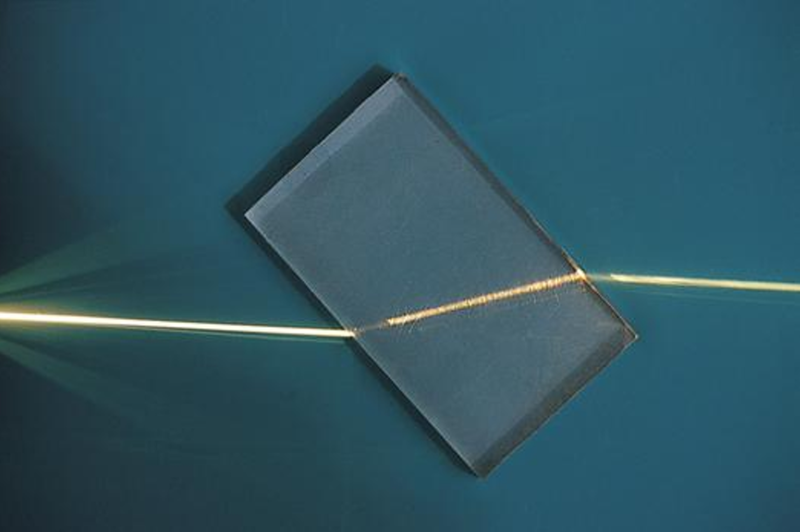
refractive index
ratio of the speed of light in vacuum to that in the medium
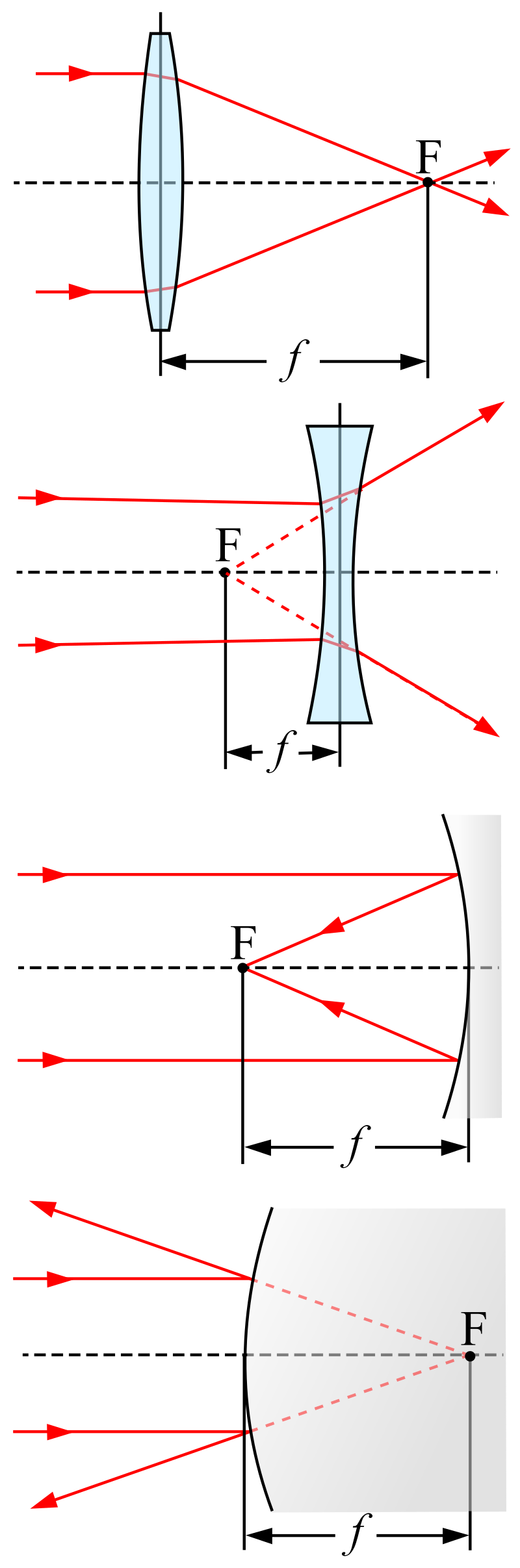
focal length
measure of how strongly an optical system converges or diverges light

Poynting vector
measure of directional energy flux

f-number
right|thumb|320px|Diagram of decreasing apertures, that is, increasing f-numbers, in one-stop increments; each aperture has half the light-gathering area of the previous one.
Abbe number
material dispersion property
Brewster's angle
angle of incidence for which all reflected light will be polarized
group velocity
physical quantity
intensity
power transferred per unit area, where the area is measured on the plane perpendicular to the direction of propagation of the energy
optical depth
natural logarithm of the ratio of incident to transmitted radiant power through a material; the absorbance × ln(10)
dioptric power
physical quantity
optical path length
term
Strehl ratio
proportion of observed intensity to ideal intensity, in astronomical imaging
air mass
optical path length through Earth’s atmosphere for light from a celestial source
Beam divergence
how much a beam expands as it travels

radius of curvature
concept in optical lens design
coherence length
distance over which a propagating wave maintains a certain degree of coherence
Rayleigh length
concept in laser optics
coherence time
the time over which a propagating wave (especially a laser or maser beam) may be considered coherent
etendue
thumb|Conservation of etendue
molar refractivity
spectral width
wavelength interval over which the magnitude of all spectral components is equal to or greater than a specified fraction of the magnitude of the component having the maximum value