Category
page 1Orbits

orbit
right|thumb|Variation of orbital eccentricity

Kepler's laws of planetary motion
scientific laws describing motion of planets around the Sun
escape velocity
minimum speed needed for an object to escape the gravitational influence of a primary body
orbital period
time taken for a given object to make one complete orbit around another object, and applies in astronomy to mostly either planets or asteroids orbiting the Sun, moons orbiting planets, exoplanets orbiting other stars, or binary stars
%20mul.svg)
apsis
lang=zxx|thumb|345px|The apsides refer to the farthest (2) and nearest (3) points reached by an orbiting planetary-mass object|planetary body (2 and 3) with respect to a primary, or host, body (1)
An apsis ( (third declension); ) is the farthest or nearest point in the orbit of a planetary body about its primary body. The line of apsides (also called apse line, or major axis of the orbit) is the line connecting the two extreme values.
orbital inclination
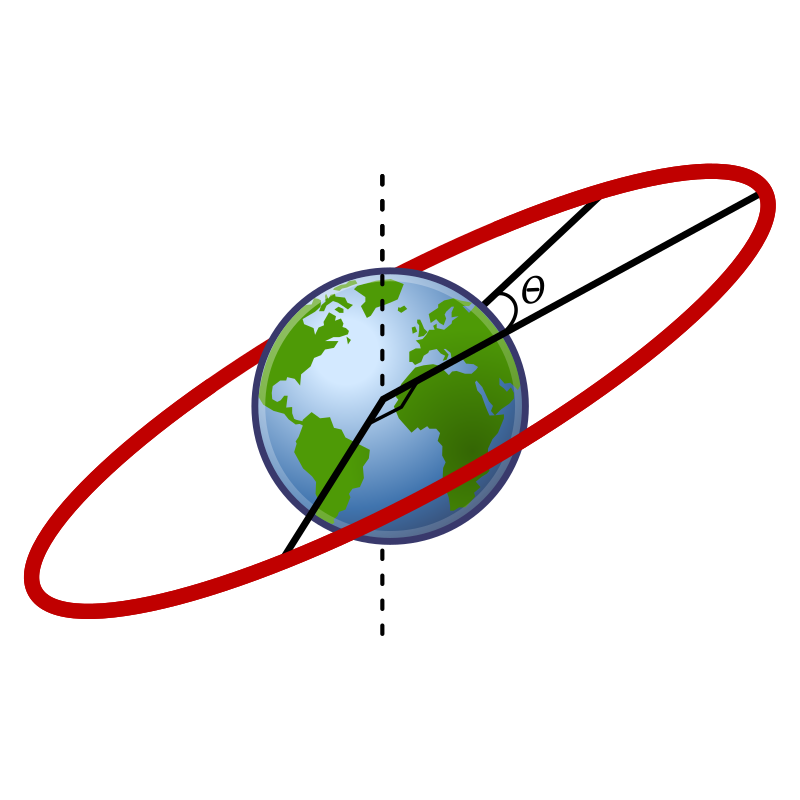
angle between a reference plane and the plane of an orbit

orbital eccentricity
parameter that determines the amount by which an orbit deviates from a perfect circle

tidal locking
situation in which an astronomical object's orbital period matches its rotational period

inertial frame of reference
frame of reference not undergoing acceleration

retrograde motion
orbit or rotation of an astronomical body opposite that of its primary body
orbital speed
speed at which it orbits around the barycenter of a system, usually around a more massive body. It can be used to refer to either the mean orbital speed, i.e. the average speed as it completes an orbit, or the speed at a particular point in its orbit
three-body problem
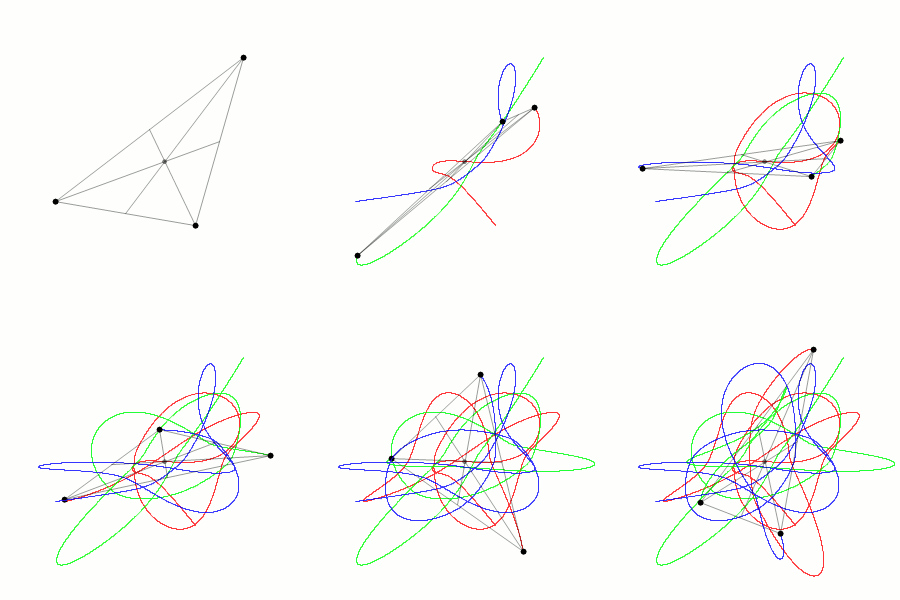
classical mechanics problem of three massive point particles interacting via Newtonian gravity; special case of the 𝑛‐body problem for 𝑛=3
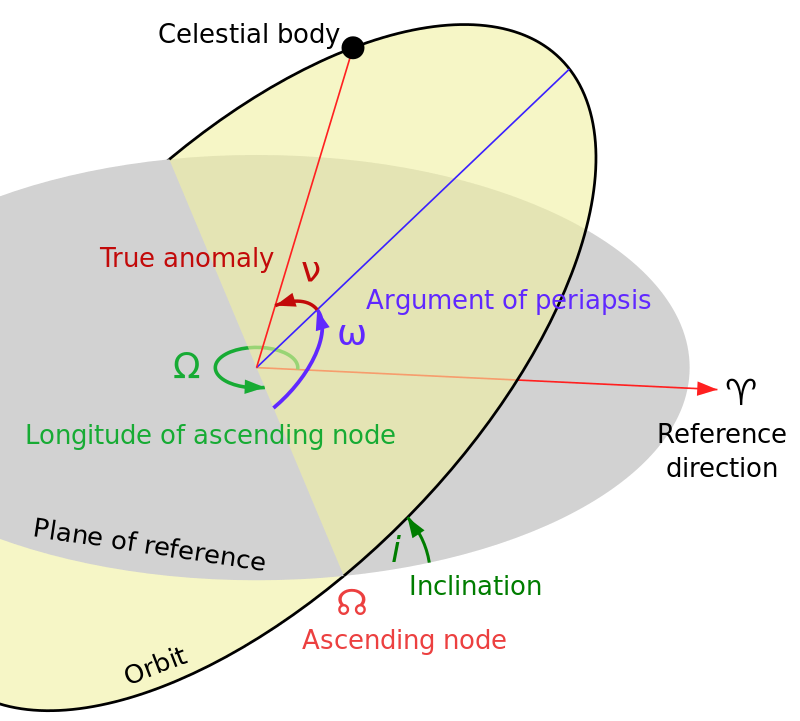
argument of periapsis
one of the orbital elements used to specify the orbit of an object in space

radial velocity
component of the velocity in radial direction

orbital elements
parameters required to uniquely identify a specific orbit
longitude of the ascending node
one of the orbital elements used to specify the orbit of an object in space

two-body problem
to determine the motion of two point particles that interact only with each other
mean anomaly
one of the orbital elements used to specify the orbit of an object in space
orbital node
point where an orbit crosses a plane of reference to which it is inclined

heliocentric orbit
orbit around the barycenter of the Sun
Hill sphere
with regards to an astronomical body, the region in which it dominates the attraction of satellites
Hohmann transfer orbit
elliptical orbit used to transfer between two circular orbits of different altitudes, in the same plane
irregular moon
natural satellite following a distant, inclined, and often eccentric and retrograde orbit
synchronous orbit
orbit of an astronomical body equal to that body's average rotational period
Kepler's equation
Equation in orbital mechanics
Laplace–Runge–Lenz vector
vector used chiefly to describe the shape and orientation of the orbit of one astronomical body around another, such as a planet revolving around a star
orbital plane
geometrical plane in which an orbit lies
quadrature
aspect of a heavenly body in which it makes a right angle with the direction of the Sun
true anomaly
angular parameter of Keplerian orbits
N-body problem
problem of predicting the individual motions of a group of celestial objects interacting with each other gravitationally
tidal acceleration
cause of tidal locking
elliptic orbit
Kepler orbit with an eccentricity of less than 1
Tisserand's parameter
named after Félix Tisserand
eccentric anomaly
angular parameter that defines the position of a body that is moving along an elliptic Kepler orbit.; one of three angular parameters ("anomalies") that define a position along an orbit, the other two being the true anomaly and the mean anomaly
Bertrand's theorem
theorem that, among central-force potentials with bound orbits, there are only 2 types of central-force scalar potentials such that all bound orbits are closed: inverse square and radial harmonic
apsidal precession
precession (rotation) of the orbit of a celestial body
hyperbolic trajectory
trajectory of any object around a central body with more than enough speed to escape the central object's gravitational pull
Kepler orbit
describes the motion of an orbiting body as an ellipse, parabola, or hyperbola
parabolic trajectory
unbound Kepler orbit with the eccentricity equal to 1
standard gravitational parameter
product GM of the gravitational constant G and the mass M of the body
circular orbit
orbit with a fixed distance from the barycenter
parking orbit
temporary orbit used during the launch of a satellite or other space probe
minimum orbit intersection distance
measure in astronomy
semi-axis
term in geometry; longest and shortest semidiameters of an ellipse
two-line element set
astronomy file format
star tracker
device that senses the direction to one or multiple stars
attitude control
spacecraft component controlling orientation
orbital decay
process that leads to gradual decrease of the distance between two orbiting bodies
longitude of the periapsis
longitude (measured from the point of the vernal equinox) at which the periapsis (closest approach to the central body) would occur if the body's inclination were zero
ecliptic pole
direction of imaginary projection onto the remote celestial sphere of the line perpendicular to planet Earth's orbital plane and passing though the orbital center
Laplace plane
reference plane about whose axis the instantaneous orbital plane of a satellite precesses
eccentricity vector
in celestial mechanics, a dimensionless vector with direction pointing from apoapsis to periapsis
observation arc
time between earliest and latest observations of a Solar System body like an asteroid or comet
primary body
main physical body of a gravitationally bound, multi-object system
inclined orbit
orbital plane that is tipped away from the equator
mean motion
angular speed required for a body to complete one orbit, assuming constant speed in a circular orbit which completes in the same time as the variable speed, elliptical orbit of the actual body
Specific orbital energy
parameter in the gravitational two-body problem
vis-viva equation
physical law that describes the motion of objects in a Keplerian orbit around a body

gravitational keyhole
region of a large body's orbit that could cause a small body to collide with it
Specific relative angular momentum
vector quantity in celestial mechanics