Category
page 1Orthoptera families

Gryllidae
The family Gryllidae contains the subfamilies and genera which entomologists now term true crickets. Having long, whip-like antennae, they belong to the Orthopteran suborder Ensifera, which has been greatly reduced in the last 100 years (e.g. Imms): taxa such as the tree crickets, spider-crickets and their allies, sword-tail crickets, wood or ground crickets and scaly crickets have been moved or elevated to family level. The type genus is Gryllus and the first use of the family name "Gryllidae" was by Francis Walker.

Tettigoniidae
Insects in the family Tettigoniidae are commonly called katydids (especially in North America) or bush crickets. They have previously been known as "long-horned grasshoppers". More than 8,000 species are known. Part of the suborder Ensifera, the Tettigoniidae are the only extant (living) family in the superfamily Tettigonioidea.

Acrididae
Acrididae are the predominant family of grasshoppers, comprising some 10,000 of the 11,000 species of the entire suborder Caelifera. The Acrididae are best known because all locusts (swarming grasshoppers) are of the Acrididae. The subfamily Oedipodinae is sometimes classified as a distinct family Oedipodidae in the superfamily Acridoidea. Acrididae grasshoppers are characterized by relatively short and stout antennae (so they may be called "short-horned grasshoppers"), and tympana on the side of the first abdominal segment.

Tetrigidae
Tetrigidae is an ancient family in the order Orthoptera, which also includes similar families such as crickets, grasshoppers, and their allies. Species within the Tetrigidae are variously called groundhoppers, pygmy grasshoppers, pygmy devils or (mostly historical) "grouse locusts".

Rhaphidophoridae
The orthopteran family Rhaphidophoridae of the suborder Ensifera has a worldwide distribution. Common names for these insects include cave crickets, camel crickets, spider crickets (sometimes shortened to "criders" or "sprickets"), and sand treaders. Those occurring in New Zealand are typically referred to as jumping or cave wētā. Most are found in forest environments or within caves, animal burrows, cellars, under stones, or in wood or similar environments. All species are flightless and nocturnal, usually with long antennae and legs. More than 500 species of Rhaphidophoridae are described.

Pyrgomorphidae
Pyrgomorphidae is a family of grasshoppers in the order Orthoptera; it is the only family in the superfamily Pyrgomorphoidea. Pyrgomorphidae are found worldwide in tropical and warm temperate regions (though none are from US mainland), but the vast majority of the family's approximately 500 species are from Africa, Asia and Australia. Their name is probably derived from pyrgos (Greek: Πύργος) meaning "tower": a reference to the form (morph) of the head in the type genus Pyrgomorpha and other genera.
Gryllacrididae
Gryllacrididae are a family of non-jumping insects in the suborder Ensifera occurring worldwide, known commonly as leaf-rolling crickets or raspy crickets. The family historically has been broadly defined to include what are presently several other families, such as Stenopelmatidae ("Jerusalem crickets") and Rhaphidophoridae ("camel crickets"), now considered separate. As presently defined, the family contains two subfamilies: Gryllacridinae and Hyperbaeninae. They are commonly wingless and nocturnal. In the daytime, most species rest in shelters made from folded leaves sewn with silk. Some sp

Anostostomatidae
Anostostomatidae is a family of insects in the order Orthoptera, widely distributed in the southern hemisphere. It is named Mimnermidae or Henicidae in some taxonomies, and common names include king crickets in Australia and South Africa, and wētā in New Zealand (although not all wētā are in Anostostomatidae). Prominent members include the Parktown prawn of South Africa, and the giant wētā of New Zealand.

Pamphagidae
Pamphagidae is a family of grasshoppers belonging to the superfamily Acridoidea. The species in this family can be found in Africa, Europe and Asia.

Mogoplistidae
Mogoplistidae is a family of scaly crickets and allies within the superfamily Grylloidea. Considered to be monophyletic, a sister taxon to the Gryllidae crickets. This family consists of more than 370 species worldwide; 20 species in 4 genera occur in North America and this family includes the scaly crickets of Europe.

Stenopelmatidae
Stenopelmatidae is a family of large, mostly flightless orthopterans that includes the Jerusalem crickets. Two genera: Ammopelmatus and the type genus Stenopelmatus are found in the New World. Oryctopus and Sia are Old World genera, and previously placed in their own subfamilies (see below), but with the addition of new genera, current placement is as five tribes in the single subfamily Stenopelmatinae.

Romaleidae
The Romaleidae or lubber grasshoppers are a family of grasshoppers, based on the type genus Romalea. The species in this family can be found in the Americas. It is known to be polyphagous, but there is not much else known regarding its diet. The descriptive "lubber" is nautical slang for a big and clumsy person, referring to this grasshopper's limited or nonexistent ability to fly, seemingly clumsy and narrow range of movement, and relatively large size.

Tridactylidae
The Tridactylidae are a family in the insect order Orthoptera. They are small, mole-cricket-like insects, almost always less than long when mature. Generally they are shiny, dark or black, sometimes variegated or sandy-coloured. They commonly live in short tunnels and are commonly known as pygmy mole crickets, though they are not closely related to the true "mole crickets" (Ensifera), as they are included in the Caelifera suborder (related to grasshoppers).
Prophalangopsidae
The family Prophalangopsidae are insects belonging to the order Orthoptera. They are the only extant members of the superfamily Hagloidea. There is only one extant genus in North America, where they are known as grigs, four genera in Asia, and many extinct genera (see below).
Schizodactylidae
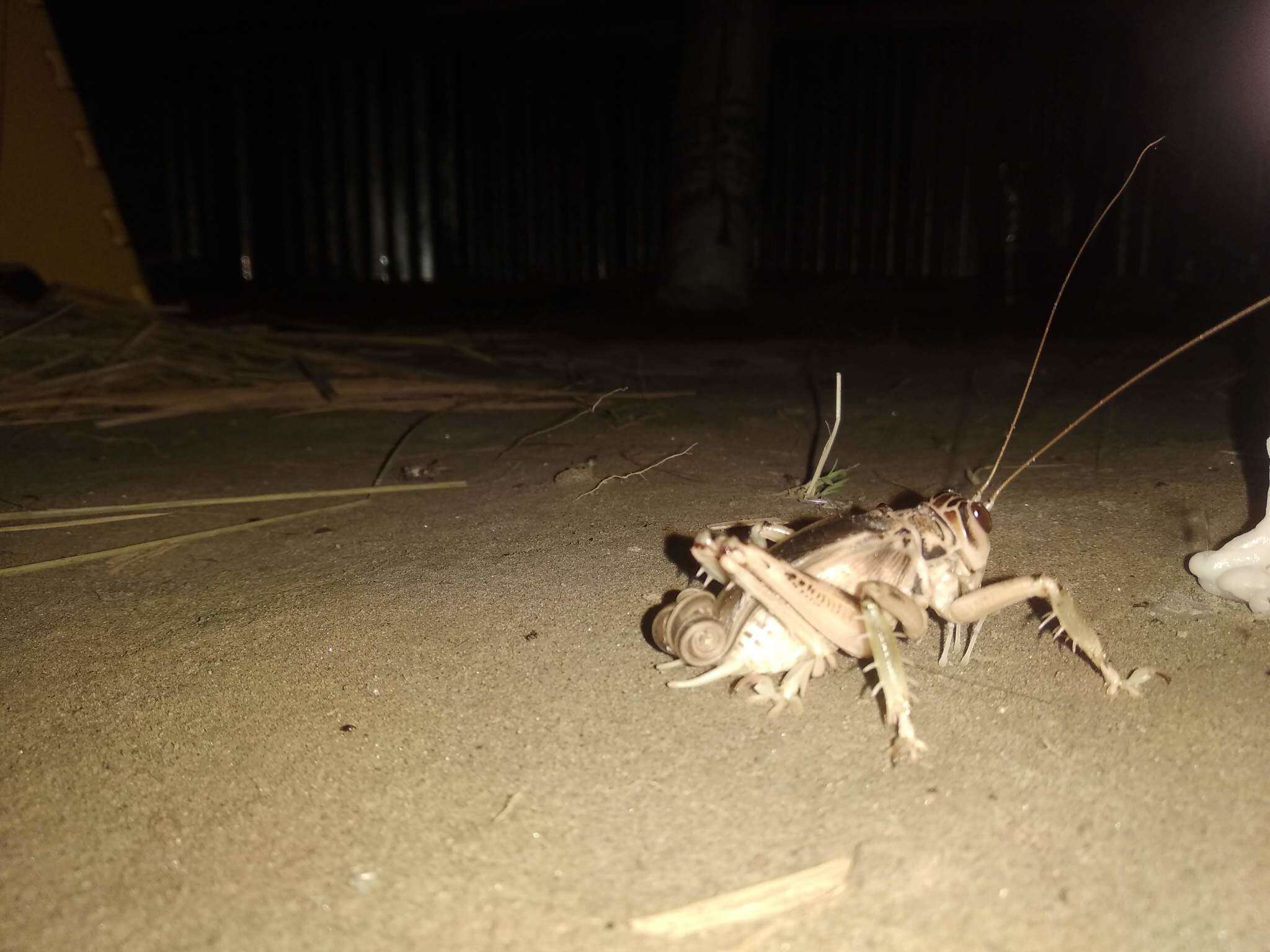
Schizodactylidae is a family of orthopteran insects found in Asia and southern Africa, known as dune crickets or splay-footed crickets. They are usually found in desert and sandy areas. Species are predatory, including Schizodactylus inexspectatus. T. B. Fletcher notes that one captive individual did not feed on any vegetable matter. Fossils are known since the Early Cretaceous.
Proscopiidae
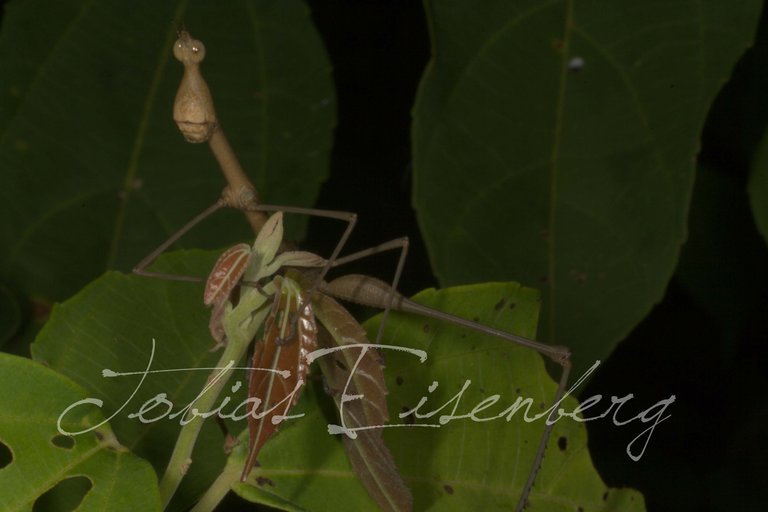
Proscopiidae is a family of Neotropical grasshoppers, now placed in its own superfamily, the Proscopioidea. Some species may be known as stick grasshoppers or jumping sticks. Within the family Proscopiidae, there are 34 genera and 228 different species. The proscopiids are herbivores and feed on a variety of plants in a variety of environmental conditions. Due to the insects being herbivores, they also have the ability to cause significant damage to the agriculture of their neotropical habitat. Identifying Proscopiidae is extremely difficult due to their close resemblance to a couple of other

Chorotypidae
Chorotypidae is a family of tropical Asian grasshoppers (order Orthoptera), formerly included within the family Eumastacidae. These grasshoppers have a head that rises above the level of the thorax and short antennae. Some species have reduced wings, others have wings that widen towards the tips and still others have a flattened leaf-like shape. They lack abdominal tympani (hearing organs).

Thericleidae
thumb|Unidentified wingless species of Thericleidae, showing characteristic "horse-head" and stubby antennae

Eumastacidae
Eumastacidae are a family of grasshoppers sometimes known as monkey- or matchstick grasshoppers. They usually have thin legs that are held at right angles to the body, sometimes close to the horizontal plane. Many species are wingless. Their heads are held at an angle with the top of the head often jutting above the line of the thorax and abdomen. They have three segmented tarsi and have a short antenna with a knobby organ at the tip. They do not have a prosternal spine or tympanum. Most species inhabit the tropics, with a greater diversity in the neotropics. They are considered primitive with
Pneumoridae
The Pneumoridae are a family of nocturnal short-horned grasshoppers in the order Orthoptera, commonly known as the bladder grasshoppers and the sole representative of the superfamily Pneumoroidea. Their centre of diversity is in southern Africa, but one species occurs as far north as South Sudan. Most adult males acquire an inflated abdomen, a specialization for amplified sound production, which is likely its primary function. Most genera display striking sexual dimorphism, and several species exhibit a dual male phenotype.

Trigonidiidae
The Trigonidiidae are a family of crickets consisting of two subfamilies:
Subfamily Nemobiinae Saussure, 1877 – wood crickets or ground crickets
Subfamily Trigonidiinae Saussure, 1874 – sword-tail crickets
Mastacideidae
Mastacideidae is a family of grasshoppers in the order Orthoptera. There are at least two genera and about eight described species in Mastacideidae, found in South Asia.
Lathiceridae
The Lathiceridae are a family of grasshoppers, in the Orthoptera: suborder Caelifera. Species in this family can be found in the desert regions of southern Africa where they resemble the stony ground on which they live. They are characterized by their apterous (wingless) bodies, which are dorsoventrally depressed and often excessively widened in the metathoracic region, giving them a spindle-like appearance. Their integument is sculptured and rugose, and their coloration varies from white to brown and purple, harmonizing with the color of the substratum on which they live.
Lentulidae
The Lentulidae are a family of flightless grasshoppers found in sub-Saharan Africa.
Lithidiidae
The Lithidiidae are a family of grasshoppers, in the Orthoptera: suborder Caelifera. Species in this family can be found in Africa.

Ripipterygidae
Ripipterygidae is a family of insects in the order Orthoptera. Members of the family are commonly known as mud crickets.
Ommexechidae
The Ommexechidae are a family of grasshoppers, in the Orthoptera: suborder Caelifera. Species in this family can be found in the Americas.
Tristiridae
The Tristiridae are a family of grasshoppers, in the Orthoptera: suborder Caelifera. Species in this family can be found in the Americas.
Tanaoceridae
The Tanaoceridae are an insect family in the monotypic superfamily Tanaoceroidea in the suborder Caelifera. They are sometimes called desert long-horned grasshoppers.
Trigonopterygidae
The Trigonopterygidae are an insect family in the Orthoptera: Caelifera found in South Asia and Southeast Asia.
Dericorythidae
Dericorythidae are a family of grasshoppers, in the Orthoptera: suborder Caelifera. Species in this family can be found in northern Africa, southern Europe and Asia.

Phalangopsidae
Phalangopsidae, which includes the "spider crickets" and their allies, is a reconstituted (2014) family of crickets (Orthoptera: Ensifera), with the type genus Phalangopsis. Priority for family-group names based on this genus dates from Blanchard's "Phalangopsites".
Elcanidae
Elcanidae are an extinct family of Mesozoic and early Cenozoic orthopterans. Members of the family are distinguished by the presence of spurs on the distal part of the metatibia, unique among orthopterans, these have been suggested to have been used for controlling gliding, swimming aids, or for jumping on water. The group combines characteristics from both major groups of orthopterans, with long antennae and nymphal morphology similar to Ensifera, but with wing venation and adult morphology more similar to Caelifera. Elcanidae is part of Elcanoidea, which is thought to have diverged from livi
Pamphagodidae
Pamphagodidae is a small family of grasshoppers in the Orthoptera: suborder Caelifera. Species in this family can be found in southern Africa and Morocco.