Category
page 1Physical quantities

mass
Mass is an intrinsic property of a body. In modern physics, it is generally defined as the strength of an object's gravitational attraction to other bodies - as measured by an observer moving along at the same speed.
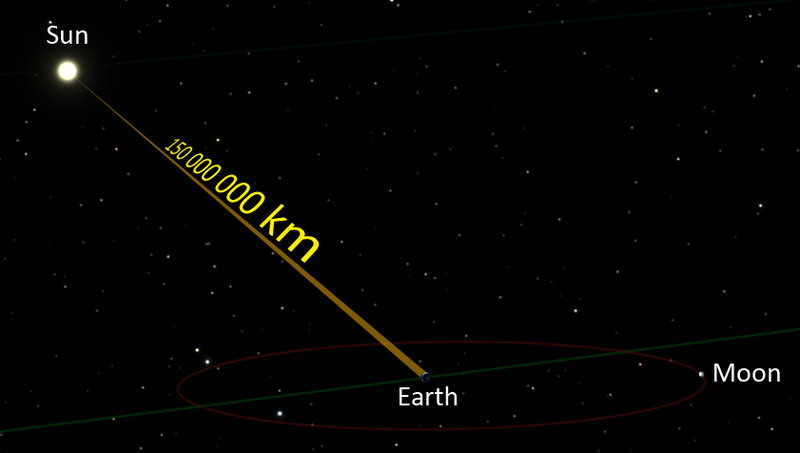
speed of light in vacuum
speed of electromagnetic waves in vacuum

heat
In thermodynamics, heat is defined as the form of energy crossing the boundary of a thermodynamic system by virtue of a temperature difference across the boundary. A thermodynamic system does not contain heat. Nevertheless, the term is also often used to refer to the thermal energy contained in a system as a component of its internal energy and that is reflected in the temperature of the system.

length
Length is a measure of distance. In the International System of Quantities, length is a quantity with dimension distance. In most systems of measurement a base unit for length is chosen, from which all other units are derived. In the International System of Units (SI) system, the base unit for length is the metre.

power
rate at which energy is transferred, used, or transformed

melting point
temperature at which a solid turns liquid

entropy
Entropy is a scientific concept, most commonly associated with states of disorder, randomness, or uncertainty. The term and the concept are used in diverse fields, from classical thermodynamics, where it was first recognized, to the microscopic description of nature in statistical physics, and to the principles of information theory. It has found far-ranging applications in chemistry and physics, in biological systems and their relation to life, in cosmology, economics, and information systems including the transmission of information in telecommunication.

humidity

speed
In kinematics, the speed (commonly referred to as v) of an object is the magnitude of the change of its position over time or the magnitude of the change of its position per unit of time, it is thus a non-negative scalar quantity. The average speed of an object in an interval of time is the distance travelled by the object divided by the duration of the interval; the instantaneous speed is the limit of the average speed as the duration of the time interval approaches zero. Speed is the magnitude of velocity (a vector), which indicates additionally the direction of motion.

dimension
thumb|upright=1.2|From left to right: a square (geometry)|square, a [[cube and a tesseract. The square is two-dimensional (2D) and bounded by one-dimensional line segments; the cube is three-dimensional (3D) and bounded by two-dimensional squares; the tesseract is four-dimensional (4D) and bounded by three-dimensional cubes.
]]
[[File:Dimension levels.svg|thumb|upright=1.2| The first four spatial dimensions, represented in a two-dimensional picture.

redshift
thumb|upright|Spectral line|Absorption lines in the [[visible spectrum of a supercluster of distant galaxies (right), as compared to absorption lines in the visible spectrum of the Sun (left). Arrows indicate redshift. Wavelength increases up towards the red and beyond (frequency decreases).]]

speed of sound
distance travelled during a unit of time by a sound wave propagating through an elastic medium

spin
intrinsic form of angular momentum as a property of quantum particles

physical quantity
quantitative characterization of an aspect of a physical entity, phenomenon, event, process, transformation, relation, system, or substance

amplitude
The amplitude of a periodic variable is a measure of its change in a single period (such as time or spatial period). The amplitude of a non-periodic signal is its magnitude compared with a reference value. There are various definitions of amplitude (see below), which are all functions of the magnitude of the differences between the variable's extreme values. In older texts, the phase of a periodic function is sometimes called the amplitude.

enthalpy
Enthalpy () is the sum of a thermodynamic system's internal energy and the product of its pressure and volume. It is a state function in thermodynamics used in many measurements in chemical, biological, and physical systems at a constant external pressure, which is conveniently provided by Earth's ambient atmosphere. The pressure–volume term expresses the work W that was done against constant external pressure P_\text{ext} to establish the system's physical dimensions from V_\text{system, initial}=0 to some final volume V_\text{system, final} (as W=P_\text{ext}\Delta V), i.e. to make room for
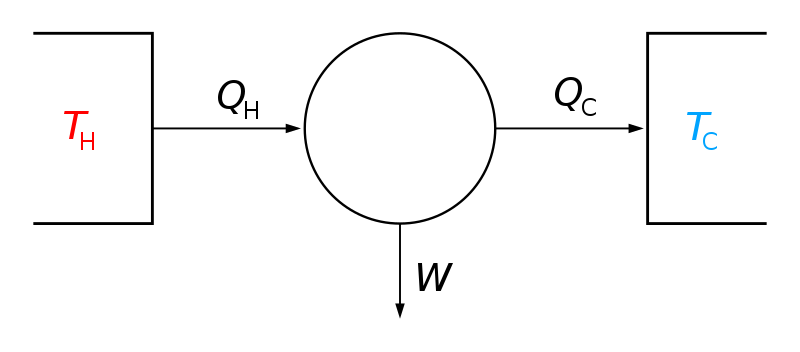
internal energy
energy contained in a system, excluding energy due to its position as a body in external force fields or its overall motion

luminosity
thumb|The Sun has an intrinsic luminosity of . In astronomy, this amount is equal to one [[solar luminosity, represented by the symbol L⊙. A star with four times the radiative power of the Sun has a luminosity of .]]
Luminosity is an absolute measure of radiated electromagnetic energy per unit time, and is synonymous with the radiant power emitted by a light-emitting object. In astronomy, luminosity is the total amount of electromagnetic energy emitted per unit of time by a star, galaxy, or other astronomical objects.

thermal conductivity
capacity of a material to conduct heat
specific heat capacity
intensive quantity, heat capacity per mass

field
physical quantity, represented by a number or tensor, that has a value for each point in space-time

quantum number
notation for conserved quantities in physics and chemistry
thermal conduction
transfer of internal energy within a body due to particle collisions & electron movements
Gibbs free energy
type of thermodynamic potential; useful for calculating reversible work in certain systems

Young's modulus
mechanical property that measures stiffness of a solid material

luminous flux
total amount of light energy flowing out of a light source per unit of time
illuminance
alt=Illuminance diagram with units and terminology.|thumb|372x372px|Illuminance diagram with units and terminology
In photometry, illuminance is the total luminous flux incident on a surface, per unit area. It is a measure of how much the incident light illuminates the surface, wavelength-weighted by the luminosity function to correlate with human brightness perception. Similarly, luminous emittance is the luminous flux per unit area emitted from a surface. Luminous emittance is also known as luminous exitance.

emission spectrum
frequencies of light emitted by atoms or chemical compounds

permittivity
thumb|A dielectric medium showing orientation of charged particles creating polarization effects. Such a medium can have a lower ratio of electric flux to charge (more permittivity) than empty space.

phase
position of a point in time (an instant) on a waveform cycle

porosity
Porosity or void fraction is a measure of the void (i.e. "empty") spaces in a material, and is a fraction of the volume of voids over the total volume, between 0 and 1, or as a percentage between 0% and 100%. Strictly speaking, some tests measure the "accessible void", the total amount of void space accessible from the surface (cf. closed-cell foam).
specific weight
weight per volume of a material

flux
Flux describes any effect that appears to pass or travel (whether it actually moves or not) through a surface or substance. Flux is a concept in applied mathematics and vector calculus which has many applications in physics. For transport phenomena, flux is a vector quantity, describing the magnitude and direction of the flow of a substance or property. In vector calculus, flux is a scalar quantity, defined as the surface integral of the perpendicular component of a vector field over a surface.

cohesion
chemical property of like molecules sticking together

luminance
thumb|A tea light-type candle, imaged with a luminance camera; [[false colors indicate luminance levels per the bar on the right (cd/m2)]]
Luminance is a photometric measure of the luminous intensity per unit area of light travelling in a given direction. It describes the amount of light that passes through, is emitted from, or is reflected from a particular area, and falls within a given solid angle.
rest mass
mass of a physical system independent of its motion; equals its total mass when at rest
sound intensity
instantaneous product of sound pressure and particle velocity

stiffness
thumb|right|Extension of a coil spring, \delta, caused by an axial force, F.

discharge
volume flow rate of water that is transported through a given cross-sectional area
Helmholtz free energy
thermodynamic potential
parity
flip in the sign of one spatial coordinate, in classical and quantum physics

admittance
In electrical engineering, admittance is a measure of how easily a circuit or device will allow a current to flow. It is defined as the reciprocal of impedance, analogous to how conductance and resistance are defined. The SI unit of admittance is the siemens (symbol S); the older, synonymous unit is mho, and its symbol is ℧ (an upside-down uppercase omega Ω). Oliver Heaviside coined the term admittance in December 1887. Heaviside used to represent the magnitude of admittance, but it quickly became the conventional symbol for admittance itself through the publications of Charles Proteus Steinme
cross section
measure of probability that a specific process will take place in a collision of two particles
flavour
type of elementary particles occurring in the Standard Model
couple
system of forces with a resultant moment but no resultant force
work function
difference of the energy of an electron at rest at infinity and the Fermi energy
sound pressure
local pressure deviation from the ambient atmospheric pressure, caused by a sound wave
degree of freedom
independent physical parameter in the formal description of the state of a physical system

emissivity
thumb|right|Blacksmiths work [[iron when it is hot enough to emit plainly visible thermal radiation.]]
The emissivity of the surface of a material is its effectiveness in emitting energy as thermal radiation. Thermal radiation is electromagnetic radiation that most commonly includes both visible radiation (light) and infrared radiation, which is not visible to human eyes. A portion of the thermal radiation from very hot objects (see photograph) is easily visible to the eye.

turbidity
thumb|Turbidity standards of 5, 50, and 500 NTU
energy density
physical quantity representing the energy per volume

wheelbase
thumb|320px|Wheelbase (measured between rotational center hubs of wheels)
thumb|320px|Bicycle and motorcycle geometry|Bike geometry parameters: The wheelbase of a [[bicycle]]
In both road and rail vehicles, the wheelbase is the horizontal distance between the centers of the front and rear wheels. For road vehicles with more than two axles (for example, some trucks and buses), the wheelbase is the distance between the steering (front) axle and the centerpoint of the driving axle group. In the case of a tri-axle truck or bus, the wheelbase would be the distance between the steering axle and a po

waterproofing
thumb|right|Waterproofing conducted on the exterior of a freeway tunnel
specific impulse
how efficiently a reaction mass engine creates thrust, which is often proportional to effective exhaust gas velocity
intensity
power transferred per unit area, where the area is measured on the plane perpendicular to the direction of propagation of the energy
group velocity
physical quantity

strangeness
In particle physics, strangeness (symbol S) is a property of particles, expressed as a quantum number, for describing decay of particles in strong and electromagnetic interactions that occur in a short period of time. The strangeness of a particle is defined as:
S = -(n_\text{s} - n_{\bar{\text{s})
where n represents the number of strange quarks () and n represents the number of strange antiquarks (). Evaluation of strangeness production has become an important tool in search, discovery, observation and interpretation of quark–gluon plasma (QGP). Strangeness is an excited state of matter and i
thermal equilibrium
state of no net thermal energy flow between two connected systems
luminous efficacy of radiation
measure of how well a light source produces visible light
film speed
measure of a photographic film's sensitivity to light