Category
page 1Plant anatomy
.png)
leaf
thumb|The diversity of leaves, including Bismarckia, [[Araucaria, Euphorbia, Nymphaea, Colocasia, Hildegardia, Picea, Melocactus, Cycas, Acer, Yucca, Ferocactus, and Ocimum.|401x401px]]
thumb|Leaf of Tilia tomentosa (silver linden tree)
thumb|Diagram of a simple leaf.
thumb|Top and right: staghorn sumac, Rhus typhina (compound leaf) Bottom: skunk cabbage, [[Symplocarpus foetidus (simple leaf) ]]

wood
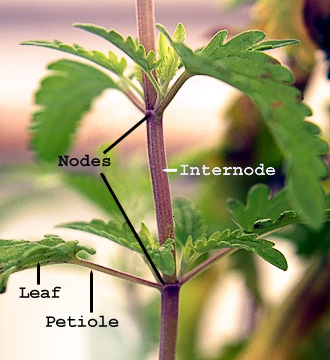
plant stem
structural axis of a vascular plant, supporting leaves, flowers and fruits

pollen
thumb|Colorized scanning electron microscope image of pollen grains from a variety of common plants: sunflower (Helianthus annuus), morning glory ([[Ipomoea purpurea), prairie hollyhock (Sidalcea malviflora), oriental lily (Lilium auratum), evening primrose (Oenothera fruticosa), and castor bean (Ricinus communis).]]
thumb|Pollen tube diagram
.jpg)
tuber
thumb|upright=1.2|Ulluku (Ullucus tuberosus) tubers

vacuole
thumb|300x300px|Plant cell structure
thumb|300x300px|Animal cell structure
A vacuole () is a membrane-bound organelle which is present in plant and fungal cells and some protist, animal, and bacterial cells. Vacuoles are essentially enclosed compartments which are filled with water containing inorganic and organic molecules including enzymes in solution, though in certain cases they may contain solids which have been engulfed. Vacuoles are formed by the fusion of multiple membrane vesicles and are effectively just larger forms of these. The organelle has no basic shape or size; its structure v

stamen
thumb|right|250px|Stamens of a Hippeastrum with white filaments and prominent anthers carrying [[pollen]]

rhizome
thumb|An antique spurge plant, Euphorbia antiquorum, sending out white rhizomes

xylem
thumb|323x323px|Xylem (blue) transports water and minerals from the roots upwards.|alt=
phloem
thumb|upright=1.2|Phloem (orange) transports products of photosynthesis to various parts of the plant.|alt=
thumb|Cross-section of a flax plant stem:

stomata
thumb|Stoma in a tomato leaf shown via colorized [[scanning electron microscope image]]
thumb|A stoma in horizontal cross section
thumb|The underside of a leaf. In this species (Tradescantia zebrina), the guard cells of the stomata are green because they contain chlorophyll while the epidermal cells are chlorophyll-free and contain red pigments.

meristem
thumb|Tunica-corpus model of the apical meristem (growing tip). The epidermal (L1) and subepidermal (L2) layers form the outer layers called the Tunica (biology)|tunica. The corpus (L3) will form the vascular and stem tissues. Cells in the outer layers divide in a sideways fashion relative to each other, which keeps these layers distinct, whereas the lower layer divides in a more random fashion in all directions.|right

gametophyte
thumb|360px|Diagram showing the alternation of generations between a diploid sporophyte (bottom) and a haploid gametophyte (top)

cotyledon
thumb|Cotyledon from a Judas-tree (Cercis siliquastrum, a dicot) seedling
thumb|Comparison of a monocot and dicot sprouting. The visible part of the monocot plant (left) is actually the first true leaf produced from the meristem; the cotyledon itself remains within the seed.

ovule
thumb|Location of ovules inside a Helleborus foetidus flower

plant cell
eukaryotic cell present in green plants

plant anatomy
study of the internal structure of plants
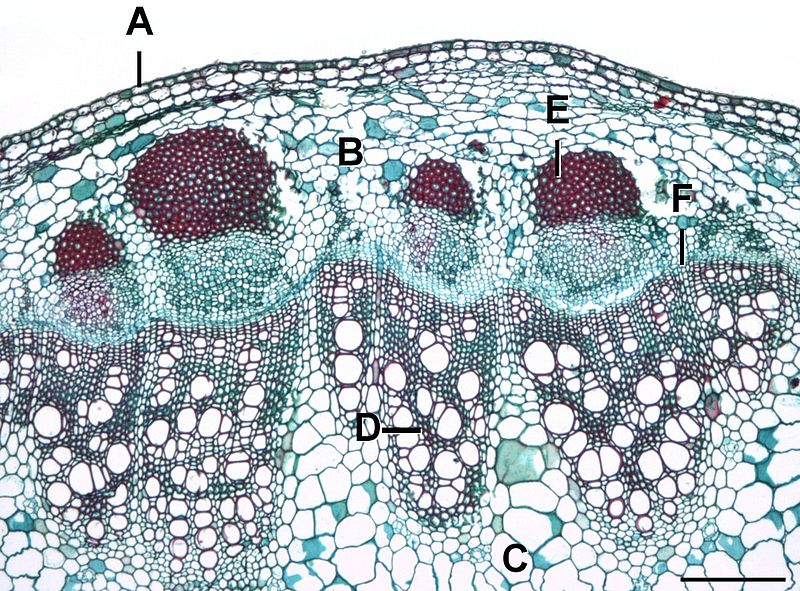
vascular cambium
part of a plant
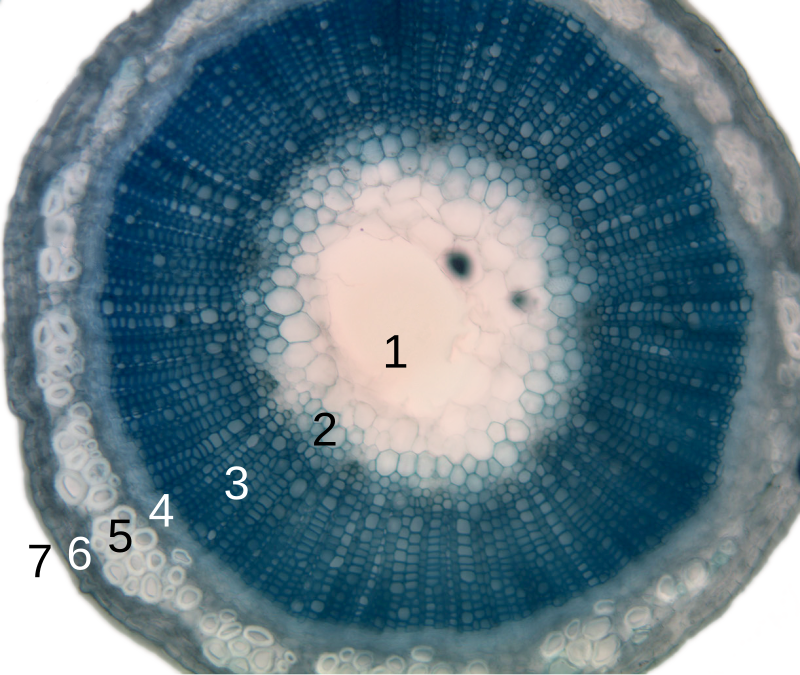
epidermis
outermost single layer of cells in plants. the outer protective layer of cells of a plant, which may be thickened by a cuticle

sporangium
A sporangium (from Late Latin, ; : sporangia) is an enclosure in which spores are formed. It can be composed of a single cell or can be multicellular. Virtually all plants, fungi, and many other groups form sporangia at some point in their life cycle. Sporangia can produce spores by mitosis, but in land plants and many fungi, sporangia produce genetically distinct haploid spores by meiosis.
vascular tissue
complex conducting tissue in plants

perianth
thumb|upright=1.4|A mature flower. In this example, the perianth is separated into a calyx (sepals) and corolla (petals)

thylakoid
250px|thumb|Thylakoids (dark green) inside a chloroplast
Thylakoids are membrane-bound compartments inside chloroplasts and cyanobacteria. They are the site of the light-dependent reactions of photosynthesis. Thylakoids consist of a thylakoid membrane surrounding a thylakoid lumen. Chloroplast thylakoids frequently form stacks of disks referred to as grana (singular: granum). Grana are connected by intergranal or stromal thylakoids, which join granum stacks together as a single functional compartment.

archegonium
right|thumb|240px|Diagram of archegonium anatomy
An archegonium (: archegonia), from the Ancient Greek ἀρχή ("beginning") and γόνος ("offspring"), is a multicellular structure or organ of the gametophyte phase of certain plants, producing and containing the ovum or female gamete. The corresponding male organ is called the antheridium. The archegonium has a long neck canal or venter and a swollen base. Archegonia are typically located on the surface of the plant thallus, although in the hornworts they are embedded.
__TOC__

aril
thumb|right|An aril that surrounds the nutmeg seed is used as a [[spice called mace]]
thumb|right|The edible white aril of Litchi chinensis is sometimes called an arillode or false aril. It grows partly from the funiculus and partly from the [[integument of the seed.]]
rhizoid
Rhizoids are protuberances that extend from the lower epidermal cells of bryophytes and algae. They are similar in structure and function to the root hairs of vascular land plants. Similar structures are formed by some fungi. Rhizoids may be unicellular or multicellular.

plasmodesma
thumb|upright=1.2|The structure of a primary plasmodesma. CW=cell wall, CA=[[callose, PM=plasma membrane, ER=endoplasmic reticulum, DM=desmotubule, Red circles=actin, Purple circles and spokes=other unidentified proteins]]

abscission
thumb|300px|Leaf litter on the forest floor. Annual autumn leaf drop in [[temperate zones is caused by the abscission of the mature leaves from the growth season in response to the approach of cold winter weather.]]

antheridium
alt=Here is a diagram of antheridium structure in a liverwort, which is representative of most antheridia structures throughout species. It is a thin cellular layer that encapsulates many sperm cells.|thumb|General structure of antheridia. Antheridia consist of a thin cellular layer that holds many sperm inside. Here, the diagram of a liverwort antheridium is shown.
plant cuticle
protecting film covering the epidermis of leaves, young shoots and other aerial plant organs
peduncle
the stalk of a plant bearing an inflorescence or solitary flower

tracheid
thumb|220px|In radial section, two tracheids of a coniferous wood species are shown. A series of bordered Pit (botany)|pits are also appearing in each tracheid.
thumb|150px|A tracheid of oak shows pits along the walls. It has no perforation plates. Angiosperms have both tracheids and vessel elements.
vascular bundle
a longitudinal strand of vascular tissue in the stems and leaves of higher plants
%20(20065769024).jpg)
suberin
thumb

sorus
thumb|The underside of a fertile frond of Dicksonia antarctica. Each circular brown structure is an individual sorus.
cork cambium
part of a plant

phylloclade
thumb|Flower clusters along the edge of the phylloclades/cladodes of Phyllanthus angustifolius
Phylloclades and cladodes are flattened, photosynthetic shoots, which are usually considered to be modified branches. The two terms are used either differently or interchangeably by different authors. Phyllocladus, a genus of conifer, is named after these structures. Phylloclades/cladodes have been identified in fossils dating from as early as the Permian.

pith
250px|right|thumb|Sambucus|Elder shoot cut longitudinally to show the broad, solid pith (rough textured, white) inside the wood (smooth, yellow tinged). Scale in millimeters.
250px|right|thumb|Walnut shoot cut longitudinally to show the chambered pith found in this genus. Scale in millimeters.
Pith, or medulla, is a tissue in the stems of vascular plants. Pith is composed of soft, spongy parenchyma cells, which in some cases can store starch. In eudicotyledons, pith is located in the center of the stem. In monocotyledons, it extends only into roots. The pith is encircled by a ring of xylem; th

Cutin
thumb|Scheme of biosynthesis of cutin and lignin

hydathode
thumb|A section of hydathode in the leaf of Primula sinensis ([[Brockhaus and Efron Encyclopedic Dictionary)]]
A hydathode is a type of pore, commonly found in vascular plants, that secretes water through pores in the epidermis or leaf margin, typically at the tip of a tooth or serration. These structures help plants regulate fluid balance and filter nutrients, functioning somewhat like tiny kidneys in leaves. Hydathodes are found in a wide variety of plants, from ferns to flowering trees, but can also serve as entry points for harmful bacteria.
root hair
part of a plant. any of the hollow hairlike outgrowths of the outer cells of a root, just behind the tip, that absorb water and salts from the soil
ground tissue
ground tissue is one of three main tissue systems: protective, ground, and vascular, each tissue system has a different role and functionality inside plant tissues
root cap
a group of cells at the tip of the root, rubbed off by the motion of the root tip through the soil and constantly renewed from within
stele
botanical term for vascular cylinder

hypocotyl
thumb|Diagram of Scouler's willow (Salix scouleriana) seed, indicating position of hypocotyl.
The hypocotyl (short for "hypocotyledonous stem", meaning "below seed leaf") is the stem of a germinating seedling, found below the cotyledons (seed leaves) and above the radicle (root).
vessel element
one of the cell types found in xylem, the water conducting tissue of plants; typically found in angiosperms but absent from most gymnosperms such as conifers; main feature distinguishing the "hardwood" of angiosperms from the "softwood" of conifers
bast fibre
fibre obtained from the phloem tissues of many plants, used for textiles, rope, and paper

hardwood
250px|right|thumb|Beech is a popular hardwood
endocarp
REDIRECT Fruit (plant structure)#Endocarp
secondary growth
Lateral growth of a plant axis (shoot axis or root) that is an increase in thickness resulting from formation of secondary vascular tissues by the vascular cambium.
casparian strip
thin tissue surrounding a stele

apoplast
thumb|300px|The apoplastic and symplastic pathways
The apoplast is the network of cell walls, intercellular spaces, and xylem vessels in plants that allows the movement of water, ions, and small molecules outside the plasma membrane. It forms a continuous extracellular pathway, distinct from the symplast, which involves cytoplasmic transport through plasmodesmata. Water and solutes moving via the apoplast bypass the selective control of the plasma membrane, allowing rapid bulk flow across tissues.

phytolith
Phytoliths (from Greek, "plant stone") are rigid, microscopic mineral deposits found in some plant tissues, often persisting after the decay of the plant. Although some use "phytolith" to refer to all mineral secretions by plants, it more commonly refers to siliceous plant remains. Phytoliths come in varying shapes and sizes. The plants which exhibit them take up dissolved silica from the groundwater, whereupon it is deposited within different intracellular and extracellular structures of the plant.
symplast
thumb|300px|The apoplastic and symplastic pathways

seta
In biology, setae (; seta ; ) are any of a number of different bristle- or hair-like structures on living organisms.
Sieve tube element
elongated cell in the phloem tissue of flowering plants

chalaza
The chalaza (; ; : chalazas or chalazae ) is a structure inside bird eggs and plant ovules. It attaches or suspends the yolk or nucellus within the larger structure.

Coleoptile
thumb|Schematic image of wheat coleoptile (above) and flag leaf (below)
thumb|Young seedling breaks through the tip of the coleoptile (left). The majority of the tissue remains ungreening throughout the lifecycle (right).
Coleoptile is the pointed protective sheath covering the emerging shoot in monocotyledons such as grasses in which few leaf primordia and shoot apex of monocot embryo remain enclosed. The coleoptile protects the first leaf as well as the growing stem in seedlings and eventually, allows the first leaf to emerge. Coleoptiles have two vascular bundles, one on either side. Unlike
.jpg)
caudex
thumb|The caudex of a tree fern resembles the trunk of a woody plant, but has a different structure.
thumb|The caudex of Jatropha cathartica is [[pachycaul, with thickening that provides water storage.]]
thumb|Certain cacti can develop a caudex too; here Acanthocereus maculatus
A caudex (: caudices) of a plant is a stem, but the term is also used to mean a rootstock and particularly a basal stem structure from which new growth arises.

sclereid
thumb|Fresh mount of a sclereid in a banana fruit
Sclereids are a reduced form of sclerenchyma cells with highly thickened, lignified cellular walls that form small bundles of durable layers of tissue in most plants. The presence of numerous sclereids form the cores of apples and produce the gritty texture of guavas.