Category
page 1Rodent-carried diseases

plague
specific contagious and frequently fatal human disease caused by Yersinia pestis

leptospirosis
.jpg)
Salmonella
Salmonella is a genus of rod-shaped, (bacillus) Gram-negative bacteria of the family Enterobacteriaceae. The two known species of Salmonella are Salmonella enterica and Salmonella bongori. S. enterica is the type species and is further divided into six subspecies that include over 2,650 serotypes. Salmonella was named after Daniel Elmer Salmon (1850–1914), an American veterinary surgeon.

bubonic plague
human and animal disease

Mycoplasma
Mycoplasma is a genus of bacteria that, like the other members of the class Mollicutes, lack a cell wall (peptidoglycan) around their cell membrane. The absence of peptidoglycan makes them naturally resistant to antibiotics such as the beta-lactam antibiotics that target cell wall synthesis. They can be parasitic or saprotrophic.

Toxoplasma gondii
obligate intracellular parasitic protozoan that causes toxoplasmosis

trichinosis

hepatitis E
an inflammation of the liver caused by infection with the hepatitis E virus
endocarditis
Endocarditis is an inflammation of the inner layer of the heart, the endocardium. It usually involves the heart valves. Other structures that may be involved include the interventricular septum, the chordae tendineae, the mural endocardium, or the surfaces of intracardiac devices. Endocarditis is characterized by lesions, known as vegetations, which are masses of platelets, fibrin, microcolonies of microorganisms, and scant inflammatory cells. In the subacute form of infective endocarditis, a vegetation may also include a center of granulomatous tissue, which may fibrose or calcify.

Orthohantavirus
Orthohantavirus is a genus of viruses that includes all hantaviruses (family Hantaviridae) that cause disease in humans, but are not spread by humans. Orthohantaviruses, hereafter referred to as hantaviruses, are naturally found primarily in rodents. In general, each hantavirus is carried by one rodent species and each rodent that carries a hantavirus carries one hantavirus species. Hantaviruses in their natural reservoirs usually cause an asymptomatic, persistent infection. In humans, however, hantaviruses cause two diseases: hemorrhagic fever with renal syndrome (HFRS) and hantavirus pulmona

Q fever
disease caused by infection with Coxiella burnetii
Lassa fever
viral disease

Oriental rat flea
species of fleas
epidemic typhus
human disease

Flavivirus
Orthoflavivirus (Flavivirus prior to 2023; common name orthoflavivirus, orthoflaviviral or orthoflaviviruses) is a genus of positive-strand RNA viruses in the family Flaviviridae. The genus includes the West Nile virus, dengue virus, tick-borne encephalitis virus, yellow fever virus, Zika virus and several other viruses which may cause encephalitis, as well as insect-specific flaviviruses (ISFs) such as cell fusing agent virus (CFAV), Palm Creek virus (PCV), and Parramatta River virus (PaRV). While dual-host flaviviruses can infect vertebrates as well as arthropods, insect-specific flaviviruse
hemorrhagic fever with renal syndrome
Group of clinically similar illnesses caused by species of hantaviruses
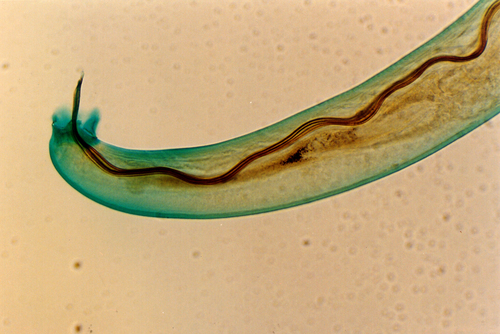
Angiostrongylus cantonensis
species of worm
Cryptosporidium parvum
species of apicomplexan parasitic alveolate
hantavirus pulmonary syndrome
human disease
rat-bite fever
human disease
lymphocytic choriomeningitis
rodent-borne viral infectious disease that presents as aseptic meningitis, encephalitis or meningoencephalitis

hymenolepiasis
Hymenolepiasis is infestation by one of two species of tapeworm: Hymenolepis nana or H. diminuta. Alternative names are dwarf tapeworm infection and rat tapeworm infection. The disease is a type of helminthiasis which is classified as a neglected tropical disease.
angiostrongyliasis
Bolivian hemorrhagic fever
hemorrhagic fever and zoonotic infectious disease originating in Bolivia after infection by Machupo virus

Sarcocystis
Sarcocystis is a genus of protozoan parasites, with many species infecting mammals, reptiles and birds. Its name is derived from Greek sarx = flesh and kystis = bladder.
Argentine hemorrhagic fever
human disease
Puumala orthohantavirus
human virus discovered in 1980
Argentinian mammarenavirus
species of virus
Venezuelan hemorrhagic fever
Human disease
Hantaan orthohantavirus
species of virus
Andes orthohantavirus
species of virus
Dobrava-Belgrade orthohantavirus
Viral disease

Streptobacillus
Streptobacillus is a genus of fastidious microaerophilic Gram-negative bacteria, which grow in culture as rods in chains.
Haverhill fever
Human disease
Lujo virus
species of virus
La Crosse encephalitis
Human disease
Tula orthohantavirus
species of virus
Sangassou orthohantavirus
Virus species