Category
page 1Rosaceae genera

Fragaria
Fragaria () is a genus of flowering plants in the rose family, Rosaceae, commonly known as strawberries for their edible fruits. There are more than 20 described species and many hybrids and cultivars. The most common strawberries grown commercially are cultivars of the garden strawberry, a hybrid known as Fragaria × ananassa. Strawberries have a taste that varies by cultivar, and ranges from quite sweet to rather tart. Strawberries are an important commercial fruit crop, widely grown in all temperate regions of the world.

Crataegus

Malus
Malus ( or ) is a genus of about 32–57 species of small deciduous trees or shrubs in the family Rosaceae, including the domesticated orchard apple, crab apples (sometimes known in North America as crabapples) and wild apples.

Sorbus
Sorbus is a genus of over 100 species of trees and shrubs in the rose family, Rosaceae. Species of Sorbus (s.str.) are commonly known as rowan or mountain-ash. The genus used to include species commonly known as whitebeam, chequer tree and service tree that are now classified in other genera (see below). The genus Sorbus, as currently circumscribed, includes only the pinnate leaved species of former subgenus Sorbus.

Prunus
thumb|Prunus sp.
Prunus is a genus of flowering trees and shrubs from the family Rosaceae. The genus includes plums, cherries, peaches, nectarines, apricots and almonds (collectively stonefruit). The genus has a cosmopolitan distribution, being native to the temperate regions of North America, the neotropics of South America, and temperate and tropical regions of Eurasia and Africa, There are about 340 accepted species .

Rubus
Rubus is a large and diverse genus of flowering plants in the rose family, Rosaceae, subfamily Rosoideae, most commonly known as brambles. Fruits of various species are known as raspberries, blackberries, dewberries, and bristleberries. It is a diverse genus, with the estimated number of Rubus species varying from 250 to over 1000, found across all continents except Antarctica.

Amelanchier
Amelanchier ( ), also known as shadbush, shadwood or shadblow, serviceberry or sarvisberry (or just sarvis), juneberry, saskatoon, sugarplum, wild-plum or chuckley pear, is a genus of about 20 species of deciduous-leaved shrubs and small trees in the rose family (Rosaceae).

Cotoneaster
Cotoneaster is a genus of flowering plants in the rose family, Rosaceae, native to the Palaearctic region (temperate Asia, Europe, north Africa), with a strong concentration of diversity in the genus in the mountains of southwestern China and the Himalayas. They are related to hawthorns (Crataegus), firethorns (Pyracantha), photinias (Photinia), and rowans (Sorbus).

Alchemilla
Alchemilla is a genus of herbaceous perennial plants in the family Rosaceae, with the common name '''lady's mantle' applied generically as well as specifically to Alchemilla mollis when referred to as a garden plant. The plant used as a herbal tea or for medicinal usage such as gynaecological disorders is Alchemilla xanthochlora'' or in Middle Europe the so-called common lady's mantle Alchemilla vulgaris. There are about 700 species, the majority native to cool temperate and subarctic regions of Europe and Asia, with a few species native to the mountains of Africa and the Americas.
%20-%20Ystad-2021.jpg)
Aronia
thumb|Aronia berries.
Aronia is a genus of deciduous shrubs, the chokeberries, in the family Rosaceae native to eastern North America and most commonly found in wet woods and swamps. The genus Aronia is considered to have 3 species. The most common and widely used is Aronia melanocarpa (black chokeberry) which emerged from Eastern North America. The lesser known Aronia arbutifolia (red chokeberry) and the hybrid form of the above mentioned species called Aronia prunifolia (purple chokeberry) were first cultivated in Central and Eastern North America. In the eighteenth century, the first s

Potentilla
Potentilla is a genus containing over 500 species of annual, biennial and perennial herbaceous flowering plants in the rose family, Rosaceae.

Spiraea
Spiraea , sometimes spelled spirea in common names, and commonly known as meadowsweets or steeplebushes, is a genus of about 80 to 100 species of shrubs in the family Rosaceae. They are native to the temperate Northern Hemisphere, with the greatest diversity in eastern Asia.

Agrimonia
Agrimonia (from the Greek ), commonly known as agrimony, is a genus of 12–15 species of perennial herbaceous flowering plants in the family Rosaceae, native to the temperate regions of the Northern Hemisphere, with one species also in Africa. The species grow to between tall, with interrupted pinnate leaves, and tiny yellow flowers borne on a single (usually unbranched) spike.

Filipendula
Filipendula is a genus of 12 species of perennial herbaceous flowering plants in the family Rosaceae, native to the temperate regions of the Northern Hemisphere. Well-known species include meadowsweet (Filipendula ulmaria) and dropwort (Filipendula vulgaris), both native to Europe, and queen-of-the-forest (Filipendula occidentalis) and queen-of-the-prairie (Filipendula rubra), native to North America.

Sanguisorba
thumb|right|Sanguisorba hakusanensis

Geum
right|thumb|Geum urbanum flower
Geum , (Latinized Greek for "taste" referencing the roots of the plant) commonly called avens, is a genus of about 50 species of rhizomatous perennial herbaceous plants in the rose family and its subfamily Rosoideae which are widely distributed across Europe, Asia, North and South America, Africa, and New Zealand. They are closely related to Potentilla and Fragaria. From a basal rosette of leaves, they produce flowers on wiry stalks, in shades of white, red, yellow, and orange, in midsummer. Geum species are evergreen except where winter temperatures drop below

Mespilus
thumb|234px|Common medlar flowers
thumb|234px|Medlar fruit, cv. 'Nefle Precoce'

Chaenomeles
Chaenomeles is a genus of four species of deciduous spiny shrubs, usually 1–3 m tall, in the family Rosaceae. They are native to Eastern Asia. These plants are related to the quince (Cydonia oblonga) and the Chinese quince (Pseudocydonia sinensis), differing in the serrated leaves that lack fuzz, and in the flowers, borne in clusters, having deciduous sepals and styles that are connate at the base.

Pyracantha
Pyracantha (from Greek "fire" and "thorn", hence firethorn) is a genus of large, thorny evergreen shrubs in the family Rosaceae, with common names firethorn or pyracantha. They are native to an area extending from Southwest Europe east to Southeast Asia. They resemble and are related to Cotoneaster, but have serrated leaf margins and numerous thorns (Cotoneaster is thornless).

Dryas
genus of plants
.jpg)
Eriobotrya
Eriobotrya is a genus of flowering plants, mostly large evergreen shrubs and small trees, in the family Rosaceae, native to woodland in the Himalayas and East Asia. The loquat, E. japonica, is grown for its edible fruit.

Aruncus
Aruncus is a genus of clump-forming herbaceous perennial plants in the family Rosaceae. Botanical opinion of the number of species differs, with from one to four species accepted. They are closely related to the genera Filipendula and Spiraea, and are native to mountainous damp woodland in temperate regions of the Northern Hemisphere. Creamy white plumes of flowers are produced above veined and toothed leaflets.

Photinia
Photinia () is a genus of about 30 species of small trees and large shrubs, but the taxonomy has recently varied greatly, with the genera Heteromeles, Stranvaesia and Aronia sometimes included in Photinia.

Physocarpus
Physocarpus, commonly called ninebark, is a genus of flowering plants in the family Rosaceae, native to North America (most species) and northeastern Asia (one species).
Acaena
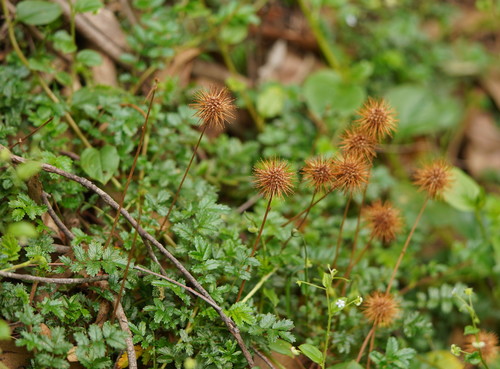
Acaena is a genus of about 60 species of mainly evergreen, creeping herbaceous perennial plants and subshrubs in the family Rosaceae, native mainly to the Southern Hemisphere, notably New Zealand, Australia and South America, but with a few species extending into the Northern Hemisphere, north to Hawaii (A. exigua) and California (A. pinnatifida).
Sorbaria
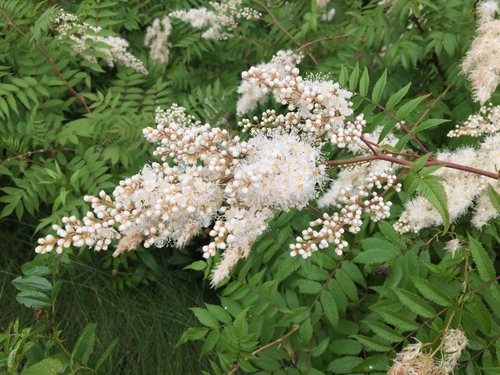
Sorbaria is a genus of around four species of flowering plants belonging to the family Rosaceae.

Aphanes
Aphanes (parsley-piert) is a genus of around 20 species in the rose family (Rosaceae), native to Europe, Asia and Australia. A 2003 study indicated that Aphanes may belong to the genus Alchemilla, commonly called lady's-mantle. They are slender, annual prostrate herbs, much-branched with deeply lobed leaves, pilose (covered with soft hair) and on short petioles. The tiny green to yellow flowers without petals grow in clusters in the denticulate leaflike stipules.

Polylepis
Polylepis is a genus comprising 44 recognized shrub and tree species, that are endemic to the mid- and high-elevation regions of the tropical Andes, up to above sea level. It is distributed from Venezuela to Patagonia. In Peru, plants in the genus are known as queñual, queuña, or queñoa; in Bolivia, as kewiña; in Ecuador, as yagual; and in Argentina, tabaquillo.
.jpg)
Rhaphiolepis
Rhaphiolepis ( or ) is a genus of about fifteen species of evergreen shrubs and small trees in the family Rosaceae, native to warm temperate and subtropical East Asia and Southeast Asia, from southern Japan, southern Korea and southern China, south to Thailand and Vietnam. In searching literature it is well to remember that the name commonly is misspelt "Raphiolepsis". The genus is closely related to Eriobotrya (loquats), so closely in fact, that members of the two genera have hybridised with each other; for example × Rhaphiobotrya, the "Coppertone loquat", is a hybrid of Eriobotrya deflexa X

Prinsepia
Prinsepia is a genus of trees in the Rosaceae. It bears fruit which looks like a cherry. The various species grow largely in Nepal, India, China, Bangladesh, and Taiwan, though P. sinensis is hardy in zone 4, to about .
thumb|left|Prinsepia utilis
The plant is named for James Prinsep, scholar, antiquarian, architect, secretary of the Asiatic Society in Calcutta, India, and member of the well-known Prinsep family of India, an Anglo-Indian family prominent in Indian affairs for several generations.
.jpg)
Neillia
Neillia is a genus of the botanical family Rosaceae. They are deciduous shrubs or subshrubs. They produce clusters of terminal or axillary flowers, and have dry dehiscent fruits. They are native to eastern and central Asia.

Osteomeles
Osteomeles is a genus of plants in the rose family, Rosaceae. They are shrubs native to eastern Asia, with compound leaves, opposite leaf arrangement, and small pome fruit. The fruits of all species in this genus are edible.

Comarum
Comarum is a genus of plants formerly included with the genus Potentilla ("typical cinquefoils"). It contains one or two species:
Comarum palustre – marsh cinquefoil, swamp cinquefoil
Comarum salesowianum (sometimes considered as the monotypic genus Farinopsis.)

Waldsteinia
Waldsteinia, the barren strawberries, is a genus of the rose family (Rosaceae). It contains about six species native to the temperate Northern Hemisphere. A number of species are cultivated as a ground cover in gardens, including Waldsteinia fragarioides from North America, Waldsteinia geoides from Europe, Waldsteinia lobata, and Waldsteinia ternata from Eurasia (from Central Europe to Siberia, China, and Japan).
Gillenia
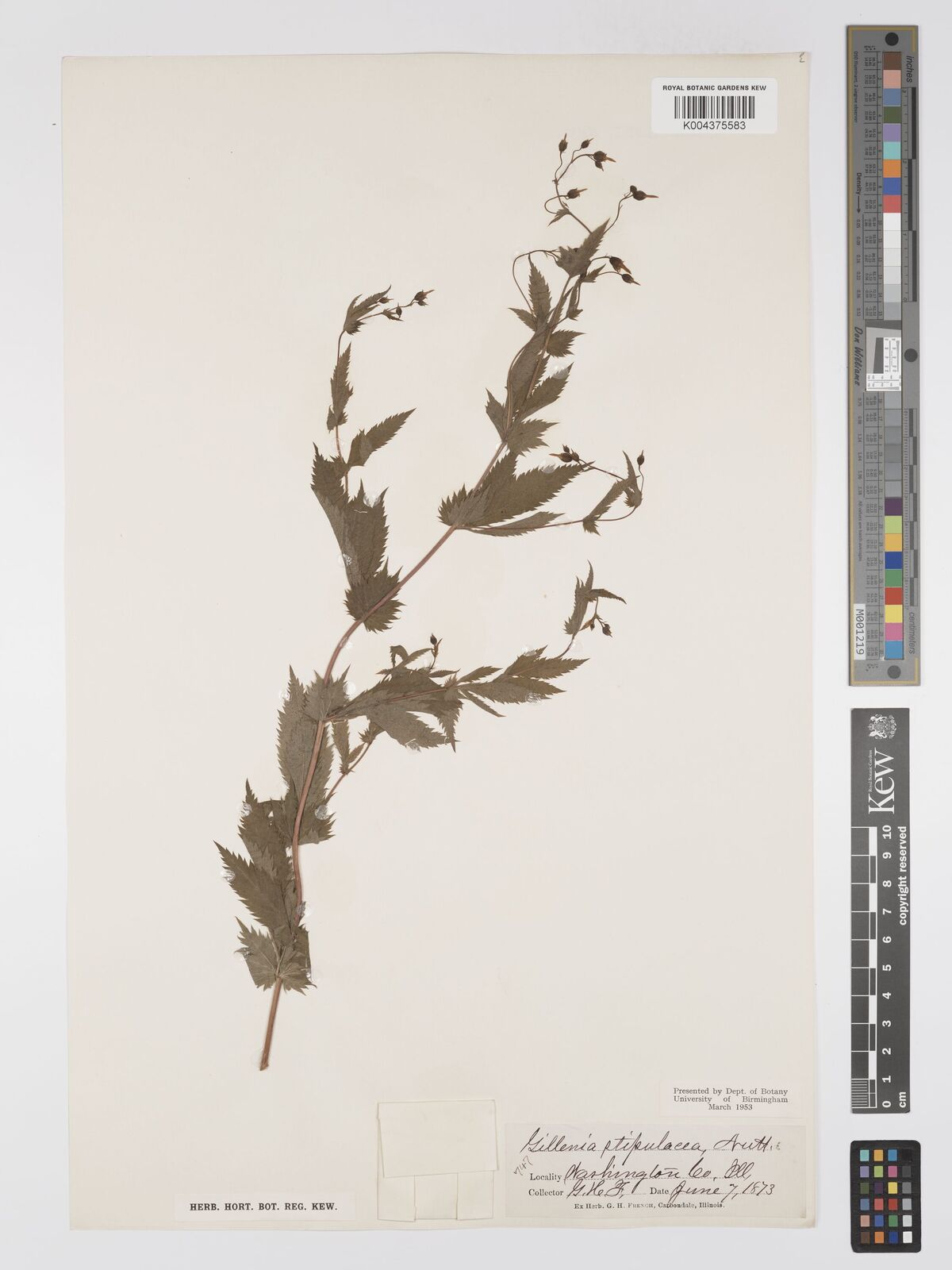
Gillenia (syn. Porteranthus) is a genus of two species of perennial herbs in the family Rosaceae, Gillenia stipulata and Gillenia trifoliata. Common names for plants in this genus include: '''Bowman's root, Indian-physic, American ipecac'. This genus is endemic to dry open woods with acidic soils in eastern North America. Both plants are subshrubs with exposed semi-woody branches and serrated leaves; the larger lower leaves are divided into palmately arranged leaflets. Plants bloom in May, June, or July; blooms are composed of five slender white petals which are loosely arranged and typically

Cercocarpus
Cercocarpus, commonly known as mountain mahogany, is a small genus of at least nine species of nitrogen-fixing flowering plants in the rose family, Rosaceae. They are native to the western United States and northern Mexico, where they grow in chaparral and semidesert habitats and climates, often at high altitudes. Several are found in the California chaparral and woodlands ecoregion.
Chamaerhodos
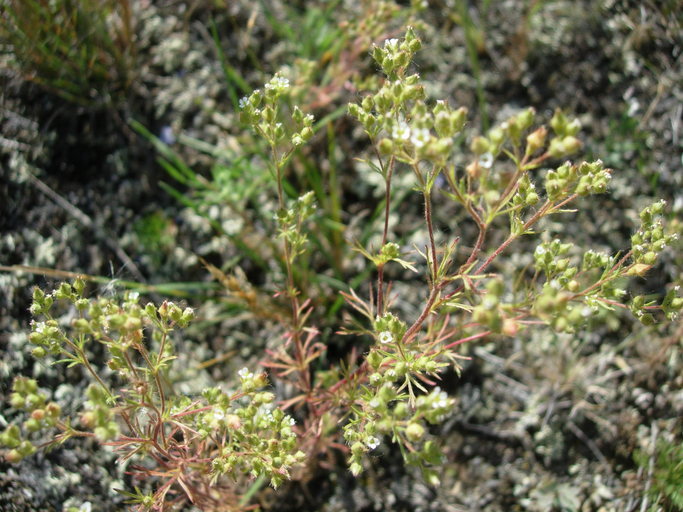
Chamaerhodos is a genus of plants in the family Rosaceae
Purshia
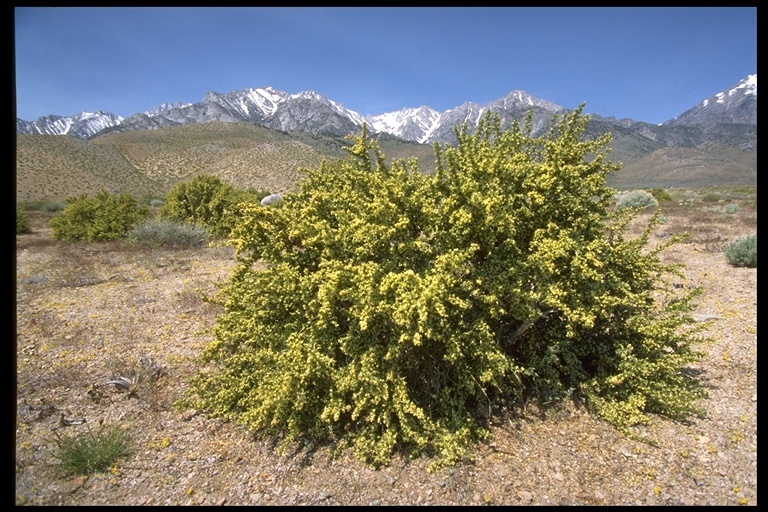
Purshia (bitterbrush or cliff-rose) is a small genus of 5–8 species of flowering plants in the family Rosaceae which are native to western North America.
Sibbaldia
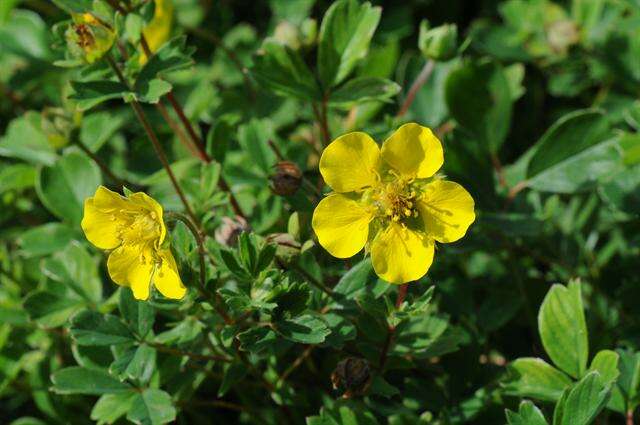
Sibbaldia is a genus of flowering plants of the family Rosaceae, with a circumpolar distribution, including the high Arctic. The type species is Sibbaldia procumbens. It is also in the Rosoideae subfamily.
Sibiraea
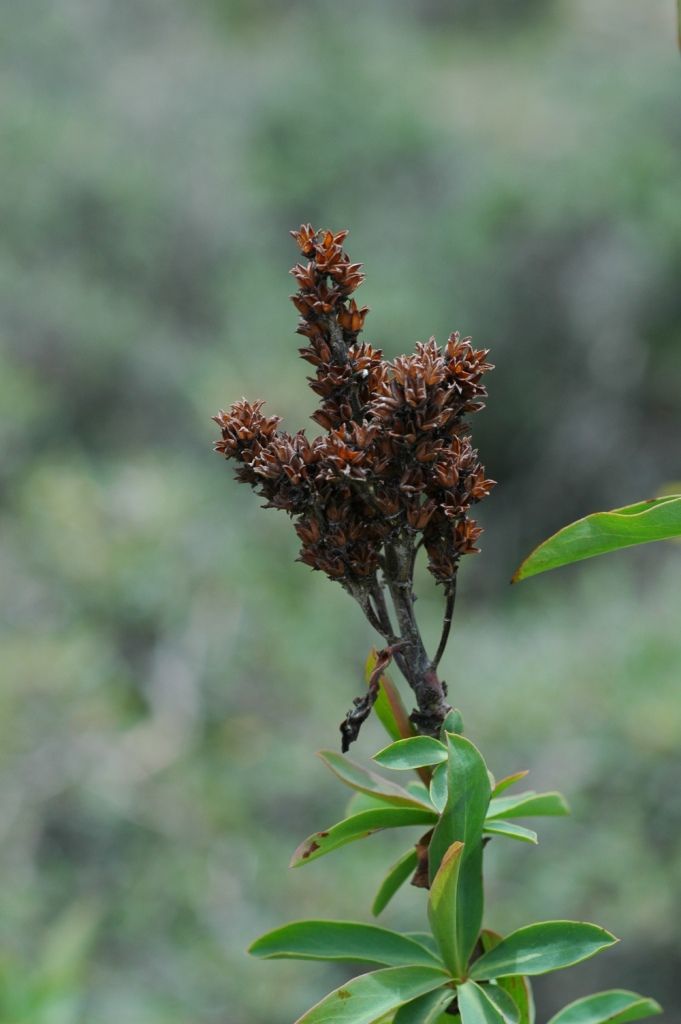
Sibiraea is a genus of flowering plants of the family Rosaceae, disjunctly found in the Balkans, Central Asia, and China. The type species is Sibiraea laevigata, which is occasionally cultivated as an ornamental garden plant.
Adenostoma
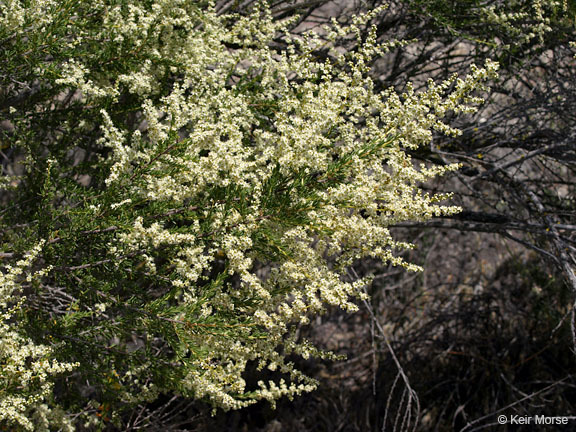
Adenostoma is a genus of shrubs in the rose family (Rosaceae) containing only two species, chamise (Adenostoma fasciculatum) and redshanks (Adenostoma sparsifolium). Both are native to the Californias.

Argentina
genus of plants
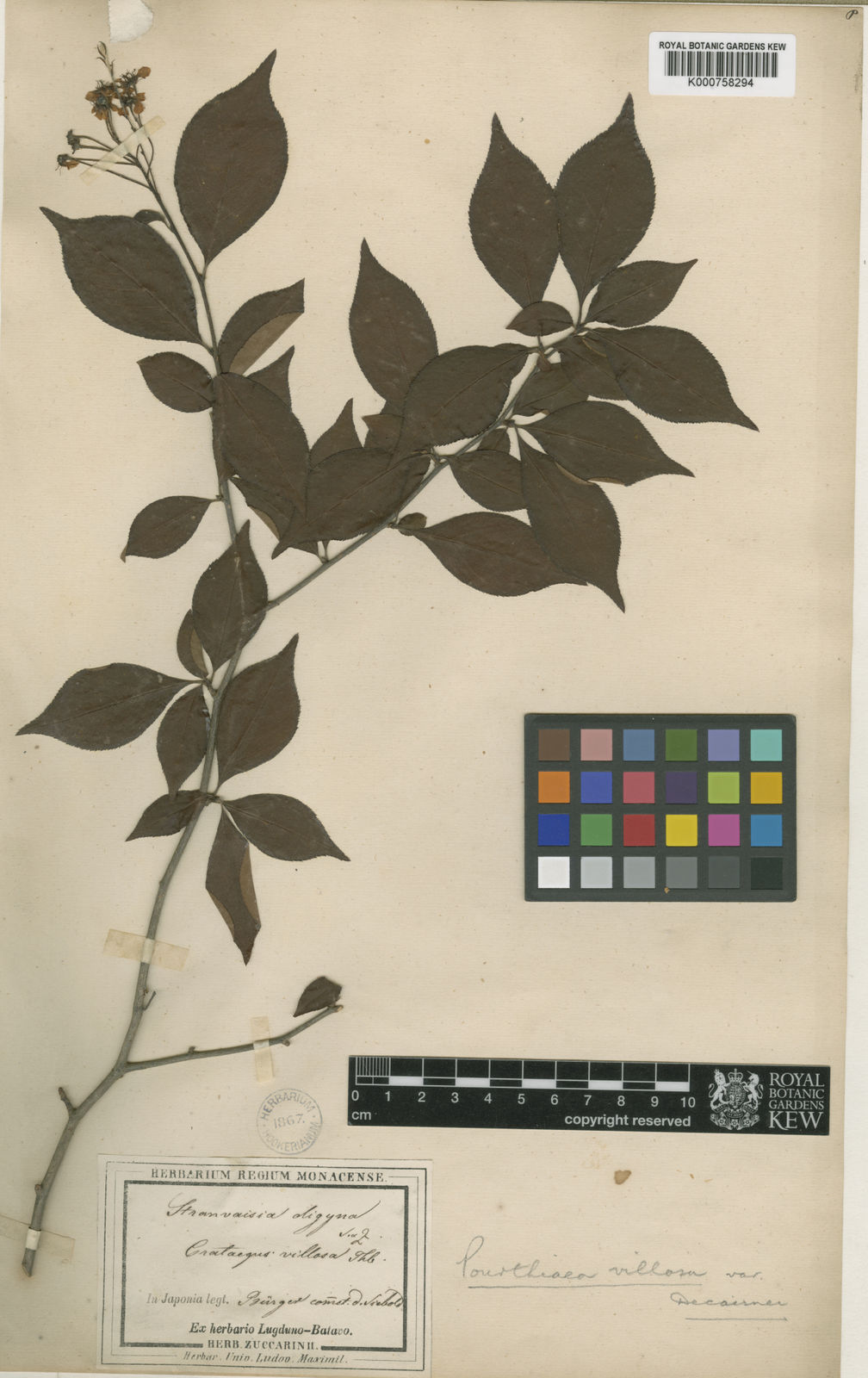
Stranvaesia
Stranvaesia is a genus of flowering plants in the family Rosaceae. Its morphology is so similar to Photinia that it has sometimes been included within that genus, but recent molecular data indicate that the two genera are distinct.
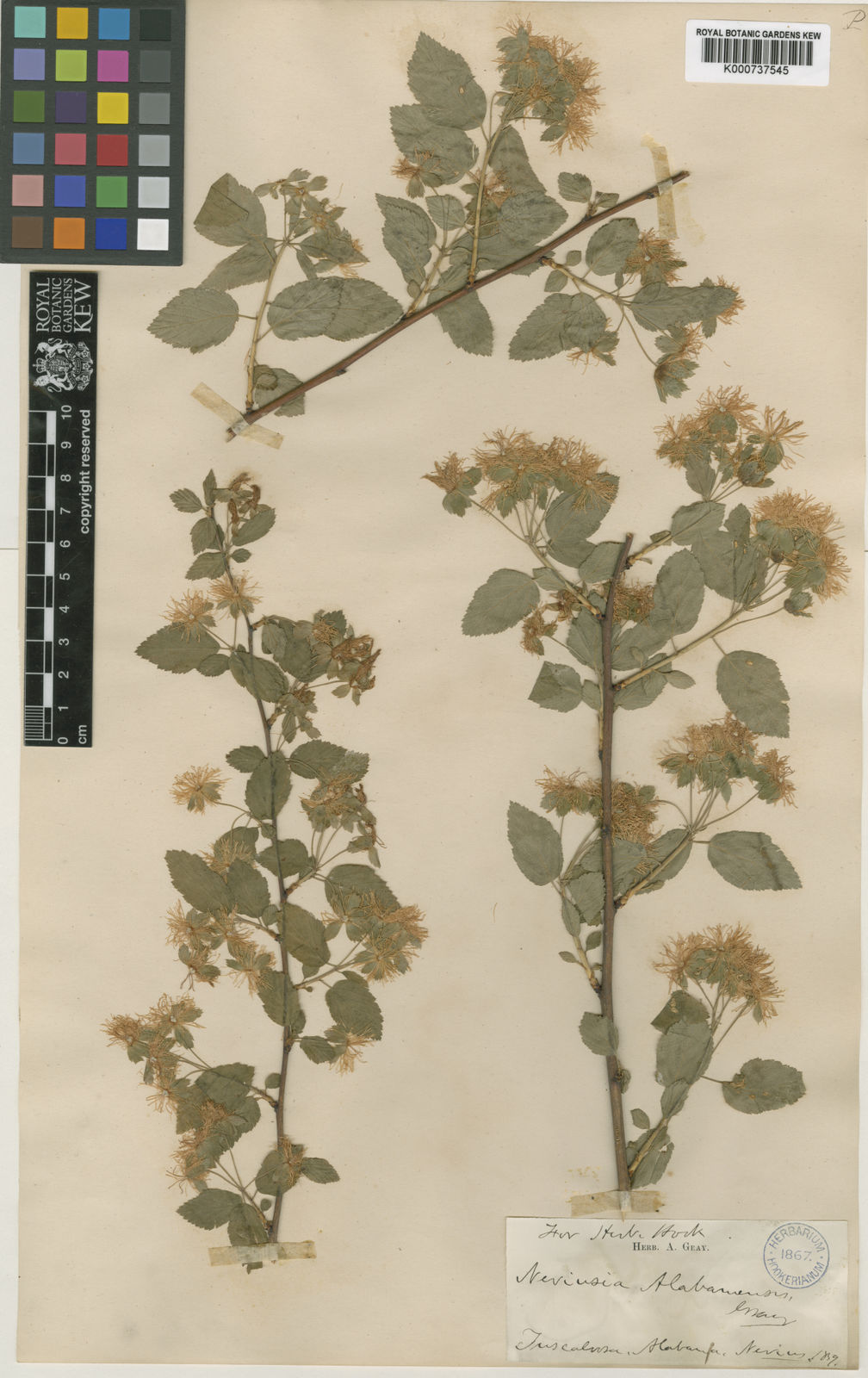
Neviusia
Neviusia, the snow-wreaths, is a genus of ornamental plants, which are native to the United States, containing two extant species and one extinct species known from fossil leaves. This genus is a rare example of a disjunct range occurring in North America. The type species, Neviusia alabamensis, occurs in several southeastern states, while second extant species, Neviusia cliftonii, is endemic to the Mt Shasta region of California, and the extinct species Neviusia dunthornei is found in shale deposits in the Okanagan Highlands of Washington and British Columbia. It is named for Episcopal priest
.jpg)
Dasiphora
Dasiphora is a genus of shrubs in the rose family Rosaceae, native to Asia, with one species D. fruticosa (shrubby cinquefoil), ranging across the entire cool temperate Northern Hemisphere. In the past, the genus was normally included in Potentilla as Potentilla sect. Rhopalostylae, but genetic evidence has shown it to be distinct.

Kageneckia
Kageneckia is a genus of flowering plant in family Rosaceae.
Holodiscus
Holodiscus is a genus of flowering plants in the family Rosaceae, native to the Americas, from southwestern British Columbia, Canada and the western United States south to Bolivia.
Chamaebatia
Chamaebatia, also known as mountain misery, is a genus of two species of aromatic evergreen shrubs endemic to California. Its English common name derives from early settlers' experience with the plant's dense tangle and sticky, strong-smelling resin. They are actinorhizal, non-legumes capable of nitrogen fixation through symbiosis with the actinobacterium, Frankia.
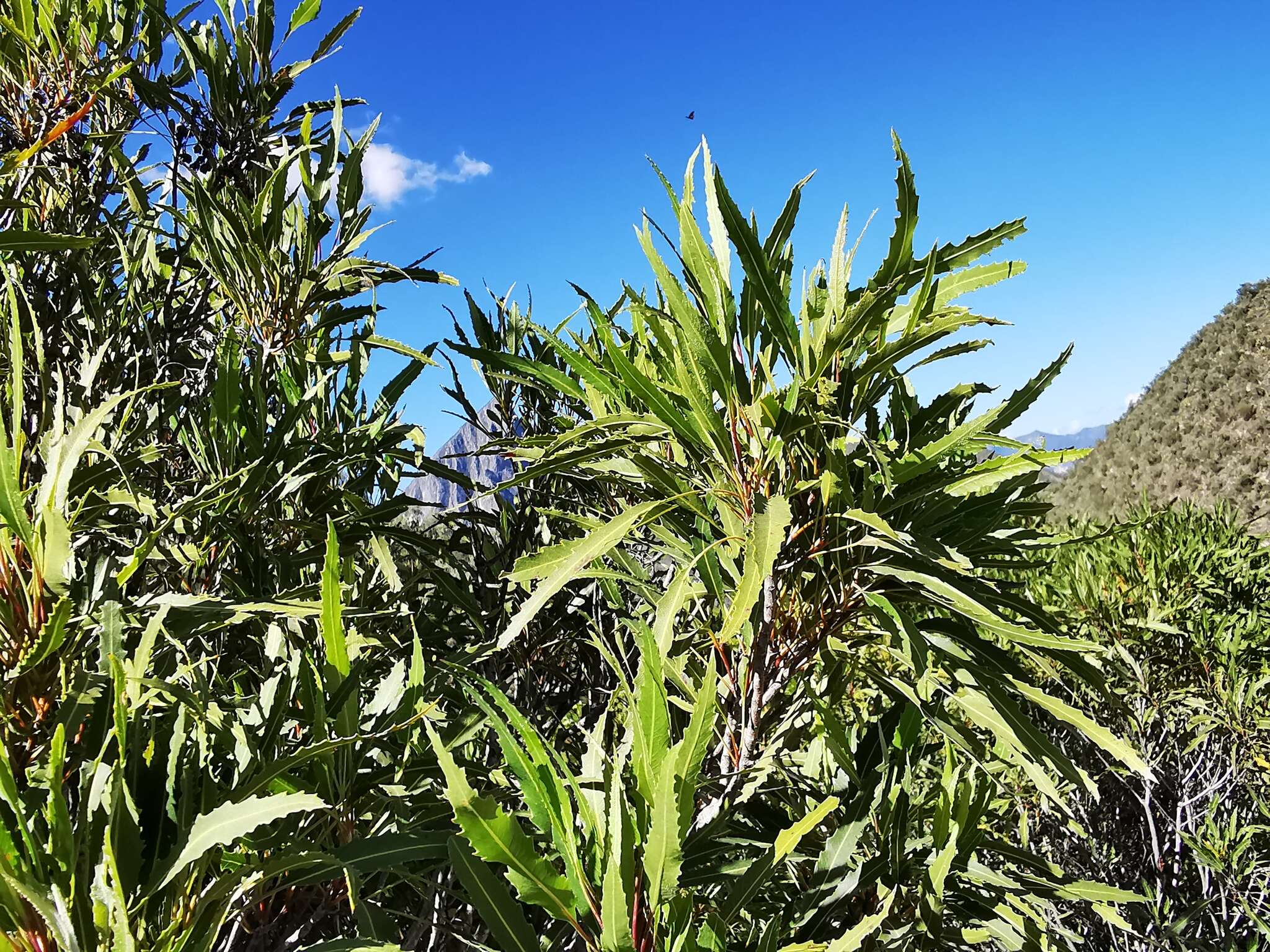
Vauquelinia
Vauquelinia, commonly known as the rosewoods, is a genus of the rose family, Rosaceae. It consists of four species of shrubs found in the southwestern United States and northern and central Mexico. The genus was named for French chemist Louis Nicolas Vauquelin (1763-1829). The nectar provided by these plants is commonly fed on by wasps such as Polistes instabilis.
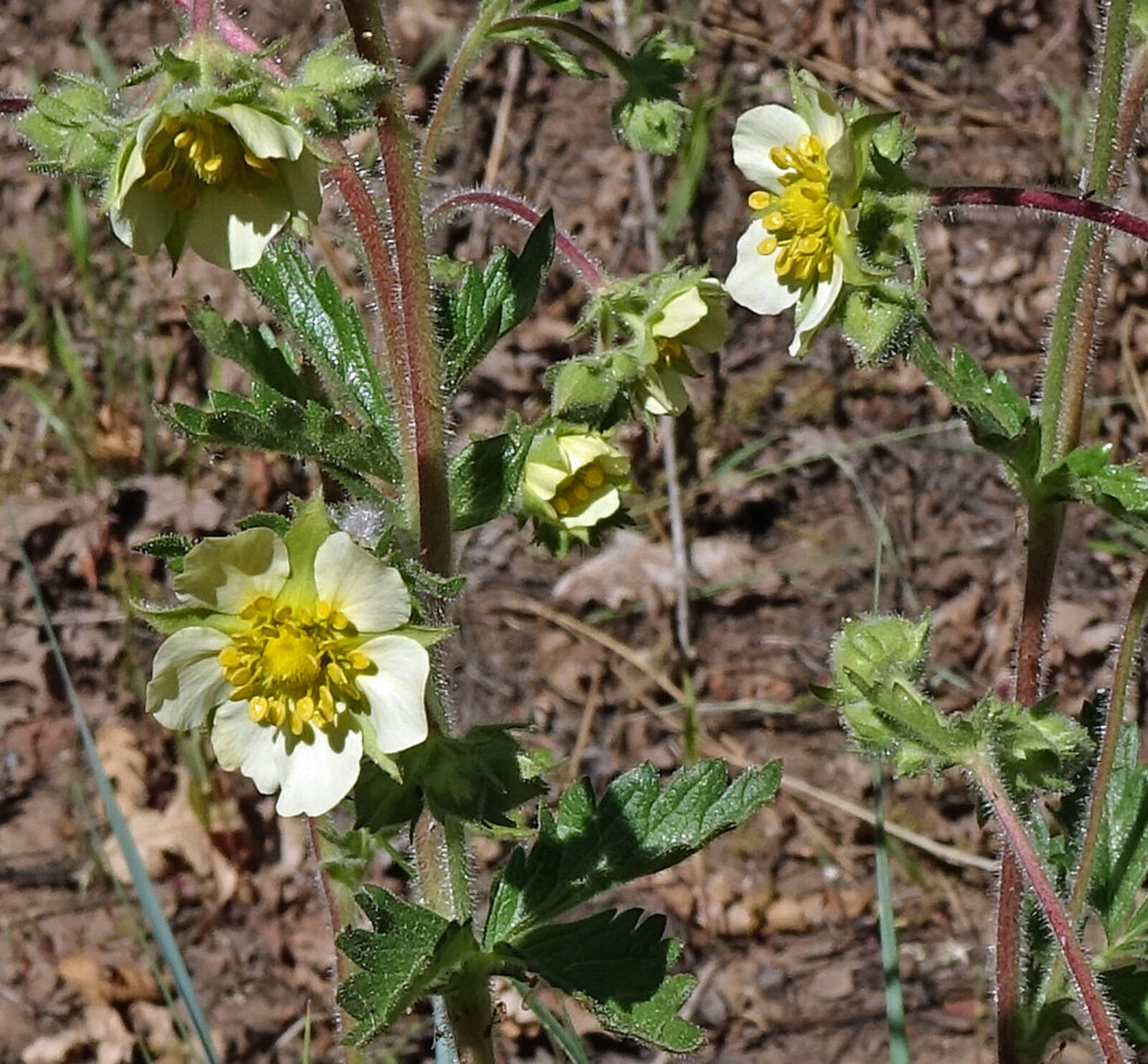
Drymocallis
Drymocallis is a genus of plants formerly (and sometimes still) included with the typical cinquefoils (Potentilla). It contains three species known or suspected to be protocarnivorous, but more cinquefoils might eventually be moved here:

Docynia
Docynia (栘𣐿属, yí yī shǔ) is a genus of flowering trees, evergreen or semi-evergreen, in the family Rosaceae. The fruit is a pome. The tree is endemic to Southeast Asia, including Myanmar where it grows wild and is sometimes cultivated.
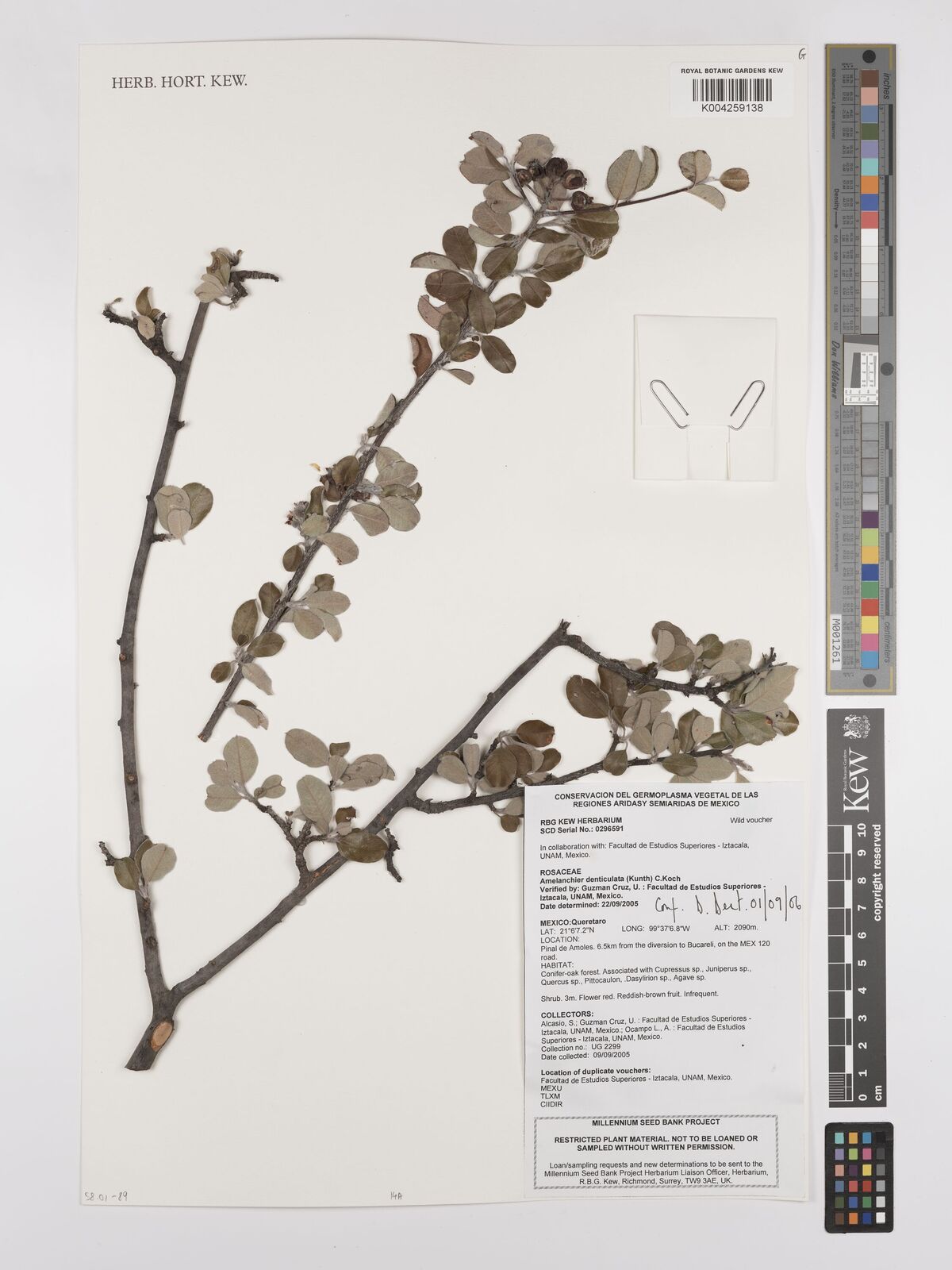
Malacomeles
Malacomeles, or false serviceberry, is a genus of flowering plants in the Rosaceae. It is most closely related to Amelanchier, Peraphyllum, Crataegus, and Mespilus.
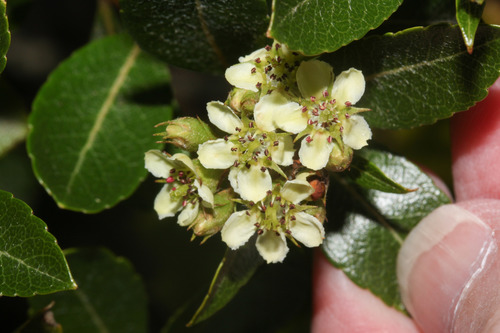
Hesperomeles
Hesperomeles is a genus of South American evergreen trees of the family Rosaceae that has sometimes been included along with Pyracantha in the genus Osteomeles. However, Osteomeles notably have compound leaves, and recent molecular phylogenetics suggests that Hesperomeles is only distantly related to Osteomeles, and is instead sister to the Crataegus—Mespilus clade.

Bencomia
Bencomia is a genus of four rare plant species, which grow as woody, branching shrubs with glossy, evergreen leaves and central, pendulous inflorescences with small flowers followed by densely packed, globular fruits. Mature heights range from 1 to 4 meters.

Petrophyton
Petrophytum (orth. var. Petrophyton) is a small genus of plants in the rose family known as the rock spiraeas or rockmats. These are low mat-forming shrubs which send up erect stems bearing spike inflorescences of flowers. The brushy flowers are white and have many stamens and hairy, thready pistils. Rockmats are native to western North America.
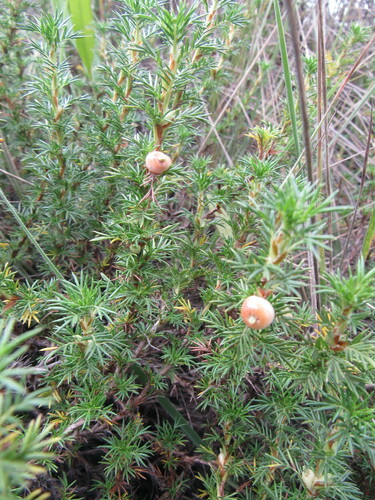
Margyricarpus
Margyricarpus is a genus of flowering plant in the family Rosaceae, native to South America.
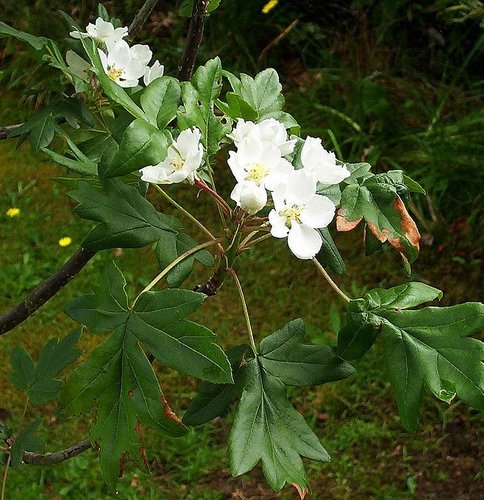
Eriolobus
Eriolobus is a former genus of plants in the family Rosaceae, native to Europe and the Middle East that is synonymized with Malus, the apples. Two species formerly included in it were Eriolobus florentinus, now Malus florentina and Eriolobus trilobatus, now Malus trilobata.
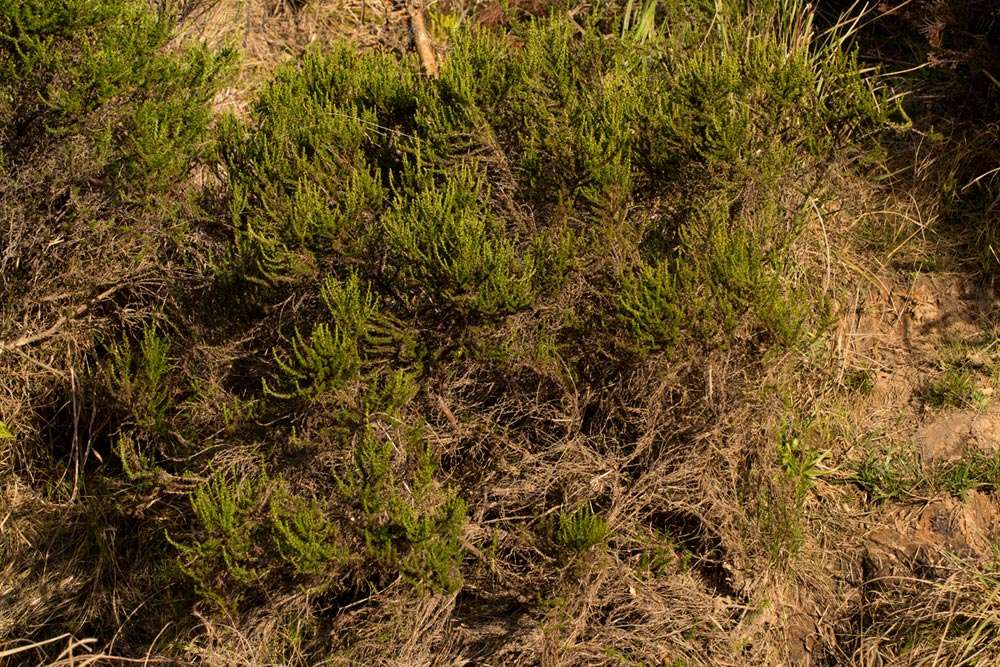
Cliffortia
Cliffortia, or Caperose is a genus of plants that has been assigned to the rose family, with currently 132 known species. Its species can be found in southern Africa, particularly in the Cape Floristic Region (CFR) where 124 of the species can be found, 109 of which are endemic to the CFR. Most species are ericoid shrubs, some small trees up to 5 m (16 ft) high, others more or less herbaceous groundcover. All are wind pollinated and have separate male and female flowers in the axils of the leaves, mostly individually, sometimes grouped, which may be on the same plant or on separate plants.

Marcetella
Marcetella is a genus of flowering plants belonging to the family Rosaceae.
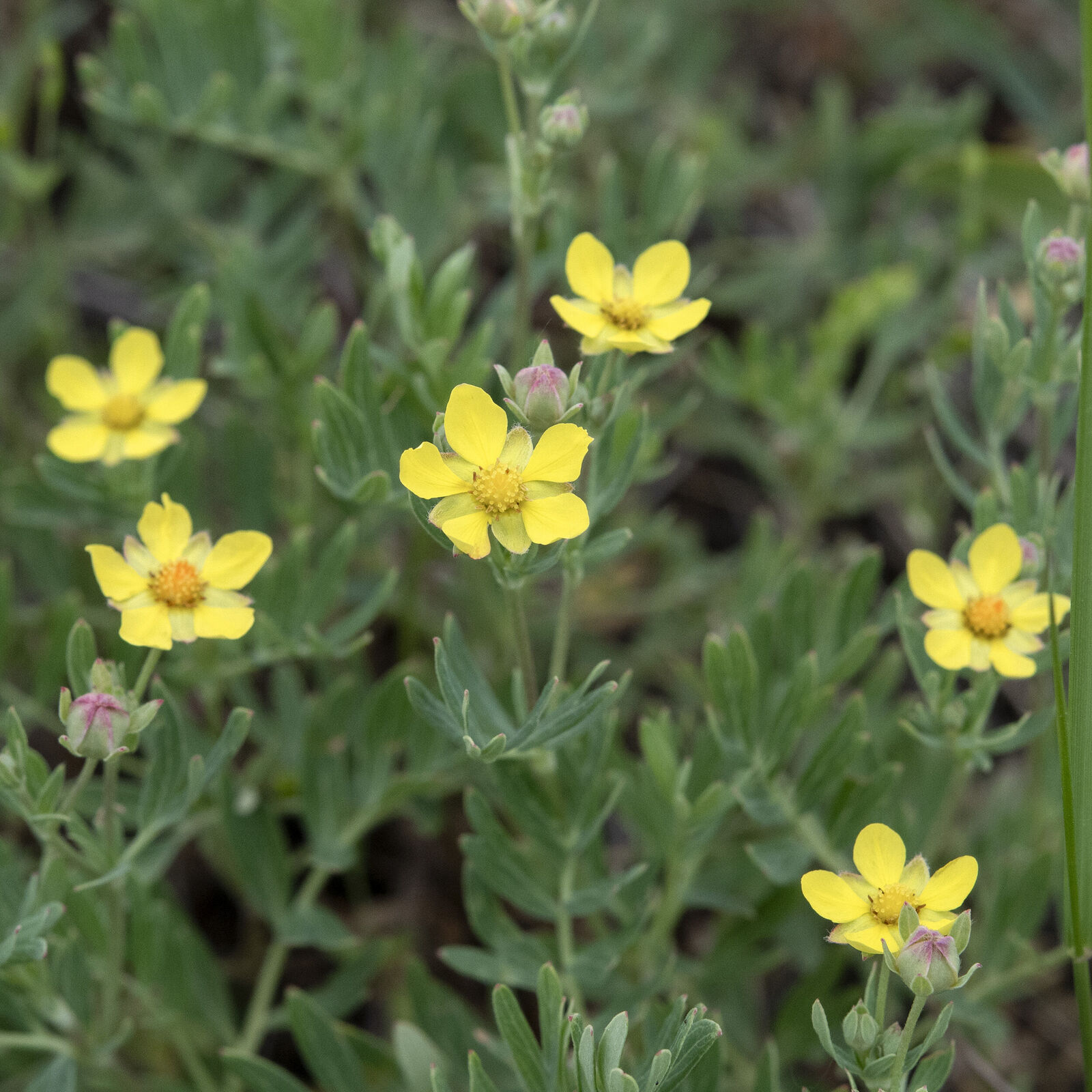
Sibbaldianthe
Sibbaldianthe is a genus of flowering plants belonging to the family Rosaceae. It is also in the Rosoideae subfamily.