Category
page 1SG-1000 games
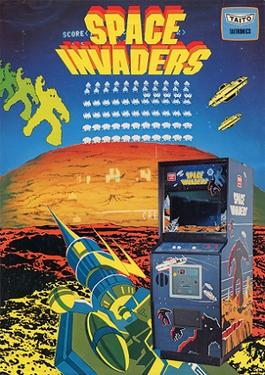
Space Invaders
1978 fixed shooter video game

Sokoban
is a puzzle video game created in 1981 by Hiroyuki Imabayashi. In Sokoban, the player pushes boxes in a warehouse to get them onto storage locations. The game is viewed from a top-down perspective. Boxes can only be pushed, never pulled, and only one box can be pushed at a time. The principal challenge is planning moves correctly to avoid causing a deadlock, a situation where a box or the player becomes permanently trapped, making the puzzle unsolvable.

Galaga
is a 1981 fixed shooter video game developed and published by Namco for Japanese and European arcades; it was distributed by Midway Manufacturing in North America. It is the sequel to 1979's Galaxian, and the second game in the Galaxian series. Controlling a starship, the player is tasked with destroying the Galaga forces in each stage while avoiding enemies and projectiles. Some enemies can capture a player's ship via a tractor beam, which can be rescued by another ship to give the player a "dual fighter" with additional firepower.
Lode Runner
1983 video game

Hang-On
is a 1985 racing video game developed and published by Sega for arcades. In the game, the player controls a motorcycle against time and other computer-controlled bikes. It was one of the first arcade games to use 16-bit graphics and uses the Super Scaler arcade system board, created with design input from Yu Suzuki, as technology to simulate 3D effects. The deluxe cabinet version also introduced a motion-controlled arcade cabinet, where the player's body movement on a large motorbike-shaped cabinet corresponds with the player character's movements on screen.

Elevator Action
1983 arcade game
Bomb Jack
1984 platform arcade video game
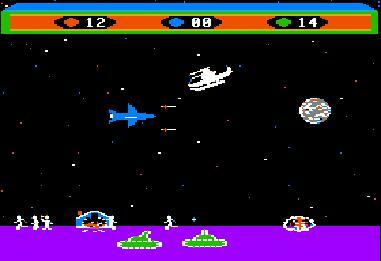
Choplifter
Choplifter (stylized as Choplifter!) is a 1982 horizontally scrolling shooter video game developed by Dan Gorlin and published by Broderbund for the Apple II. It was ported to the Atari 8-bit computers the same year, and later to the VIC-20, Commodore 64, Atari 5200, ColecoVision, MSX, and Thomson computers. In 1985, Sega released a remake for arcades, with subsequent ports published for the Master System and Famicom in 1986. Graphically enhanced versions for the Atari 8-bit computers and the Atari 7800 were also released in 1988 by Atari Corporation.

Zaxxon
is a 1981 scrolling shooter video game developed by Sega with assistance from Ikegami Tsushinki and published by Sega for Japanese and European arcades; it was distributed by Sega/Gremlin in North America. The player pilots a ship through two heavily defended space fortresses, and the outer space areas between them, to confront the Zaxxon robot at the end of the second fortress.
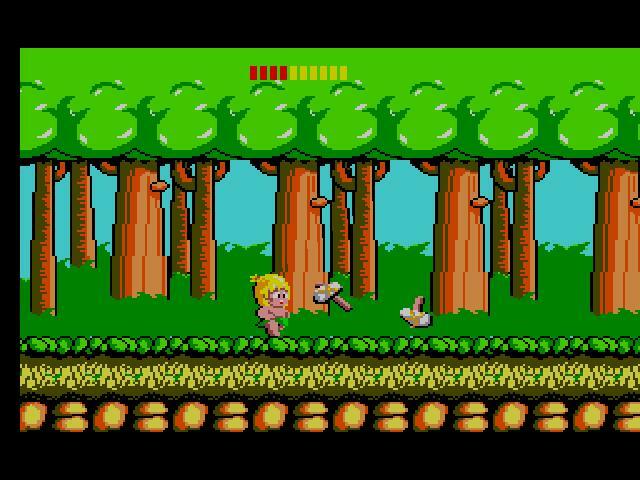
Wonder Boy
1986 video game

Flicky
is a platform game developed by Sega and released as an arcade video game in May 1984. It was licensed to Bally Midway for distribution in the United States. In Flicky, the player controls the eponymous blue bird and must gather all the small birds called Chirps in each round and bring them safely to the exit. There are cat and lizard enemies which can disperse the Chirps and kill the player, but Flicky can use items on the playing field to protect herself and the Chirps from danger.
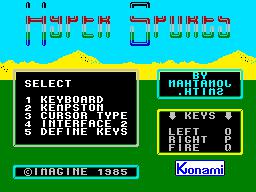
Hyper Sports
1984 video game

MotoRace USA
1983 video game
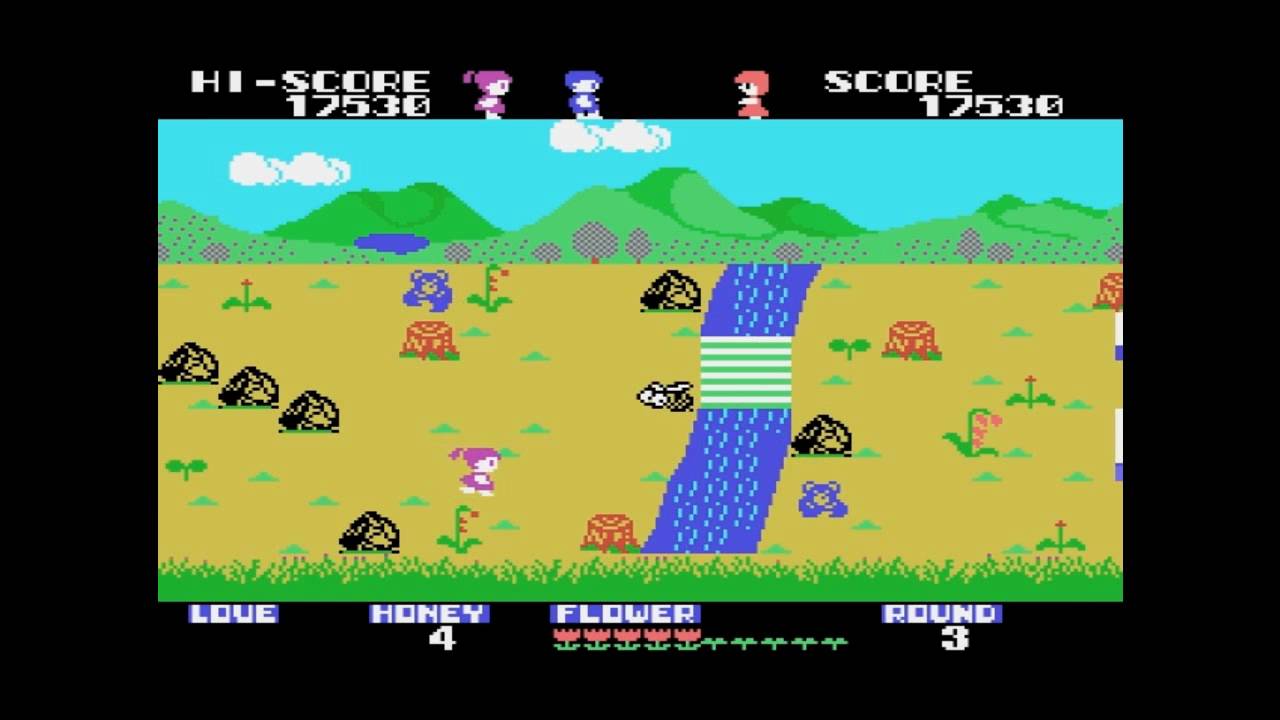
Girl's Garden
1984 action game

Chack'n Pop
1983 video game

Monaco GP
1979 video game

Star Force
1984 arcade game
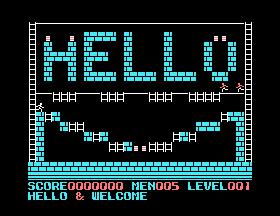
Championship Lode Runner
1985 video game
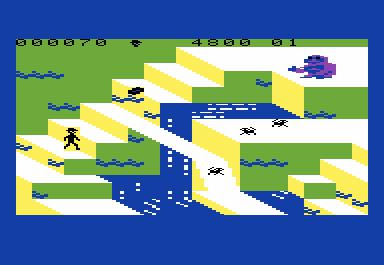
Congo Bongo
1983 video game
Exerion
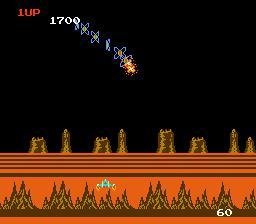
is a 1983 shoot 'em up video game developed by Kawa Denshi Giken and published by Jaleco for arcades. It was released in North America by Taito. The player controls a starship and must fire at enemies on the screen while avoiding projectiles. The game uses a pseudo-3D scrolling background, giving a sense of depth, and the player's ship has a sense of inertia while it is being controlled with the joystick.

Bank Panic
1984 video game
H.E.R.O.
1984 video game
The Black Onyx
1984 video game
Sega Ninja
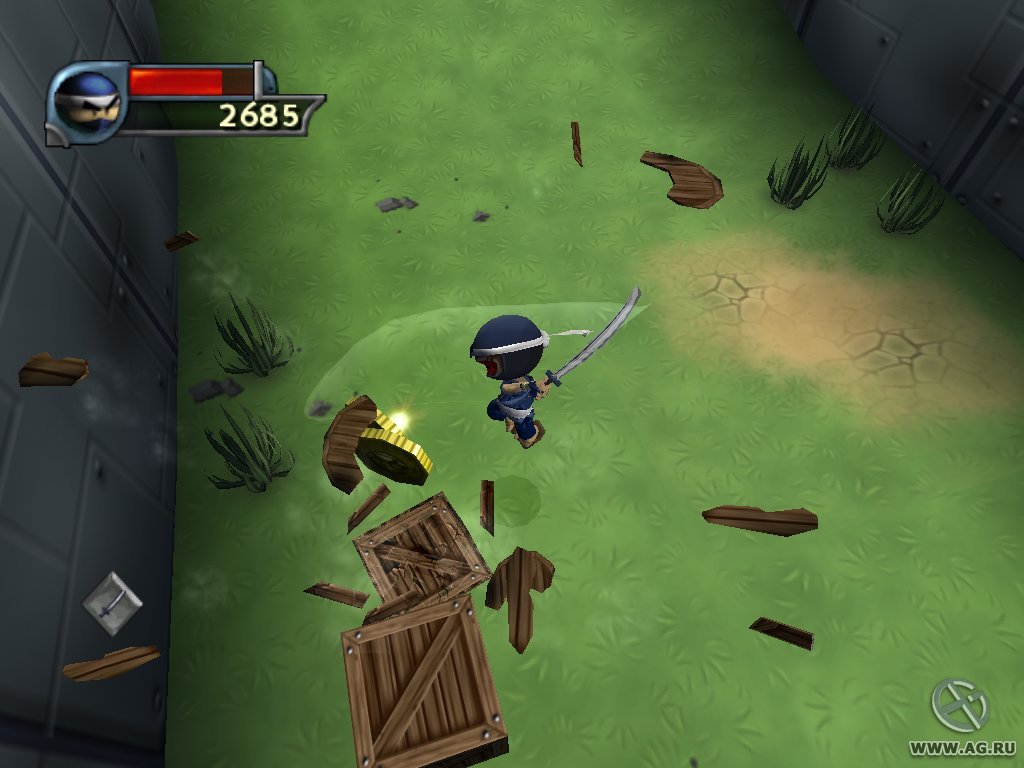
1985 video game

Champion Baseball
1983 video game
Buck Rogers: Planet of Zoom
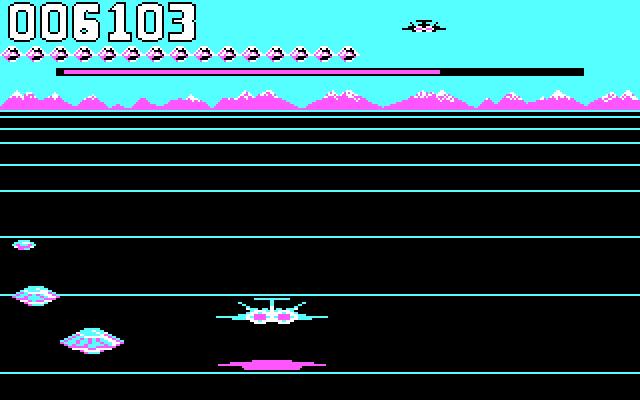
1982 video game
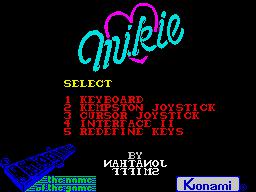
Mikie
Mikie, known as in Japan, is an arcade video game developed and released by Konami in 1984. The object of the game is to guide a student named Mikie around the school locations to collect hearts which make up a letter from his girlfriend while being chased by members of the school staff. In Japan, the game's setting was changed to an office in order to avoid controversy, while the original version of the game was released internationally. Centuri distributed the game in North America.