Category
page 1Snake families

viper
Vipers are snakes in the family Viperidae, found in most parts of the world, except for Antarctica, Australia, Hawaii, Madagascar, Ireland, and various other isolated islands. All vipers are venomous, and have long (relative to non-vipers), hinged fangs that permit deep envenomation of their prey. Three subfamilies are currently recognized. They are also known as viperids. The name "viper" is derived from the Latin word vipera, -ae, also meaning viper, possibly from vivus ("living") and parere ("to beget"), referring to the trait viviparity (giving live birth) common in vipers like most of the

pythons
alt=pythons|thumb|Indian python (Python molurus)
The Pythonidae, commonly known as pythons, are a family of nonvenomous snakes found in Africa, Asia, and Australia. Among its members are some of the largest snakes in the world. Ten genera and 39 species are currently recognized. Being naturally non-venomous, pythons must constrict their prey to induce cardiac arrest prior to consumption. Pythons will typically strike at and bite their prey of choice to gain hold of it; they then must use physical strength to constrict their prey, by coiling their muscular bodies around the animal, effectively

Boidae
The Boidae, commonly known as boas or boids, are a family of nonvenomous snakes primarily found in the Americas, as well as Africa, Europe, Asia, and some Pacific islands. Boas include some of the world's largest snakes, with the green anaconda of South America being the heaviest and second-longest snake known; in general, adults are medium to large in size, with females usually larger than the males. Six subfamilies comprising 14-15 genera and 54-67 species are currently recognized.

Elapidae
Elapidae (, commonly known as elapids , from , variant of "sea-fish") is a family of snakes characterized by their permanently erect fangs at the front of the mouth. Most elapids are venomous, with the exception of the genus Emydocephalus. Many members of this family exhibit a threat display of rearing upwards while spreading out a neck flap. Elapids are endemic to tropical and subtropical regions around the world, with terrestrial forms in Asia, Australia, Africa, and the Americas and marine forms in the Pacific and Indian Oceans. Members of the family have a wide range of sizes, from the whi

Colubridae
Colubridae (, commonly known as colubrids , from , 'snake') is a family of snakes. With 249 genera, it is the largest snake family. The earliest fossil species of the family date back to the Late Eocene epoch, with earlier origins suspected. Colubrid snakes are found on every continent except Antarctica.
Typhlopidae
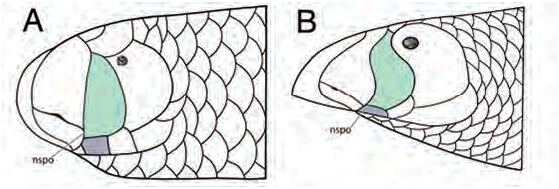
The Typhlopidae are a family of blind snakes. They are found mostly in the tropical regions of Africa, Asia, the Americas, and all mainland Australia and various islands. The rostral scale overhangs the mouth to form a shovel-like burrowing structure. They live underground in burrows, and since they have no use for vision, their eyes are mostly vestigial. They have light-detecting black eye spots, and teeth occur in the upper jaw. Typhlopids do not have dislocatable lower jaw articulations restricting them to prey smaller than their oral aperture. All species in the family Typhlopidae are foss

Leptotyphlopidae
The Leptotyphlopidae (commonly called slender blind snakes or thread snakes) are a family of small snakes found in North America, South America, Africa and Asia. All are fossorial and adapted to burrowing, feeding on ants and termites. Two subfamilies are recognized.

Uropeltidae
The Uropeltidae, also commonly known as shield-tail snakes, shield-tailed snakes or earth snakes, are a family of primitive, nonvenomous, burrowing snakes native to Peninsular India and Sri Lanka. The name is derived from the Greek words ('tail') and ('shield'), indicating the presence of the large keratinous shield at the tip of the tail. Seven or eight genera are recognized, depending on whether Teretrurus rhodogaster is treated in its own genus or as part of Brachyophidium. The family comprises over 50 species. These snakes are not well known in terms of their diversity, biology, and natura

Tropidophiidae
The Tropidophiidae, common name dwarf boas or thunder snakes, are a family of nonvenomous snakes found from Mexico and the West Indies south to southeastern Brazil. These are small to medium-sized fossorial snakes, some with beautiful and striking color patterns. Currently, two living genera, containing 34 species, are recognized. Two other genera (Ungaliophis and Exiliboa) were once considered to be tropidophiids but are now known to be more closely related to the boids, and are classified in the subfamily Ungaliophiinae. There are a relatively large number of fossil snakes that have been des
Homalopsidae
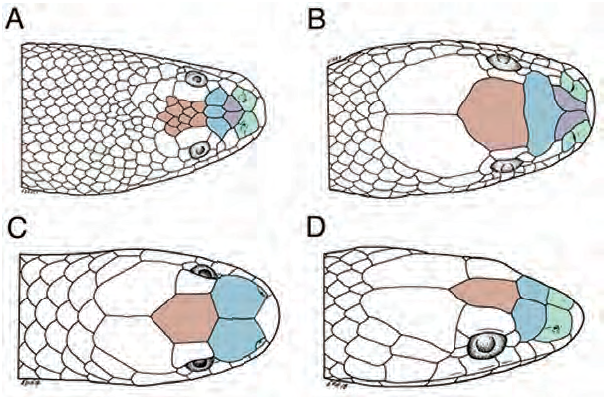
The Homalopsidae are a family of snakes which contains about 30 genera and more than 50 species. They are commonly known as Indo-Australian water snakes, mudsnakes, or bockadams. They are also known as (lit. "water snake") in Indonesian. They are typically stout-bodied water snakes, and all are mildly venomous. Two monotypic genera are notable for their unusual morphology: Erpeton possesses a pair of short, fleshy appendages protruding from the front of the snout, and Bitia has uniquely enlarged palatine teeth. Cerberus species have been noted to use sidewinding to cross slick mud flats during
Anomalepididae
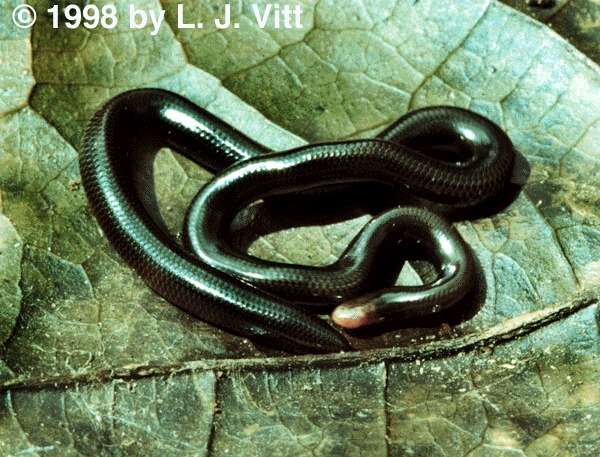
The Anomalepididae are a family of nonvenomous snakes, native to Central and South America. They are similar to Typhlopidae, except that some species possess a single tooth in the lower jaw. Currently, four genera and 15 species are recognized. Common names include primitive blind snake and dawn blind snake.
Bolyeriidae
Common names: Mauritius snakes, Round Island boas, splitjaw snakes.
The Bolyeriidae are a family of snakes native to Mauritius and a few islands around it, especially Round Island. They also used to be found on the island of Mauritius, but were extirpated there due to human influence and foraging pigs in particular. These snakes used to be placed in the Boidae, but are now classed as a separate family. Two monotypic genera are recognized, but only a single species is extant (not extinct). Bolyeriidae appear to be most closely related to the Asian genus Xenophidion.
Lamprophiidae
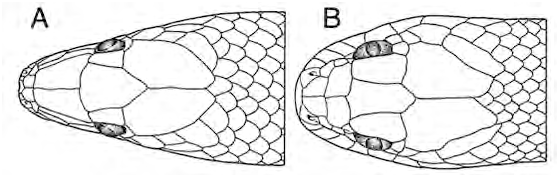
The Lamprophiidae are a family of snakes found throughout Africa, including Seychelles. There are 89 species as of July 2022.
coral snake
common name for a group of Elapid snakes
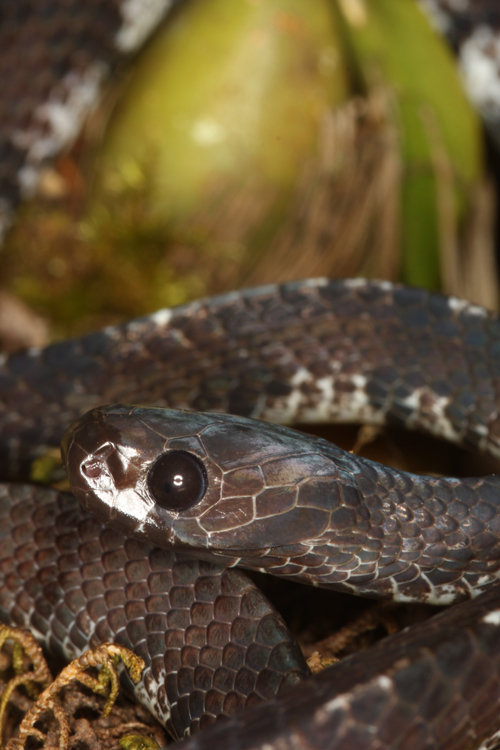
Pareidae
Pareidae is a small family of snakes found largely in southeast Asia, with an isolated subfamily endemic to southwestern India. It encompasses 42 species in four genera divided into two subfamilies: Pareinae and Xylophiinae. Both families are thought to have diverged from one another during the early-mid Eocene, about 40-50 million years ago.
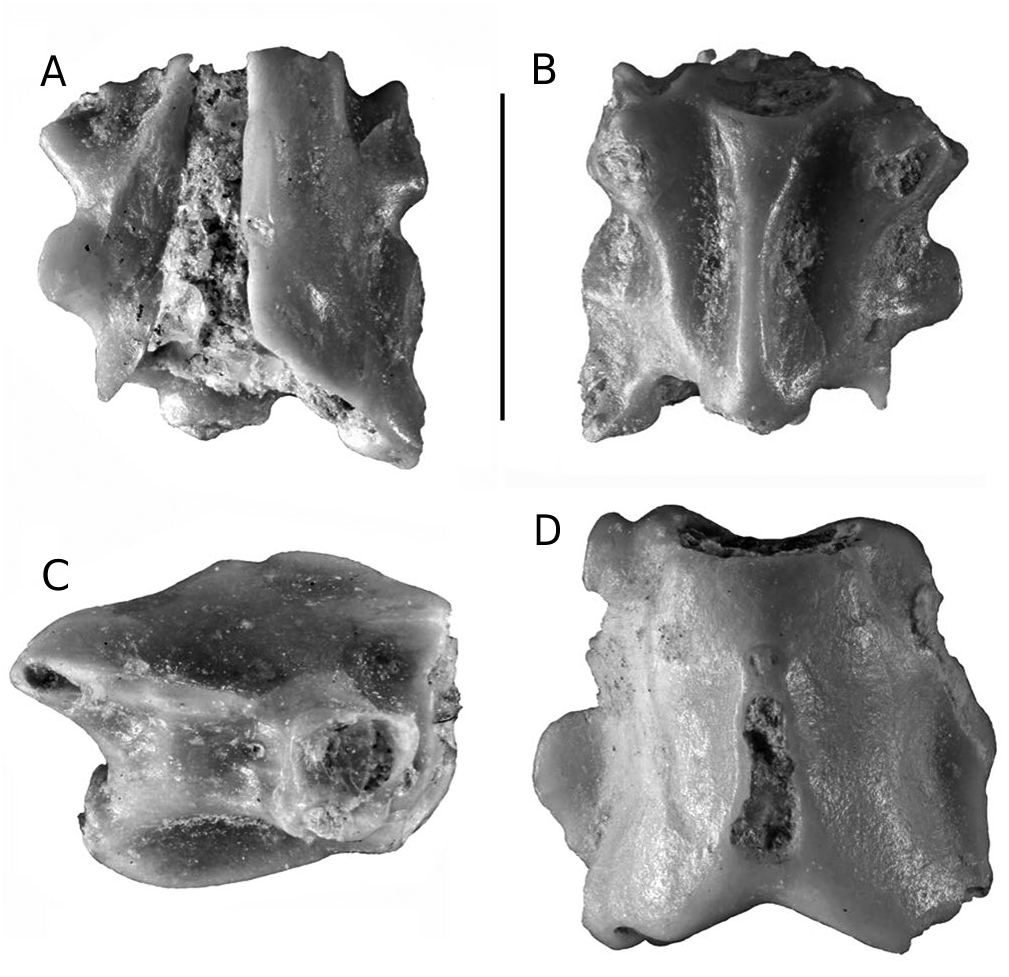
Xenodermidae
Xenodermidae is a family of snakes native to East Asia, South Asia, and Southeast Asia. All species in the family Xenodermidae are small or moderately sized snakes, never more than but typically less than in total length (including tail). They are secretive, probably nocturnal, and typically inhabit moist forest habitats. They seem to be opportunistic carnivores, preying on other vertebrates.
Xenopeltidae
REDIRECT Xenopeltis
Anomochilidae
REDIRECT Anomochilus
Xenophidion
Xenophidion is a genus of snakes first described in 1995, and the only genus of the monotypic family Xenophidiidae. Commonly referred to as spinejaw snakes, this genus is found in Borneo and peninsular Malaysia.
Dipsadinae
Dipsadinae is a large subfamily of colubroid snakes, sometimes referred to as a family (Dipsadidae). Species of the subfamily Dipsadinae are found in most of the Americas, including the West Indies, and are most diverse in South America. There are more than 700 member species.
Gerrhopilidae
The Gerrhopilidae (Indo-Malayan blindsnakes) are a family of blindsnakes that contains at least 16 species in the genus Gerrhopilus, and possibly others (the genus Cathetorhinus and the species known as either Malayotyphlops manilae, Gerrhopilus manilae, or Typhlops manilae) as well. These blindsnakes are found in India (including the Andaman Islands), Sri Lanka, Nepal, Thailand, the Philippines, Indonesia (including Java, Ternate, Sulawesi, Halmahera, Waigeu, Salawati, Irian Jaya, and Bali), and Papua New Guinea.

Madtsoiidae
Madtsoiidae is an extinct family of mostly Gondwanan snakes with a fossil record extending from early Cenomanian (Upper Cretaceous) to late Pleistocene strata located in South America, Africa, India, Australia and Southern Europe. Madtsoiidae include very primitive snakes, which like extant boas and pythons would likely dispatch their prey by constriction. Genera include some of the longest snakes known such as Vasuki, measuring at least long, and the Australian Wonambi and Yurlunggur. As a grouping of basal forms the composition and even the validity of Madtsoiidae is in a state of flux as ne
Pseudoxyrhophiidae
The Pseudoxyrhophiidae is a family of elapoid snakes, found mostly in Madagascar. They were formerly placed as a subfamily of the Lamprophiidae, but have been more recently identified as a distinct family.
Pachyophiidae
Simoliophiidae is an extinct family of limbed Tethyan marine snakes of the order Squamata. The name Pachyophiidae has also been used for this group, but Simoliophiidae has priority.
Palaeophiidae
Palaeophiidae is an extinct family of marine snake within the infraorder Alethinophidia.