Encyclopedia of Life · EOL (see source)
Anomalepididae
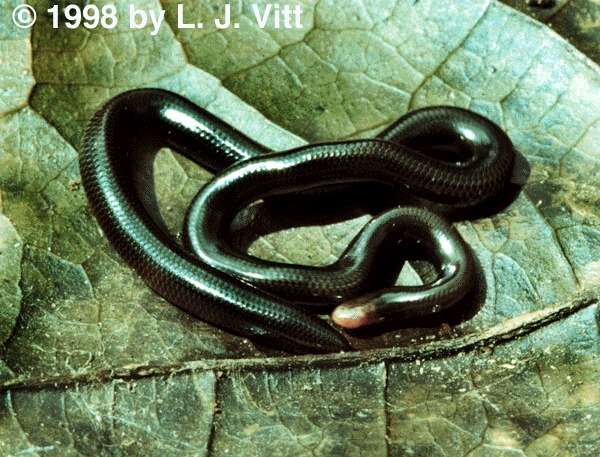
Sign in to saveThe Anomalepididae are a family of nonvenomous snakes, native to Central and South America. They are similar to Typhlopidae, except that some species possess a single tooth in the lower jaw. Currently, four genera and 15 species are recognized. Common names include primitive blind snake and dawn blind snake.
Species
FAMILY
- KingdomAnimalia
- PhylumChordata
- ClassSquamata
- FamilyAnomalepididae
異盾盲蛇科是蛇亞目下的一個無毒蛇科,科內的蛇類主要分佈於中美洲及南美洲。除了個別下顎僅有一隻牙齒的蛇類外,此科的蛇類與盲蛇科是相當相似的。目前,異盾盲蛇科下有4個屬共15個品種已被確認。[2] 目录 1 特徵 2 地理分佈 3 品種 4 備註 特徵 異盾盲蛇屬於小型蛇,體長通常僅有30公分長,有著圓渾的頭部及尾巴。此類蛇主要生活於地下,擅長掘洞,亦由於這個原因,牠們的眼睛有退化的跡象。 地理分佈 主要分佈於中美洲及南美洲西北部,亦有少量分佈於南美洲的東北部及東南部。[1] 品種 品種[2] 學名及命名者[2] 種數[2] 異名 地理分佈[1] 異盾盲蛇屬T Anomalepis,Jan,1860 4 中美洲南部地區(如尼加拉瓜、哥斯達黎加及巴拿馬)及南美洲西北部(如哥倫比亞、厄瓜多爾及秘魯) 大盲蛇屬 Helminthophis,Peters,1860 3 中美洲(如哥斯達黎加及巴拿馬)及南美洲西北部(如哥倫比亞及委內瑞拉);其中有一個新品種在發現於毛里裘斯 小盲蛇屬 Liotyphlops,Peters,1881 7 中美洲及南美洲,包括哥斯達黎加及巴拉圭 特立尼達盲蛇屬 Typhlophis,Fitzinger,1843 1 南美洲的大西洋海岸,包括巴西北部的圭亞那及帕拉 備註 ^ 1.0 1.1 1.2 McDiarmid RW、Campbell JA、Touré T:《Snake Species of the World: A Taxonomic and Geographic Reference, vol. 1》頁511,Herpetologists' League,1999年。ISBN 1-893777-00-6 ^ 2.0 2.1 2.2 2.3 Anomalepididae. Integrated Taxonomic Information System. 2007 [29 August, 2007] (英语). 请检查|access-date=中的日期值 (帮助) 查 论 编 蛇亞目 • 蛇類列表 脊索動物門 • 爬蟲綱 • 有鱗目 真蛇下目 瘰鱗蛇科 • 筒蛇科 • 倭管蛇科 • 穴蝰科 • 蚺科 • 島蚺科 • 游蛇科 • 管蛇科眼鏡蛇科 • 美洲閃鱗蛇科 • 蟒科 • 林蚺科 • 盾尾蛇科 • 蝰蛇科 • 閃鱗蛇科 盲蛇下目 異盾盲蛇科 • 細盲蛇科 • 盲蛇科 取自“https://zh.wikipedia.org/w/index.php?title=異盾盲蛇科&oldid=25488336” 分类: 蛇亚目 異盾盲蛇科 隐藏分类: 引文格式1错误:日期 CS1英语来源 (en) 使用ISBN魔术链接的页面 本地和维基数据均无相关图片
via GBIF
Museum specimens
- Specimen records
- 4
- Family
- Anomalepididae
- Collections
- AMNH, MPEG
- Recorded in
- Brazil, Brasil, Panama
Wikidata facts
Show 6 more facts
- taxon name
- Anomalepididae
- taxon rank
- family
- Code of nomenclature
- International Code of Zoological Nomenclature
- topic's main category
- Category:Anomalepididae
- Commons category
- Anomalepididae
- taxon common name
- Primitive Blind Snakes
Sources (2)
via Wikidata · CC0
~2 min read
Encyclopedic overview
5 sectionsContents
- Description
- Geographic range
- Genera
- References
- External links
The Anomalepididae are a family of nonvenomous snakes, native to Central and South America. They are similar to Typhlopidae, except that some species possess a single tooth in the lower jaw. Currently, four genera and 15 species are recognized. Common names include primitive blind snake and dawn blind snake.
==Description== Species in the family Anomalepididae are small snakes, in total length (including tail) usually less than , with blunt heads and short, blunt tails. They are mainly burrowing snakes, and due to their life style their eyes are vestigial.
Excerpted from Wikipedia’s “Anomalepididae” article, available under the CC BY-SA 4.0 licence.