Category
page 1Taxa described in 1825

Hominidae
The Hominidae (; hominids ), whose members are known as the great apes, are a taxonomic family of primates that includes eight extant species in four genera: Pongo (the Bornean, Sumatran and Tapanuli orangutan); Gorilla (the eastern and western gorilla); Pan (the chimpanzee and the bonobo); and Homo, of which only modern humans (Homo sapiens) remain.

Galagidae
right|226px|thumb|Mohol bushbaby (Galago moholi)

Homininae
The Homininae (; hominines) is a subfamily of the family Hominidae (hominids). The Homininae encompass humans, and are also called "African hominids" or "African apes". This subfamily includes two tribes, Hominini and Gorillini, both having extant (or living) species as well as extinct species.

Dipterocarpaceae
Dipterocarpaceae is a family of flowering plants with 22 genera and about 695 known species of mainly lowland tropical forest trees. Their distribution is pantropical, from northern South America to Africa, the Seychelles, India, Indochina, Indonesia, Malaysia and Philippines. The greatest diversity of Dipterocarpaceae occurs in Borneo.

Atelidae
The Atelidae are one of the five families of New World monkeys now recognised. It was formerly included in the family Cebidae. Atelids are generally larger monkeys; the family includes the howler, spider, woolly, and woolly spider monkeys (the latter being the largest of the New World monkeys). They are found throughout the forested regions of Central and South America, from Mexico to northern Argentina.

Xanthoria
Xanthoria is a genus of lichenized fungi in the family Teloschistaceae. Common names include orange lichen, orange wall lichen, and sunburst lichen. They can be identified by their characteristic squamulose morphology with distinctive "fairy cups".
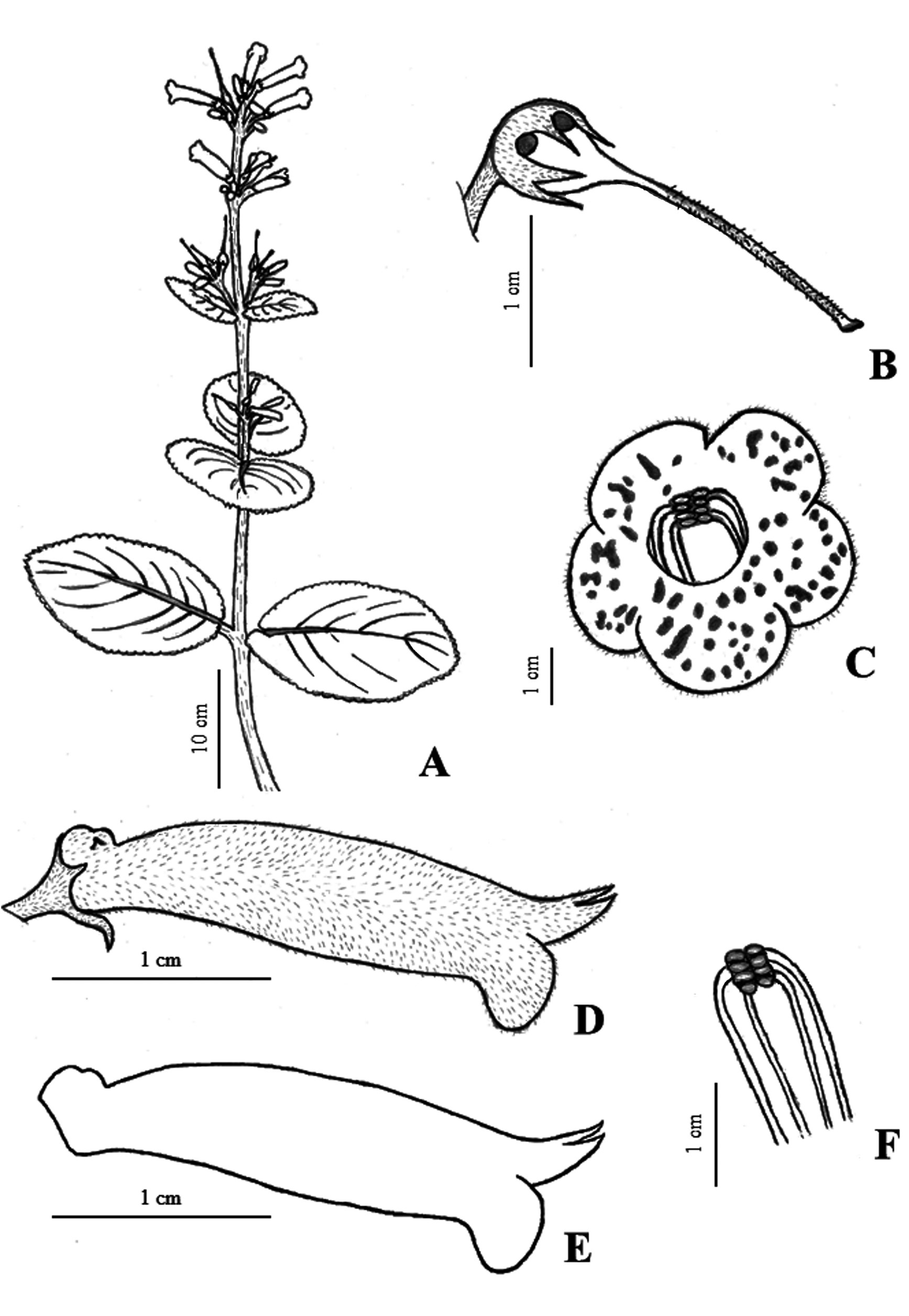
Sinningia
Sinningia is a genus of flowering plants in the family Gesneriaceae. It is named after Wilhelm Sinning (1792–1874), a gardener of the Botanische Gärten der Friedrich-Wilhelms-Universität Bonn. There are about 65 species of tuberous herbaceous perennials, all occurring in Central and South America, with the greatest concentration of species occurring in southern Brazil.
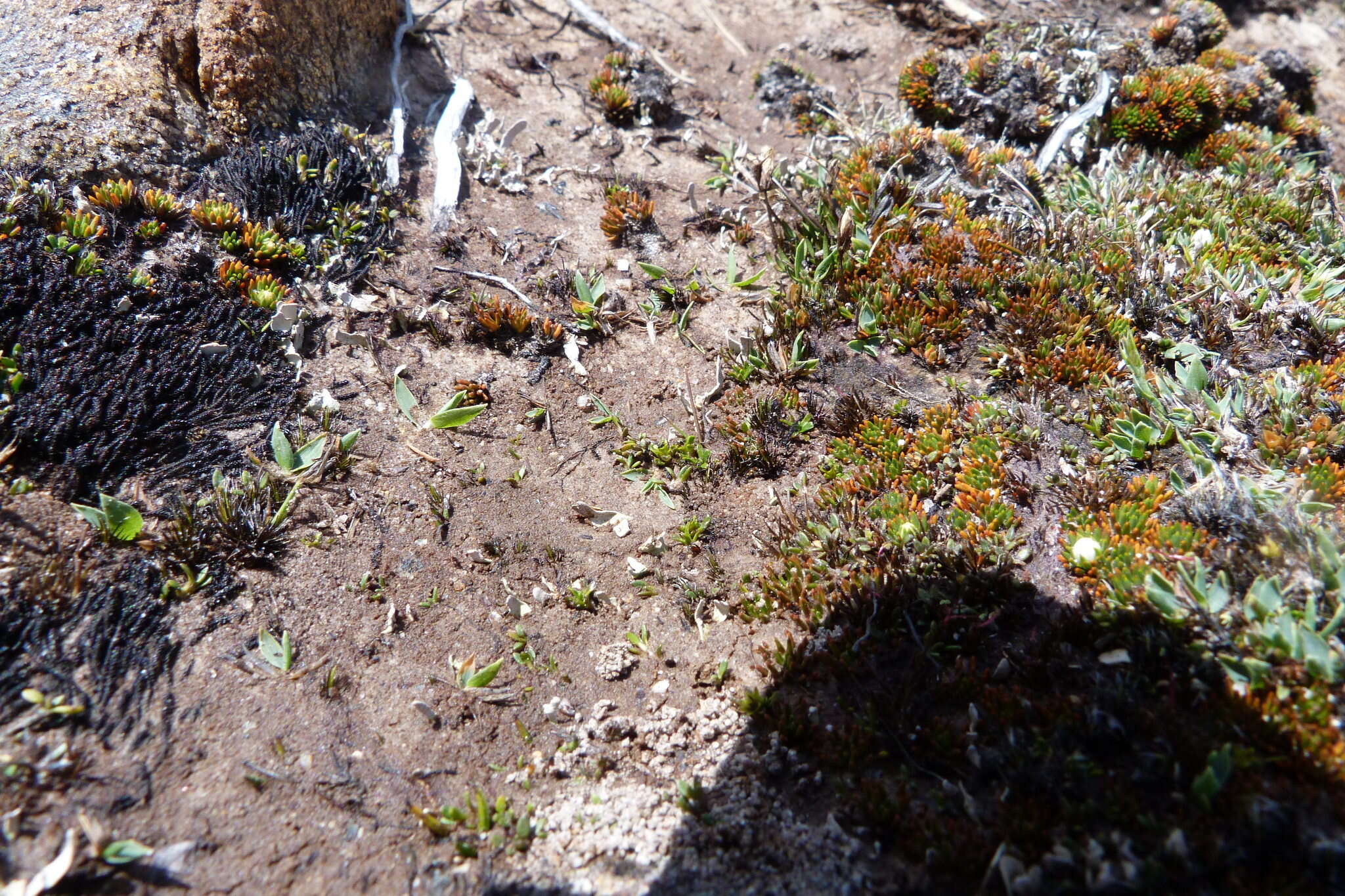
Abrotanella
Abrotanella is a genus of flowering plants in the family Asteraceae. It includes 22 species which are native to Australia, New Guinea, New Zealand, and southern South America.

Atelinae
The Atelinae are a subfamily of New World monkeys in the family Atelidae, and includes the various spider and woolly monkeys. The primary distinguishing feature of the atelines is their long prehensile tails, which can support their entire body weight.
%20Fr%20630853.jpg)
Lentinus
Lentinus is a genus of fungi in the family Polyporaceae. The genus is widely distributed, with many species found in subtropical regions.

Leucomeris
Leucomeris is a genus of Asian flowering plant in the family Asteraceae. It includes three species native to the Indian Subcontinent, Indochina, and south-central China.
Presbytini
Presbytini is a tribe of Old World monkeys that includes all of the Asian colobine monkeys.
Acanthonyx
thumb|right
Acanthonyx is a genus of crabs, in the family Epialtidae, which was first described in 1828 by. The type species is Acanthonyx lunulatus.
Irpex
Irpex is a genus of corticioid fungi in the order Polyporales. Species produce fruit bodies that grow as a crust on the surface of dead hardwoods. The crust features an irpicioid spore-bearing surface (for which the genus is named), meaning it has irregular and flattened teeth. Irpex is distinguished from the similar genera Junghuhnia and Steccherinum by the simple septa found in the generative hyphae.
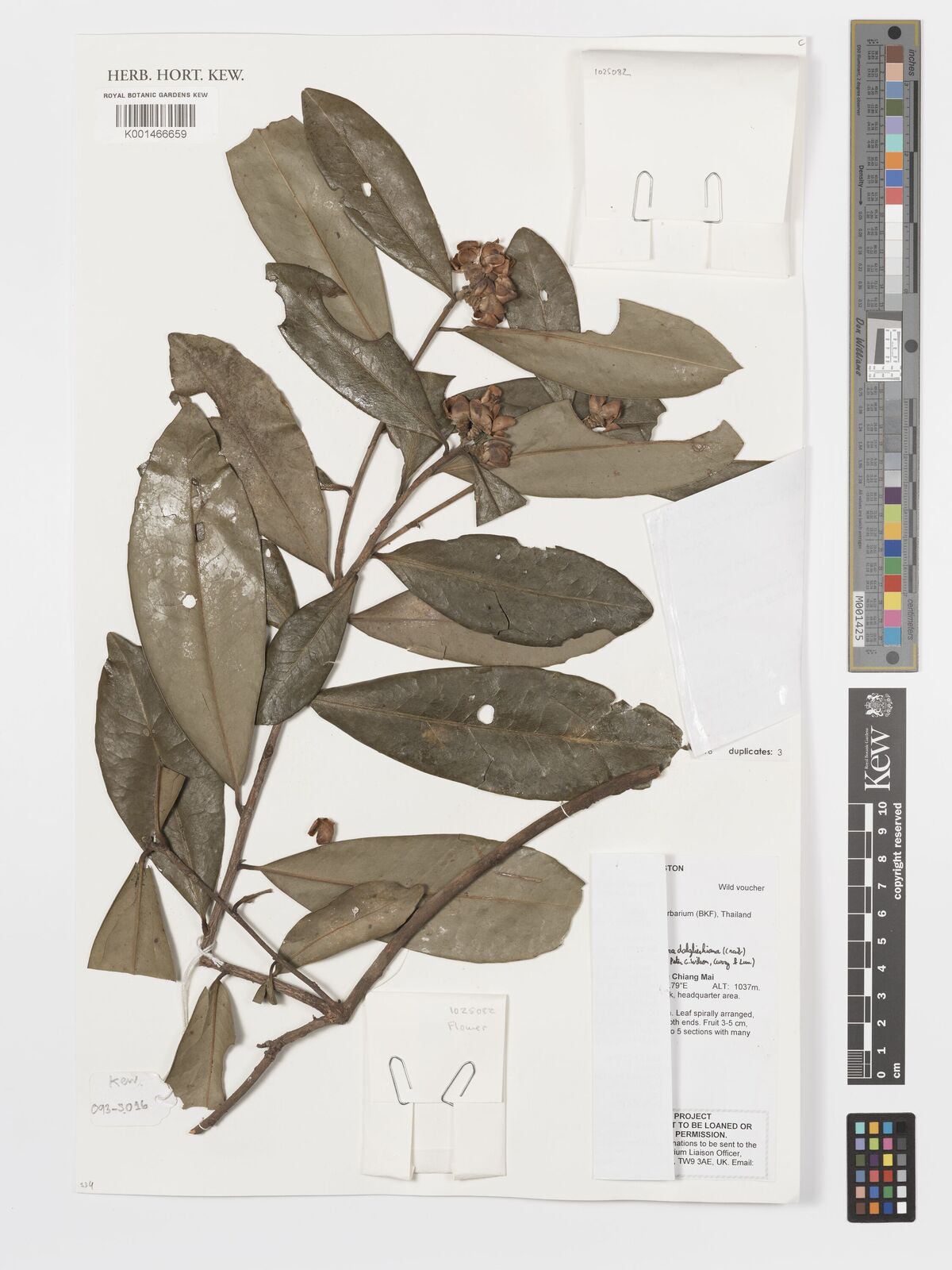
Polyspora
Polyspora is a genus of flowering plants in the tea family (Theaceae). It includes 47 species, which range from India through Indochina, southern China, Malesia, Taiwan and New Guinea.
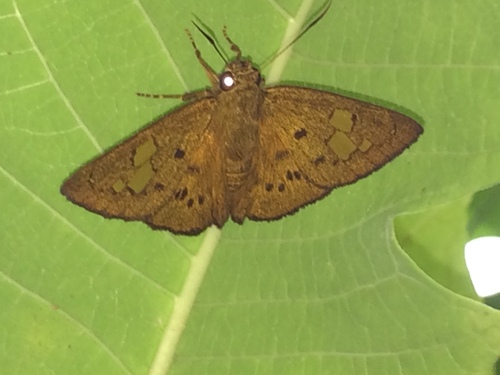
Oileides
Oileides is a genus of Neotropical spread-winged skippers in the family Hesperiidae.
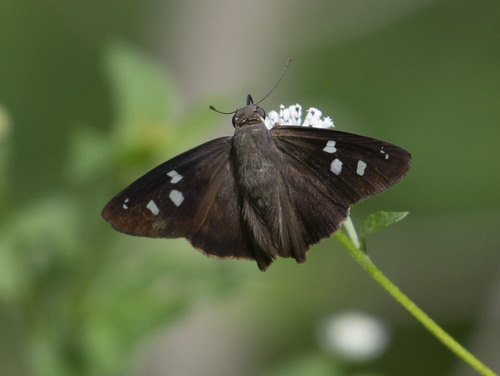
Polygonus
genus of insects

Enterographa
Enterographa is a genus of lichens in the family Roccellaceae. These lichens grow as thin, paint-like crusts on tree bark that range in colour from off-white and pale grey to dark olive-green or brown, sometimes breaking into networks of tiny, flat blocks. They reproduce through tiny slits or dots embedded in the crust that contain spindle-shaped spores divided into multiple cells, distinguishing them from other similar-looking bark lichens.

Narvalina
Narvalina is a genus of flowering plants in the dahlia tribe within the sunflower family. It includes two species native to Hispaniola (the Dominican Republic and Haiti).
Titanio
Titanio is a genus of moths of the family Crambidae.
Selenia
genus of plants
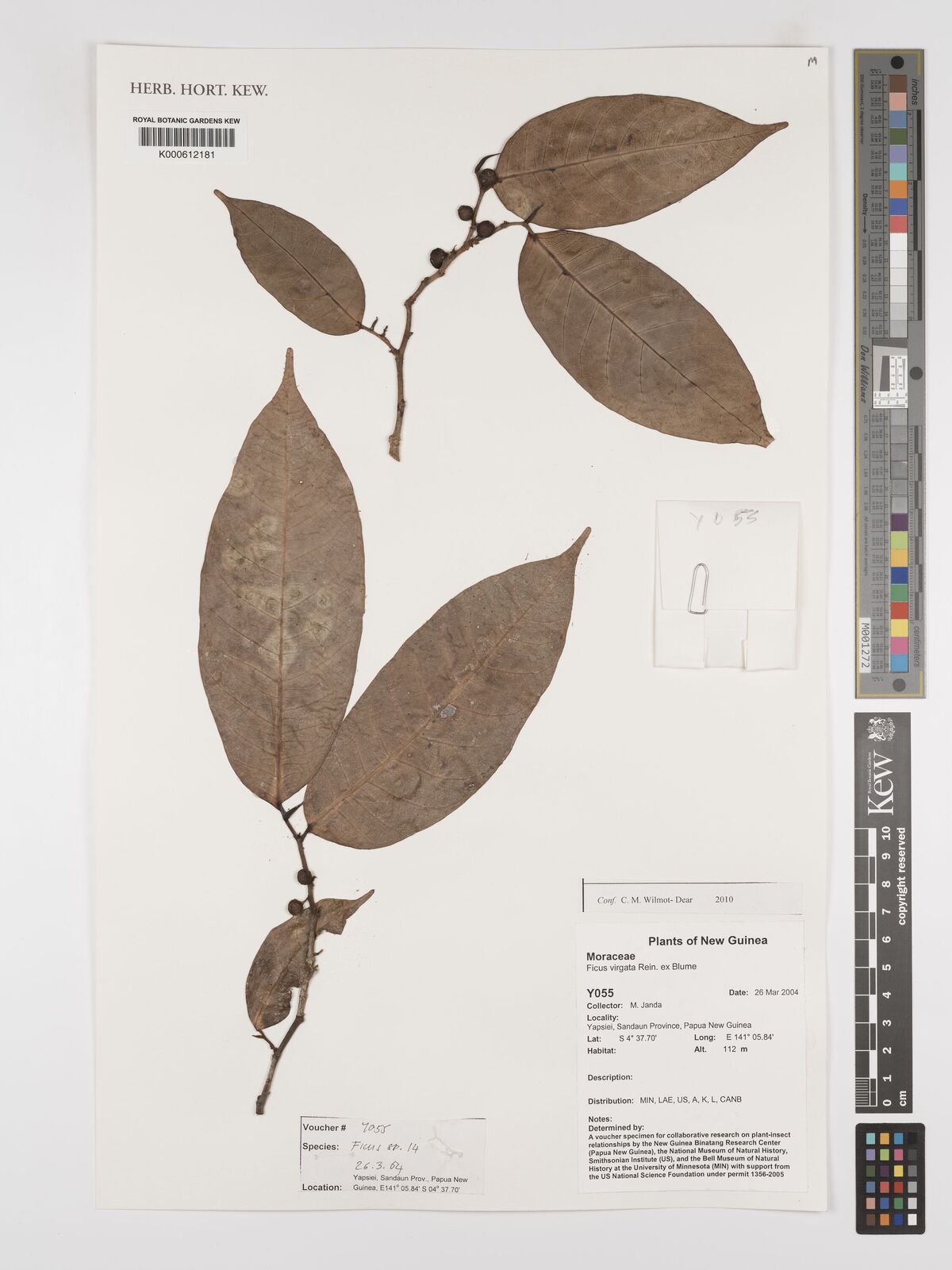
Ficus virgata
species of plant in the family Moraceae
Cliostomum
Cliostomum is a genus of lichen-forming fungi in the family Ramalinaceae. It has about 20 species. The genus was established in 1825 by Elias Magnus Fries, who characterized it by its rounded fruiting bodies that are integrated into the lichen's crust with distinctive folded or corrugated openings. These lichens form tight crusts on various surfaces, ranging in colour from whitish to pale grey or yellowish, and reproduce primarily through conspicuous flask-shaped structures that release spores rather than through sexual fruiting bodies.
Micarea
Micarea is a genus of lichen-forming fungi in the family Ectolechiaceae. The widely distributed genus contains 156 species and new species are described actively. Species in the genus are crustose lichens and their photobiont (the non-fungal organism) is a single-celled green alga. The genus was established by the Swedish mycologist Elias Fries in 1825. Micarea lichens are typically small and often overlooked, producing minute fruiting bodies that are usually whitish, grey, or bluish in colour. Many species reproduce both sexually through spores and asexually through specialised structures, an
Archonias
Archonias is a monotypic genus of butterflies in the family Pieridae. Archonias brassolis, the cattleheart white, is its sole species. It is found from Central America, south through most of South America.
thumb|left|A. b. tereas
Dirina
Dirina is a genus of lichen-forming fungi in the family Roccellaceae. All Dirina species are crustose lichens with a whitish to greyish brown thallus, and live either on rock or on bark–some species can live on both. The partner is a member of the green algal genus Trentepohlia. Most species occur in the Northern Hemisphere, and are generally restricted to coastal habitats, where they may be locally quite common. Erythrin and lecanoric acid are lichen products that usually occur in Dirina species, along with several other unidentified substances.
Erioderma
Erioderma is a genus of lichen-forming fungi in the family Pannariaceae. They are commonly called mouse ears or felt lichens, and are small, pale brown to olive-brown foliose cyanolichens with a fuzzy upper surface that have the cyanobacteria Scytonema as their photobiont. Most species are found in the tropics of Central and South America, although three species are found in coastal regions of North America where they generally grow on mossy branches in humid sites. All North American species are rare. Species of Erioderma can resemble Pannaria, Leioderma, or small Peltigera, but their fuzzy u
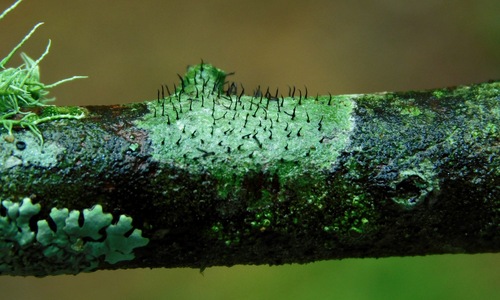
Tricharia
Tricharia is a genus of lichens in the family Gomphillaceae. It has an estimated 30 species.
Ephebe
genus of fungi
Gibbera
Gibbera is a genus of fungi in the family Venturiaceae. It was first described scientifically by Elias Magnus Fries in 1825.
Sarcographa
Sarcographa is a genus of lichen-forming fungi in the family Graphidaceae. Established in 1825 by the French botanist Antoine Laurent Apollinaire Fée, the genus contains 22 species that are recognised by their distinctive star-shaped colonies of radiating, script-like fruiting structures with black borders. These bark-dwelling lichens are found in humid tropical and warm temperate forests worldwide and serve as indicators of undisturbed woodland, as they quickly decline when forest canopy is opened or disturbed.
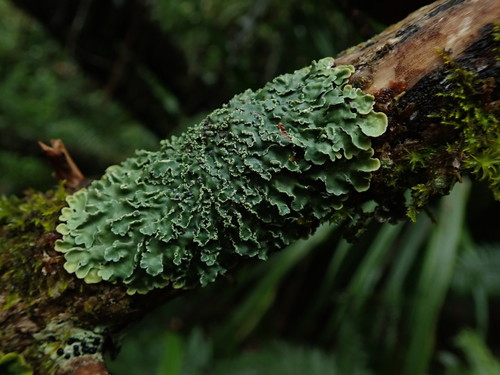
Sphinctrina
Sphinctrina is a genus of lichenicolous fungi, usually not lichenized, in the family Sphinctrinaceae. Its species are most commonly parasitic on lichens of the genus Pertusaria.
Echinoplaca
Echinoplaca is a genus of lichen-forming fungi in the family Gomphillaceae.
Plectocarpon
Plectocarpon is a genus of lichenicolous (lichen-dwelling) fungi in the family Lecanographaceae. The genus, which was established in 1825 by the French botanist Antoine Laurent Apollinaire Fée, contains about 30 species that live as parasites on other lichens rather than forming their own independent body (thallus). These fungi are recognized by the small, wart-like swellings they create on their host lichens and by their distinctive dark fruiting bodies that often contain a green pigment that dissolves when treated with potassium hydroxide solution.
Sarea
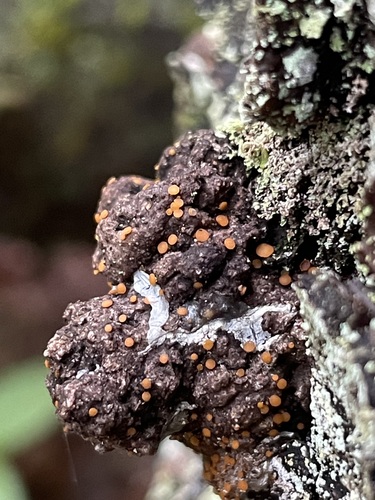
Sarea is a genus of small, non-lichenized, inoperculate, discomycete fungi in the family Zythiaceae. Sarea species are found growing on the resin of conifers in the Cupressaceae and Pinaceae in the Northern Hemisphere. Two species in the genus are readily distinguishable from each other: apothecia of Sarea difformis are black, while those of Sarea resinae are orange in color.
Q7076267
Ocellularia is a genus of lichens in the family Graphidaceae. The genus was circumscribed by Georg Friedrich Wilhelm Meyer in 1825.
Pyxine
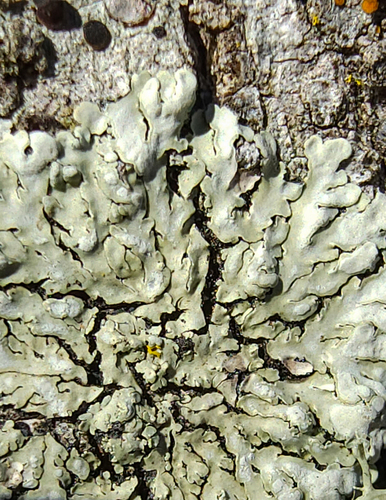
Pyxine is a genus of foliose lichens in the family Caliciaceae. The genus has a widespread distribution in tropical regions. It was established in 1825 by the Swedish botanist Elias Fries and is distinguished from similar lichens by its characteristic golden fluorescence under ultraviolet light due to the compound lichexanthone. These small, leaf-like lichens form radiating rosettes with narrow and tiny white lines called pseudocyphellae that act as air vents on their upper surface.
Fissurina
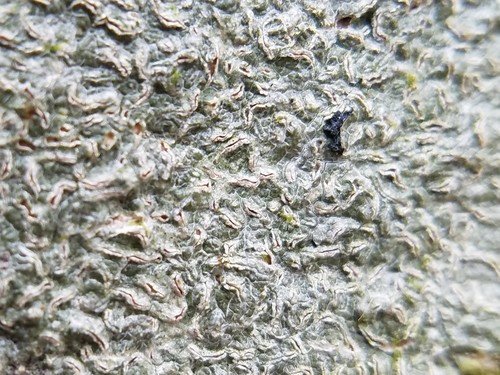
Fissurina is a genus of lichenized fungi in the family Graphidaceae. It has about 160 species, most of which are found in tropical regions.
Meliola
Meliola is a large genus of fungi in the family Meliolaceae. It was circumscribed by Swedish mycologist Elias Magnus Fries in 1825.
Myriotrema
Myriotrema is a genus of lichen-forming fungi in the family Graphidaceae.
Aulaxina
Aulaxina is a genus of lichen-forming fungi in the family Gomphillaceae. Species of Aulaxina are found predominantly in humid tropical forests across Africa, Asia, and the Americas, where they grow on the surface of living leaves, a foliicolous lifestyle. The genus is recognised by its distinctive blackish fruiting bodies, which open in a star-like or slit-like pattern, and by the small dark hairs and club-shaped reproductive structures that dot the thallus surface. The exact number of species in the genus is uncertain, as different taxonomic databases currently disagree on which names are acc
Cora
a genus of lichenized fungi
Didymocheton
Didymocheton is a genus of flowering plants in the family Meliaceae. It includes 41 species which range from eastern India through Indochina and southern China to Malesia, Papuasia, eastern Australia, New Zealand, and the South Pacific.
Thecaria
Thecaria is a genus of lichen-forming fungi in the family Graphidaceae.
Thermutis
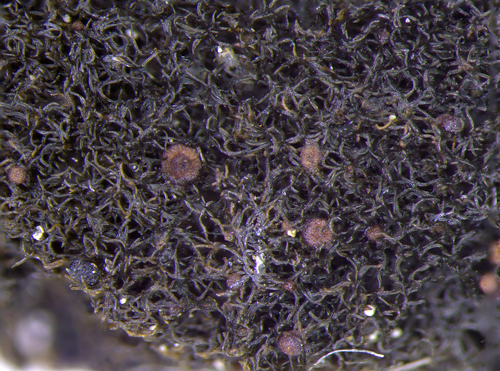
Thermutis is a small genus of cyanolichens in the family Porocyphaceae. It was formerly treated in Lichinaceae, but a 2024 multilocus re-classification of the class Lichinomycetes emended Porocyphaceae and included Thermutis there. Species are minute, dark lichens with , often gelatinous to thalli that occur on rock or soil in open, periodically wet microhabitats. Their sexual structures commonly develop as ; the asci are and the ascospores and colourless.