Category
page 1Taxa described in 1861

Dinoponera
Dinoponera is a strictly South American genus of ant in the subfamily Ponerinae, commonly called tocandiras or giant Amazonian ants. These ants are generally less well known than Paraponera clavata, the bullet ant, yet Dinoponera females may surpass in total body length, making them among the largest ants in the world.
Abisara
Abisara is a genus of butterflies in the family Riodinidae, with species found only in Asia. The genus formerly included African species but it was found to be polyphyletic in 2015. Several species formerly included in the genus were then moved to Afriodinia, Archigenes, Sibosia and Spitosa.
Valsaceae
Valsaceae is a family of sac fungi in the Diaporthales order.
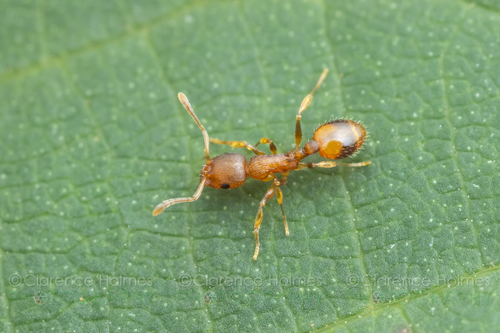
Temnothorax
thumb|Temnothorax schaumii, Maryland
Temnothorax is a genus of ants in the subfamily Myrmicinae. It contains more than 500 species.

Leucosolenia
Leucosolenia is a genus of calcareous sponges belonging to the family Leucosoleniidae. Species of this genus usually appear as groups of curved vases, up to 2 cm long, each ending in an osculum. The overall shape is sometimes likened to a tiny bunch of bananas. They are most often observed in tide pools, clustered around the base of seaweeds or on rocks, and occur in a variety of colours, usually rather pale. Its canal system is of asconoid type. The colony consists of few simple vase-like, cylindrical individuals each terminating in an osculum and united at their bases by irregular horiz
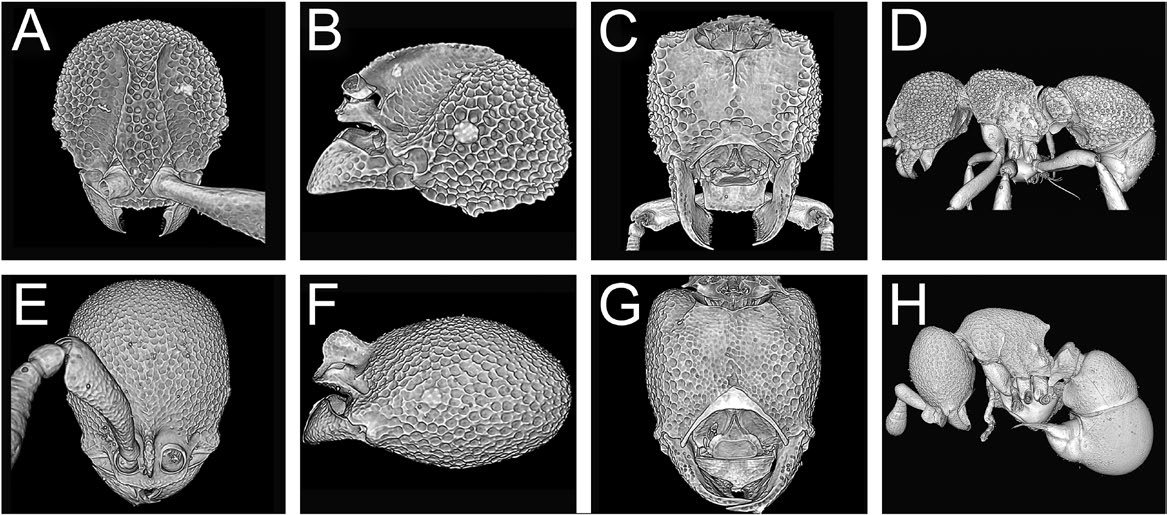
Discothyrea
Discothyrea is a genus of small ants in the subfamily Proceratiinae. The genus is distributed in the tropics and subtropics throughout the world, where they usually nest in rotten wood, in the leaf litter, or under stones. Little is known about their biology, but ants in this genus are thought to be specialist predators of arthropod eggs and have been observed storing eggs in their nests (probably spider eggs).
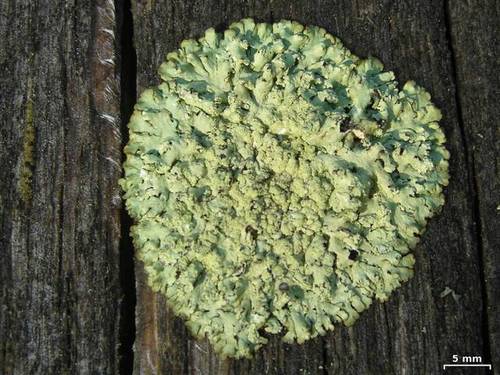
Parmeliopsis
Parmeliopsis is a genus of lichens in the family Parmeliaceae. The genus contains two species. Members of this genus are commonly called bran lichens.
Anzia
Anzia is a genus of foliose lichens known as black-foam lichens in the large family Parmeliaceae. It was formerly included in the monogeneric family Anziaceae, but this has since been subsumed into the Parmeliaceae.
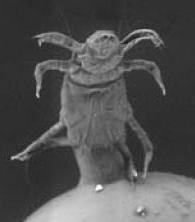
Pyemotes
Pyemotes is a genus of mites.
Bunodophoron
Bunodophoron is a genus of lichen-forming fungi in the family Sphaerophoraceae. The genus has a broad distribution in the Southern Hemisphere, with several species also present in oceanic regions of the Northern Hemisphere. Established in 1861 by the Italian botanist Abramo Bartolommeo Massalongo, the genus comprises about 20 accepted species that form shrubby, often tufted growths with flattened, strap-like branches. These lichens are characterised by their distinctive black, powdery spore masses that develop at the tips of fertile branches and their production of various lichen products incl
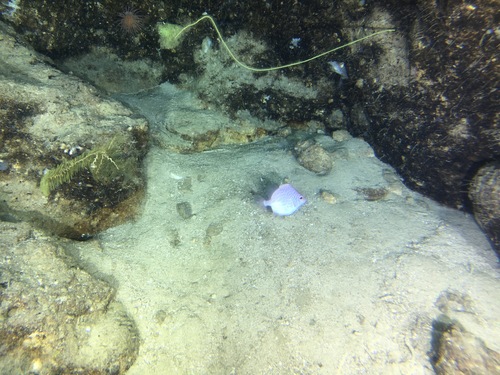
Hollardia
Hollardia is a genus of marine ray-finned fishes belonging to the family Triacanthodidae, the spikefishes. These demersal fishes are found in the Western Atlantic Ocean, with one species being found in the Pacific Ocean.
Dodona
genus of insects
Plathemis
Plathemis is a small genus of dragonflies in the family Libellulidae. It has been considered a synonym of Libellula, subgenus, or separate genus by different authorities. Phylogenetic analysis has supported its status as either a subgenus or a full genus.
Trachyspora
Trachyspora is a genus of rust fungi in the family Phragmidiaceae. The genus, widespread in northern temperate areas, contains six species.
Anoplarchus
Anoplarchus is a genus of marine ray-finned fishes belonging to the family Stichaeidae, the pricklebacks and shannies. These fishes are found in the eastern Pacific Ocean.
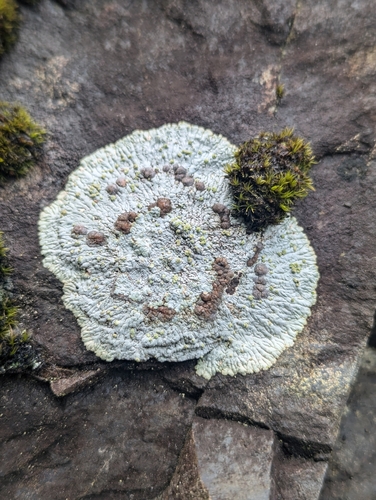
Placopsis
Placopsis is a genus of lichen-forming fungi in the family Trapeliaceae. First introduced as a subgenus in 1861 by William Nylander, the genus now comprises about 50 named species worldwide and shows its greatest diversity in the Southern Hemisphere. These lichens are conspicuous crustose to forms that typically grow on rock or soil, characterised by orbicular or irregularly spreading patches with lobed margins. A defining feature of the genus is the presence of cephalodia, which are nodules containing cyanobacteria that are often centrally placed on the thallus. This distinctive appearance in
Oropogon
Oropogon is a genus of lichen-forming ascomycetes in the large family Parmeliaceae. It is a genus of roughly 40 currently accepted species. It was previously included in the family Alectoriaceae, but this group has since been subsumed into the Parmeliaceae.
Ptychandra
Ptychandra is a butterfly genus in the subfamily Satyrinae within the family Nymphalidae. Ptychandra was first described by Cajetan Felder and Rudolf Felder in 1861. The genus comprises eight species, seven found in the Philippines with an additional species found on the island of Borneo. It is remarkable for the fact that it is one of a few genera to have undergone evolutionary radiation in the Philippine archipelago, with most other species being migrants from the Asian mainland.
Tholurna dissimilis
Tholurna is a fungal genus in the family Caliciaceae. The genus is monotypic, containing the single species Tholurna dissimilis. Long thought to be confined to Scandinavia, it has since been recorded in western North America, where a 1983 survey documented 47 localities from coastal British Columbia to Oregon and as far north-east as the Yukon and Northwest Territories.
Arctomiaceae
The Arctomiaceae are a family of lichen-forming fungi in the Ascomycota, class Baeomycetales. The family was named by Theodor Magnus Fries in 1861, with Arctomia as the type genus. Species in this family are found in arctic and subarctic habitats, usually associated with bryophytes. In overall morphology, the Arctomiaceae combine features that are otherwise uncommon together within the Ostropomycetidae: a consistent association with cyanobacterial genus Nostoc, gelatinous thalli, and fruiting bodies that develop openly rather than being enclosed.
Atelanthera
Atelanthera is a genus of flowering plants belonging to the family Brassicaceae. It includes a single species, Atelanthera perpusilla, an annual native to Afghanistan, Kirgizstan, Pakistan, Tadzhikistan, Tibet, Uzbekistan, and the West Himalayas.
Castrada
Castrada is a genus of flatworms belonging to the family Typhloplanidae.
Arctomia
Arctomia is a genus of lichen-forming fungi in the family Arctomiaceae. The genus was established in 1860 by the Swedish lichenologist Theodor Magnus Fries, and species of Arctomia are mainly distributed in circumpolar regions of the Northern Hemisphere. A comprehensive molecular study published in 2025 confirmed that the genus forms a distinct evolutionary lineage within its family. Species typically grow as thin, reddish-brown to blackish crusts on plant debris, mosses, or tree bark in cold northern regions, with their distribution ranging from the Arctic tundra to boreal forests and alpine
Lycodinae
Lycodinae is a subfamily of marine ray-finned fish belonging to the family Zoarcidae, the eelpouts. These eelpouts are found are in all the world's oceans, with a number of species being found off southern South America.

Urodacus
Urodacus is a genus of scorpion belonging to the family Urodacidae. It was described by German naturalist Wilhelm Peters in 1861. The type species is U. novaehollandiae. Its species are native to Australia, and dig burrows. The genus was placed in its own family in 2000. Before this, the group had been a subfamily Urodacinae within the family Scorpionidae. There are likely many undescribed, cryptic species within the genus.