Category
page 1Taxa named by Conrad Moench

Sorghum
genus of plants

Fagopyrum esculentum
Buckwheat (Fagopyrum esculentum) or common buckwheat is a flowering plant in the knotweed family Polygonaceae cultivated for its grain-like seeds and as a cover crop. Buckwheat cultivation originated around the 6th millennium BC in the region of what is now Yunnan Province in southwestern China. The name "buckwheat" is used for several other species, such as Fagopyrum tataricum, a domesticated food plant raised in Asia.

Silene vulgaris
species of plant

Echinacea
Echinacea is a genus of herbaceous flowering plants in the daisy family. It has ten species, which are commonly called coneflowers. They are native only in eastern and central North America, where they grow in wet to dry prairies and open wooded areas. They have large, showy heads of composite flowers, blooming in summer. The generic name is derived from the Greek word (''), meaning "hedgehog", due to the spiny central disk. These flowering plants and their parts have different uses. Some species are cultivated in gardens for their showy flowers. Two of the species, E. tennesseensis and E

Tilia tomentosa
species of plant

Picea glauca
species of plant

Bergenia
thumb|Bergenia sp.
Bergenia (elephant-eared saxifrage, '''elephant's ears''') is a genus of ten species of flowering plants in the family Saxifragaceae, native to central Asia, from Afghanistan to China and the Himalayan region.

Filipendula vulgaris
species of plant, Dropwort

Succisa pratensis
species of plant

Populus × canadensis
hybrid of P. nigra and P. deltoides

Kniphofia
Kniphofia (, , ) is a genus of perennial flowering plants in the family Asphodelaceae, first described as a genus in 1794. All species of Kniphofia are native to Africa. Common names include tritoma, red hot poker, torch lily and poker plant.

Lappula
Lappula is a genus of flowering plants in the borage family known generally as stickseeds. They are native to temperate and subtropical regions of the world, including North America, Eurasia, North Africa, South Africa, and southern South America. These are annual herbs producing funnel-shaped flowers and prickly fruits. One of the best known species is the European stickseed, Lappula squarrosa, which is a notorious noxious weed.

Gentianella
Gentianella is a plant genus in the gentian family (Gentianaceae). Plants of this genus are known commonly as dwarf gentians.

Juniperus horizontalis
species of plant

Omphalodes verna
species of plant

Dimorphotheca
Dimorphotheca is a genus of plants in the family Asteraceae, native to southern Africa. is one of eight genera of the Calenduleae, with a centre of diversity in Southern Africa. Species are native to Botswana, Eswatini, Lesotho, Namibia, South Africa, and Zimbabwe. Some species can hybridize with Osteospermum, and crosses are sold as cultivated ornamentals.

Buglossoides
Buglossoides is a genus consisting of 15 species of annual or perennial herbs, native to Europe and Asia. They grow naturally in habitats ranging from sunny scrub to rocky slopes and woodland areas. These plants are covered in fine bristles or hairs. The stems are upright or sprawling, branched or unbranched, with simple oval to lance-shaped leaves. The small funnel-shaped flowers have flaring lobes and are usually blue or white. Perennial species that are rhizomatous can become invasive and difficult where conditions are suitable.

Olearia
Olearia, most commonly known as daisy-bush, is a genus of flowering plants belonging to the family Asteraceae, the largest of the flowering plant families in the world. Olearia are found in Australia, New Guinea and New Zealand. The genus includes herbaceous plants, shrubs and small trees. The latter are unusual among the Asteraceae and are called tree daisies in New Zealand. All bear the familiar daisy-like composite flowerheads in white, pink, mauve or purple.
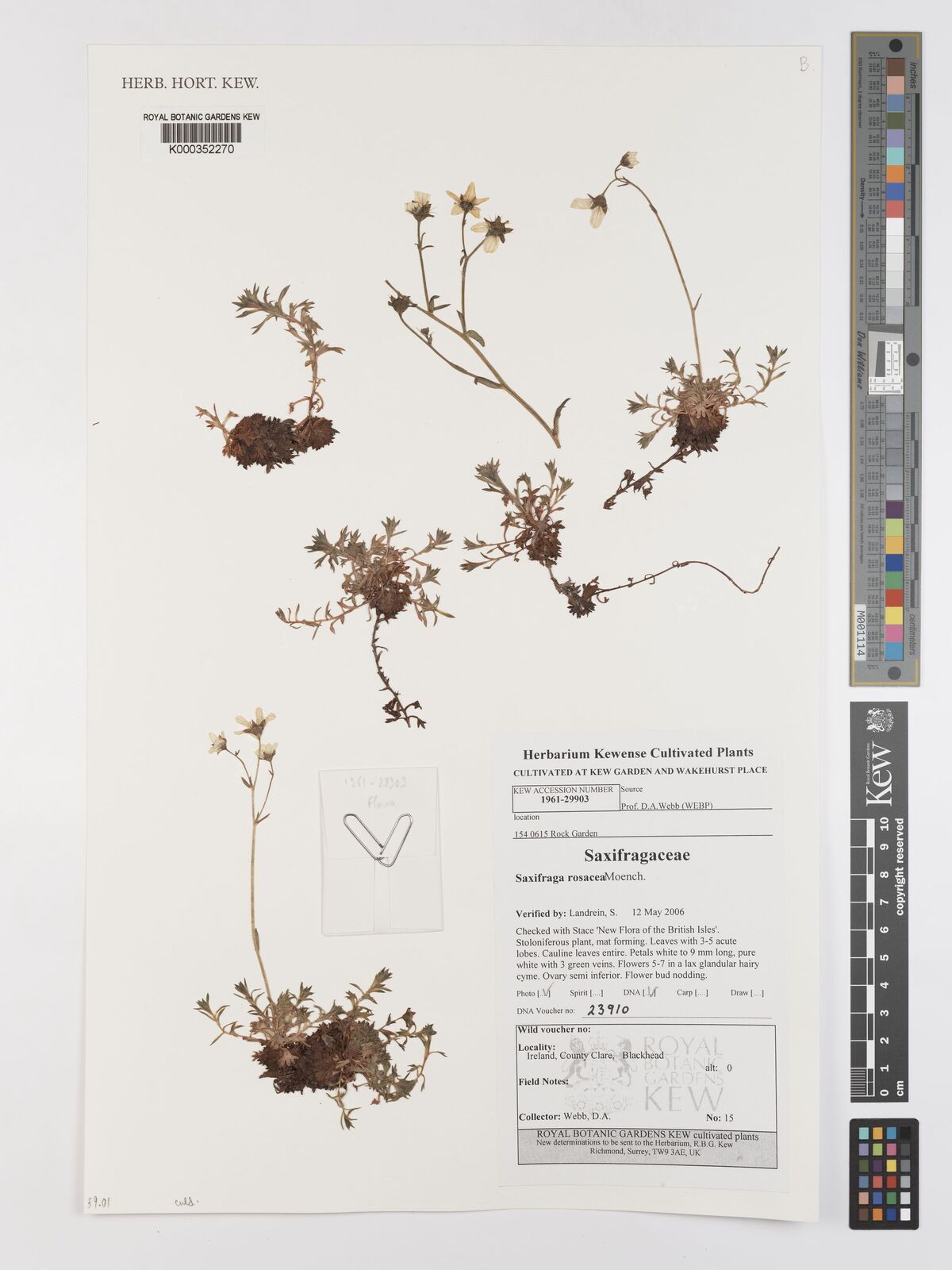
Saxifraga rosacea
species of plant
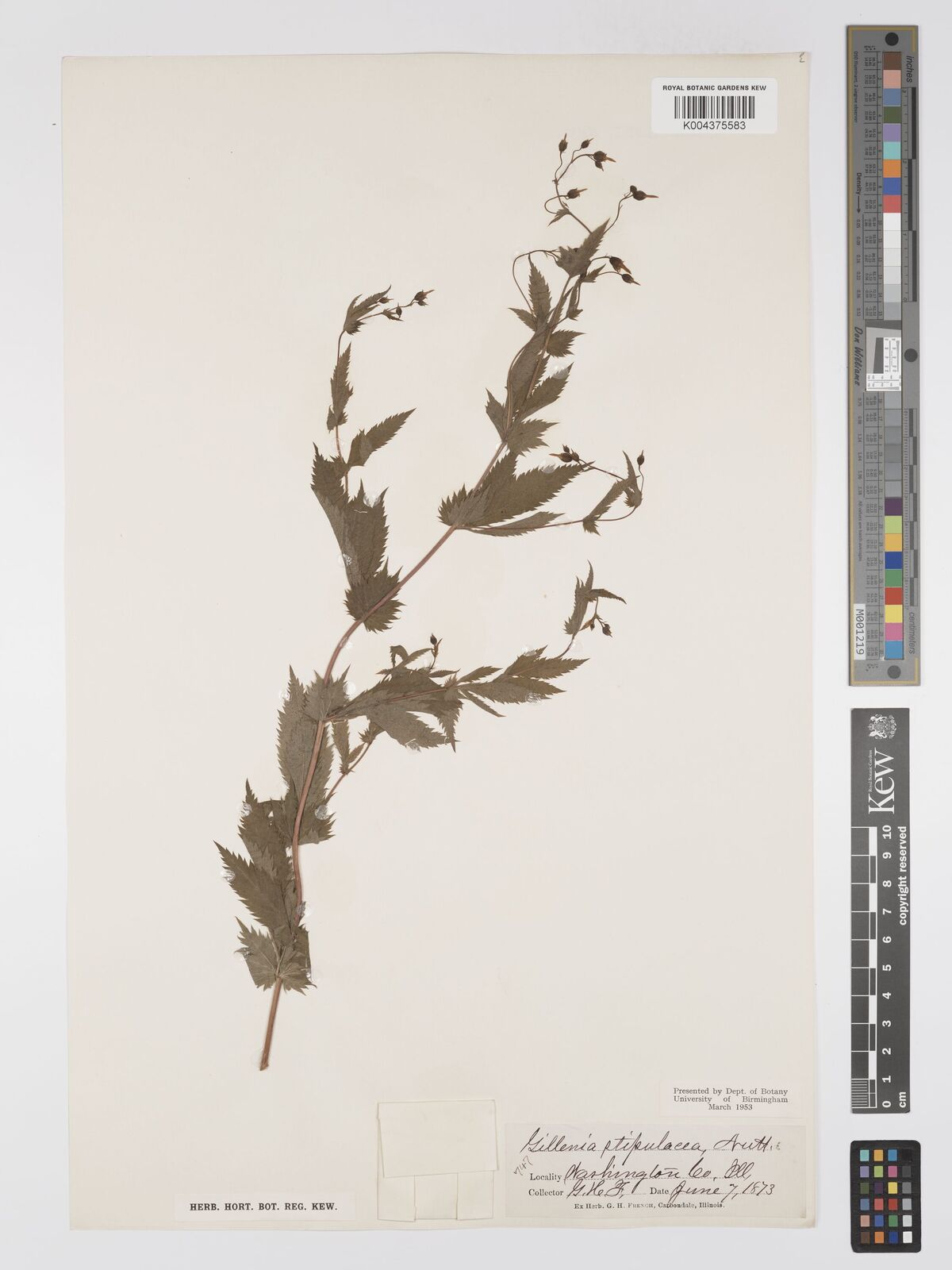
Gillenia
Gillenia (syn. Porteranthus) is a genus of two species of perennial herbs in the family Rosaceae, Gillenia stipulata and Gillenia trifoliata. Common names for plants in this genus include: '''Bowman's root, Indian-physic, American ipecac'. This genus is endemic to dry open woods with acidic soils in eastern North America. Both plants are subshrubs with exposed semi-woody branches and serrated leaves; the larger lower leaves are divided into palmately arranged leaflets. Plants bloom in May, June, or July; blooms are composed of five slender white petals which are loosely arranged and typically

Symphoricarpos orbiculatus
species of plant

Odontites vulgaris
species of plant

Galactites
Galactites is a genus of flowering plants in the family Asteraceae. The name is derived from the Greek γάλα (= "milk"). The best-known species is Galactites tomentosus.

Noccaea
Noccaea is a problematic genus of flowering plants in the family Brassicaceae, native to temperate areas of western North America, southern South America, northern Africa, Europe and Asia.

Crassocephalum
Crassocephalum is a genus the common names of whose members include ragleaf, thickhead, and bologi. Several species are raised as leaf vegetables and used for medicine, especially in West Africa. Similar to Senecio, but differing in never having ray florets. A calyculus of short bracts (c.1/4 to 1/5 of the length of the inner phyllaries) is present. The genus is typically thistle-like in appearance, but all parts are soft and not spiny.

Galactites tomentosus
species of plant

Alkekengi
Alkekengi is a monotypic genus of flowering plants in the nightshade family Solanaceae with a single species Alkekengi officinarum. This species is native to the regions covering Southern Europe to South Asia and Northeast Asia.

Ceratocephala
genus of plants

Phlomoides
Phlomoides, also called Jerusalem sage and Lampwick plant, is a genus of over 130 species of flowering plants in the family Lamiaceae, native from the eastern Mediterranean Basin through Eastern Europe, western and central Asia, and the Indian subcontinent to China, Korea, and the Russian Far East. Phlomoides now comprises many species formerly in the genus Phlomis, and the former genera Eremostachys, Lamiophlomis, Notochaete, and Pseuderemostachys.
Scorzoneroides
thumb|left|Scorzoneroides montana subsp. montana

Christia
Christia is a genus of flowering plants in the family Fabaceae. It belongs to the subfamily Faboideae.

Echium parviflorum
species of plant

Lamarckia
Lamarckia is a genus of plants in the grass family native to the Old World Dry Belt, on the Mediterranean Region, the Arabian Peninsula, East Africa and South Asia. It has a single species, Lamarckia aurea, known colloquially as the '''golden dog's-tail or goldentop grass'''.
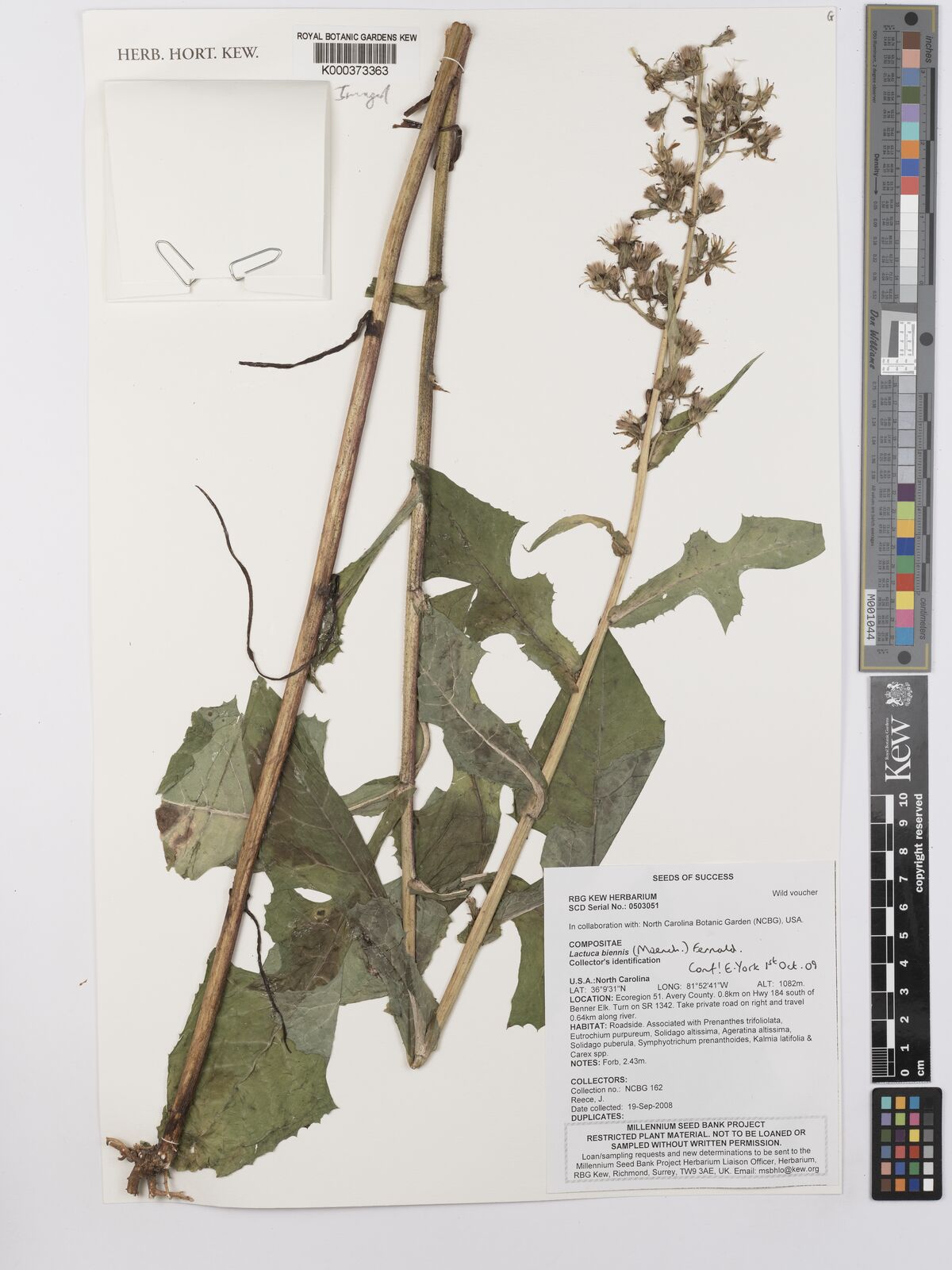
Lactuca biennis
species of plant
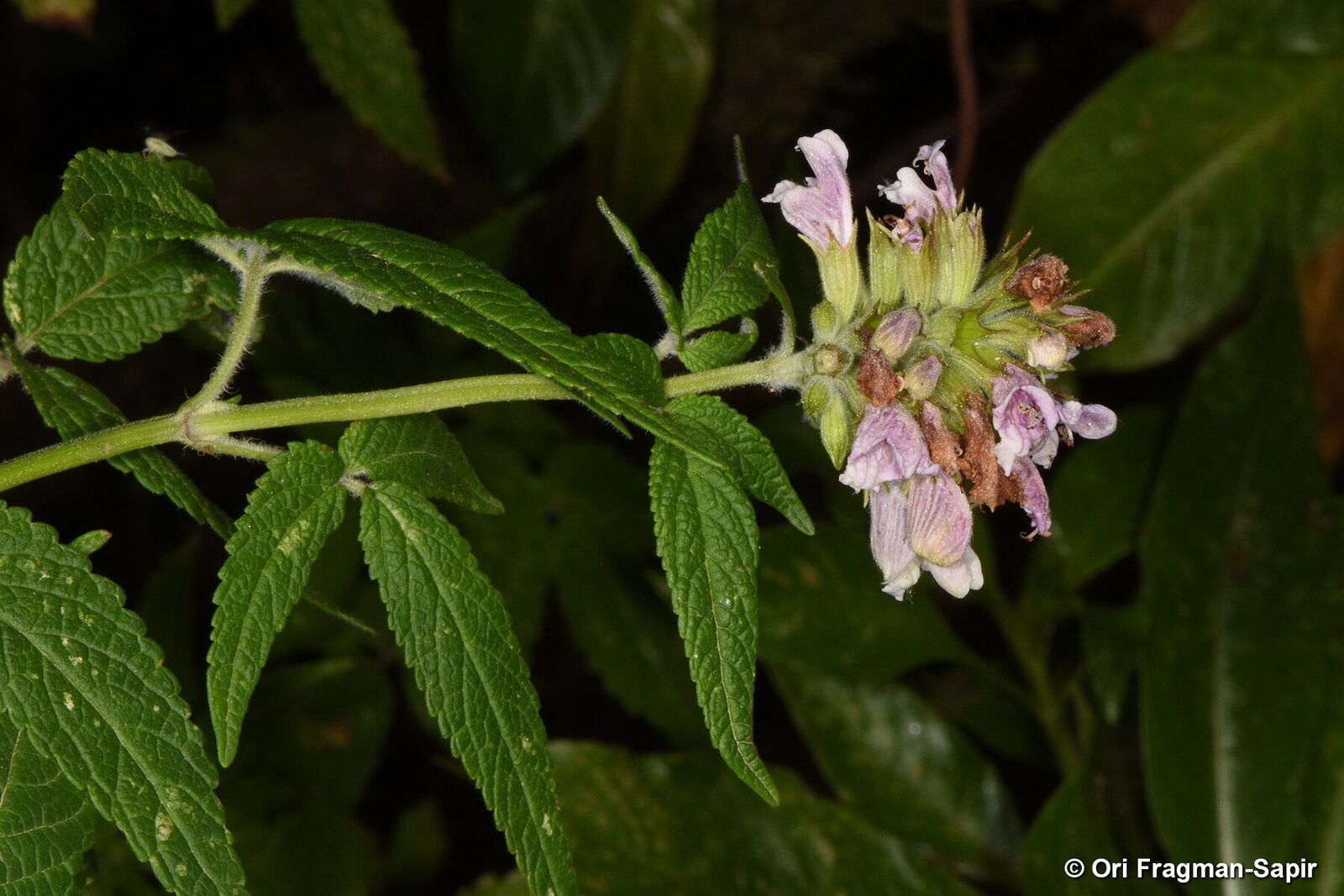
Cedronella
Cedronella is a genus of flowering plants in the tribe Mentheae of the family Lamiaceae, comprising a single species, Cedronella canariensis, native to the Canary Islands, the Azores, and Madeira. It is also naturalized in various places (South Africa, St. Helena, New Zealand, California). Common names include Canary Islands-balm, Canary balm, and Balm-of-Gilead.

Hystrix
genus of plants

Wangenheimia
Wangenheimia is a monotypic genus of plants in the grass family. The only known species is Wangenheimia lima.
Modiola
Modiola is a monotypic genus of plants in the mallow family containing the single species Modiola caroliniana, which is known by several common names including bristly-fruited mallow, Carolina bristlemallow, babosilla, and redflower mallow. It is a creeping perennial which is probably native to South America but which is widely naturalized throughout the tropical and warmer temperate world.