Category
page 1Television terminology

television
thumb|upright=1.35|Flat-panel display|Flat-screen television receivers on display for sale at a consumer electronics store in May 2008

journalist
thumb|upright|Canadian journalist Nardwuar at TEDxVancouver in 2010

news
alt=An girl holding a newspaper with the headline: 'The Eagle Has Landed' – Two Men Walk on the Moon|thumb|319x319px|An American girl holding The Washington Post newspaper about the first Moon landing – [[Apollo 11, July 21, 1969]]

video recording
thumbtime=1|thumb|upright=1.5|A one-minute animated video showing an example of a media production process|alt=Scenes in order: initial meeting, brainstorming, concept design, scripting, storyboards, shooting, initial editing, adding graphics, revising, add audio, final grading, delivery

Blu-ray Disc
Blu-ray (Blu-ray Disc or BD) is a digital optical disc data storage format designed to supersede the DVD format. It was invented and developed in 2005 and released worldwide on June 20, 2006, capable of storing several hours of high-definition video (HDTV 720p and 1080p). The main application of Blu-ray is as a medium for video material such as feature films and for the physical distribution of video games for the PlayStation 3, PlayStation 4, PlayStation 5, Xbox One, and Xbox Series X. The name refers to the blue laser used to read the disc, which allows information to be stored at a greater

screenplay
A screenplay, or script, is a written work produced for a film, television show (also known as a teleplay), or video game by screenwriters (cf. stage play). Screenplays can be original works or adaptations from existing pieces of writing. A screenplay is a form of narration in which the movements, actions, expressions and dialogue of the characters are described in a certain format. Visual or cinematographic cues may be given, as well as scene descriptions and scene changes.

sitcom
alt=Two characters sit at the table and chat with expressive faces, a common scene in sitcoms|thumb|A shot of singer Tennessee Ernie Ford as Cousin Ernie and [[Lucille Ball as Lucy Ricardo from a 1954 episode of the American television sitcom I Love Lucy, often regarded as one of the most influential television programs in history]]

television set
device that combines a tuner, display, and speakers for the purpose of viewing television

high-definition television
TV resolution standard
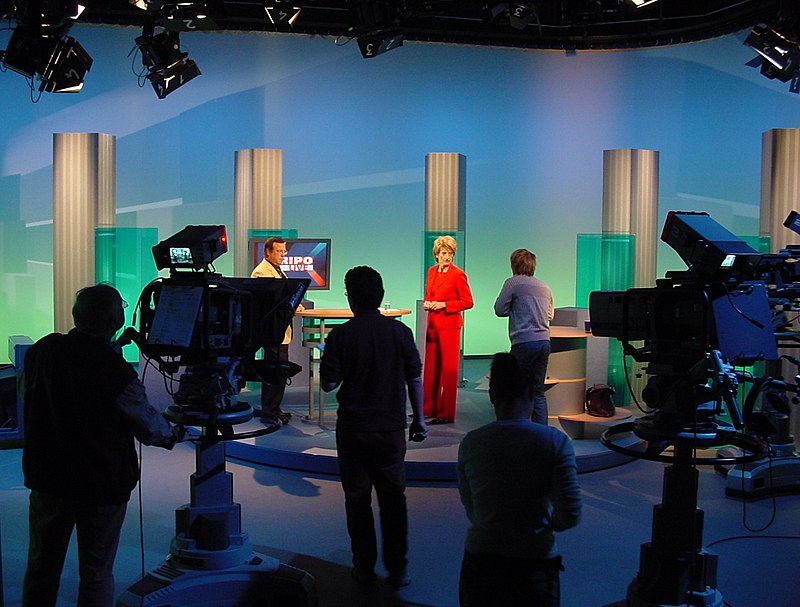
television program
segment of audiovisual content intended for broadcast and streaming on television

streaming media
continuous multimedia operated and presented to users by a provider

High-Definition Multimedia Interface
digital television
transmission of audio and video by digitally processed and multiplexed signal

modulation
process of encoding information by varying properties of a periodic carrier waveform

soap opera
genre of television/radio drama

distance education
education via communication technology with little or no face-to-face teaching
analog signal
signal where the time-varying feature is an analogous representation of some other time-varying quantity

wireless communication
thumb|235px|A handheld [[on-board communication station of the maritime mobile service ]]
.jpg)
première
thumb|300px|Film premiere for Flatliners, [[Grauman's Chinese Theatre, Hollywood, 1990]]
A premiere, also spelled première, (from , ) is the debut (first public presentation) of a work, i.e. play, film, dance, musical composition, or even a performer in that work.

PAL
Phase Alternating Line (PAL) is a colour encoding system for analogue television. It was one of three major analogue colour television standards, the others being NTSC and SECAM. In most countries it was broadcast at 625 lines, 50 fields (25 frames) per second, and associated with CCIR analogue broadcast television systems B, D, G, H, I and K. The articles on analogue broadcast television systems further describe frame rates, image resolution, and audio modulation.
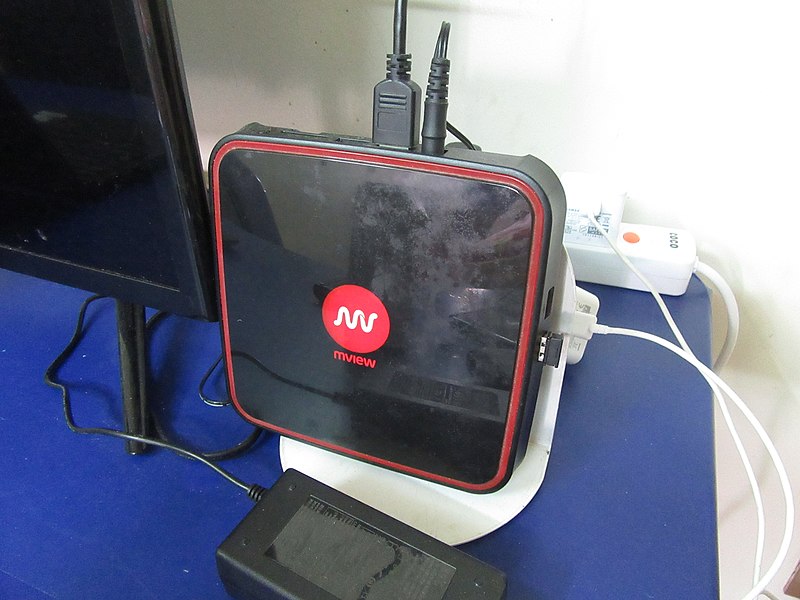
IPTV
system through which television services are delivered using the Internet protocol suite

satellite television
television content transmitted via signals from orbiting satellites

television film
film format that is broadcast and distributed specifically for television networks.

display resolution
number of distinct pixels in each dimension that can be displayed

NTSC
NTSC (an acronym of National Television System Committee) was the first American standard for analog television, published and adopted in 1941. It was one of three major color formats for analog television; the others were PAL and SECAM. NTSC color was usually associated with System M, and this combination was sometimes called NTSC II. A second NTSC standard was adopted in 1953, which allowed color television compatible with the existing stock of black-and-white sets. The EIA defined NTSC performance standards in EIS-170 (also known as RS-170) in 1957.

digital rights management
technology to control access to software or digital content

IEEE 1394
serial bus interface standard

spin-off
narrative work derived from existing works

sequel
thumb|The Return of Tarzan, official sequel to [[Tarzan of the Apes]]
A sequel is a work of literature, film, theatre, television, music, or video game that continues the story of, or expands upon, some earlier work. In the common context of a narrative work of fiction, a sequel portrays events set in the same fictional universe as an earlier work, usually chronologically following the events of that work.

stunt performer
person who performs stunts

extra
actor with a very minor part, typically non-speaking and in the background

deus ex machina
plot device

recording studio
specialized facility for sound recording

remake
A remake is a film, television series, video game, song or similar form of entertainment that is based upon and retells the story of an earlier production in the same medium—e.g., a "new version of an existing film". A remake tells the same story as the original but uses a different set of casts, and may use actors from the original, alter the theme, or change the flow and setting of the story. In addition, since a remake is released some time after the original work, it may incorporate new technologies, enhancements, and techniques that had not existed or been commonly used when the original

performance
thumb|300x300px
A performance is an act of staging or presenting a form of entertainment. It is also defined as the action or process of carrying out or accomplishing an action, task, or function.
prequel
A prequel is a literary, dramatic or cinematic work whose story precedes that of a previous work, by focusing on events that occur before the original narrative. A prequel is a work that forms part of a backstory to the preceding work.

very high frequency
the 30–300 MHz range of the electromagnetic spectrum

television advertisement
paid, usually commercial, segment in television

smart TV
technological convergence of computers, television sets, and set-top boxes
live action
cinematography, videography not produced using animation
sponsor
commercial supporter of an event, activity, or person
prime time
block of broadcast programming taking place during the middle of the evening for television programming

SECAM
SECAM, also written SÉCAM (, Système Électronique Couleur Avec Mémoire, French for electronic colour system with memory), is an analogue colour television system that was used in France, Russia, and some other countries or territories of Europe and Africa. It was one of three major analog colour television standards, the others being PAL and NTSC. Similar to PAL, a SECAM picture is made up of 625 interlaced lines and displayed at a rate of 25 frames per second (except SECAM-M). However, because of how SECAM processes colour information, it is not compatible with the PAL video format standard.

chroma key
compositing technique

product placement
marketing technique where references to specific brands or products are incorporated, inline, into another work
television channel
terrestrial frequency or virtual number over which a television station or television network is distributed
channel
physical or logical connection used for transmission of information
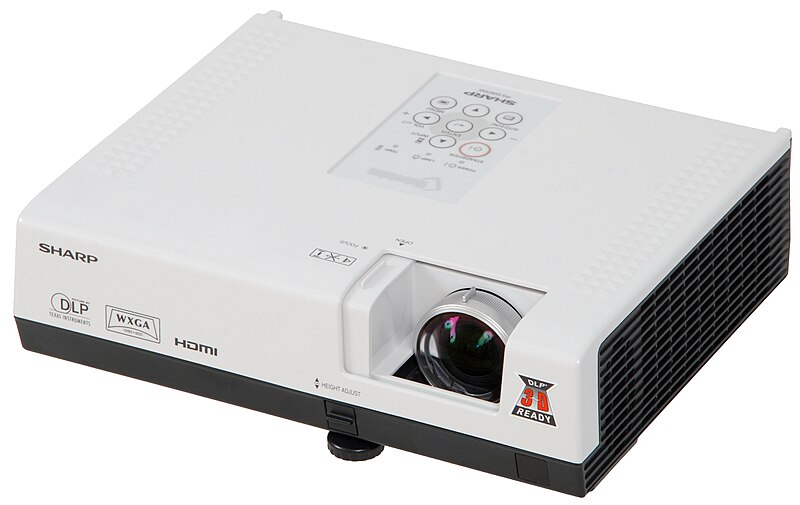
video projector
image projector that receives a video signal and projects the corresponding image on a projection screen using a lens system

multiplexing
thumb|250px|Multiple low data rate signals are multiplexed over a single high-data-rate link, then demultiplexed at the other end.

Ultra-high-definition television
television formats beyond HDTV

radio frequency
electromagnetic frequencies ranging from 3 kHz to 300 GHz
television pilot
trial episode made to sell a television series

1080p
thumb|upright=1.3|TV standards through 1080p. The red-tinted image shows 576i or [[576p resolution. The blue-tinted image shows 720p resolution, an HDTV level of resolution. The full-color image shows 1080 resolution.]]
miniseries
A miniseries or mini-series, sometimes called a limited-run series, is a television program that tells a story in a predetermined, limited number of episodes. Many miniseries can also be referred to, and shown, as a television film in several parts.

set-top box
electronic device to convert a signal to an output for a television
episode
An episode is a narrative unit within a larger dramatic, comedic, or documentary production, such as a series intended for radio, television or streaming consumption.

reboot
new start to an established fictional universe, work, or series
.jpg)
1080i
In high-definition television (HDTV) and video display technology, 1080i is a video display format with 1080 lines of vertical resolution and interlaced scanning method. This format was once a standard in HDTV. It was particularly used for broadcast television because it can deliver high-resolution images without needing excessive bandwidth. This format is used in the SMPTE 292M standard.
camera operator
professional operator of a film or video camera; filmmaker who moves the camera according to the instructions of the cameraman or director
television network
telecommunications network for distribution of television program content