Category
page 1Tells (archaeology)
.jpg)
Homs
Homs ( ; ), known in pre-Islamic times as Emesa ( ; ), is a city in western Syria and the capital of the Homs Governorate. It is above sea level and is located north of Damascus. Located on the Orontes River, Homs is also the central link between the interior cities and the Mediterranean coast.

Jericho
Jericho ( ; , ; Hebrew: יריחו) is a city in the West Bank, Palestine, and the capital of the Jericho Governorate. The city is located in the Jordan Valley, with the Jordan River to the east and Jerusalem to the west.

Ashdod
Ashdod (, ; , , or ; Philistine: , romanized: *ʾašdūd) is the sixth-largest city in Israel. Located in the country's Southern District, it lies on the Mediterranean coast south of Tel Aviv and north of Ashkelon. Ashdod's port is the largest in Israel, handling 60% of the country's imported goods.

Nineveh
Nineveh was an ancient Near Eastern city of Upper Mesopotamia, located in the modern-day city of Mosul in northern Iraq. It is located on the eastern bank of the Tigris River and was the capital and largest city of the Neo-Assyrian Empire, and potentially the wealthiest city in the ancient world. Today, it is a common name for the half of Mosul that lies on the eastern bank of the Tigris, and the country's Nineveh Governorate takes its name from it.
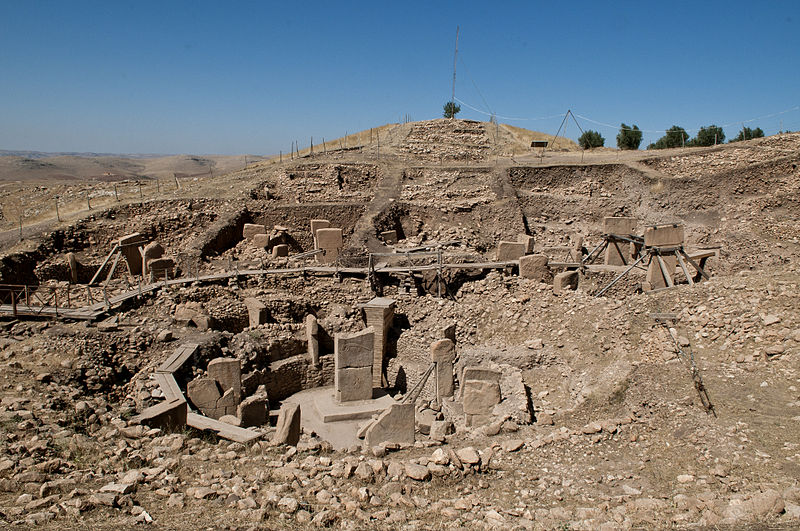
Göbekli Tepe
neolithic archaeological site in Turkey

Çatalhöyük
Çatalhöyük (English: Chatalhoyuk; , ; ; also Çatal Höyük and Çatal Hüyük; from Turkish çatal "fork" + höyük "tumulus") is a tell (a mounded accretion resulting from long-term human settlement) of a very large Neolithic and Chalcolithic proto-city settlement in southern Anatolia, which existed from approximately 7500 BC to 5600 BC and flourished around 7000 BC. Çatalhöyük overlooks the Konya Plain, southeast of the present-day city of Konya (ancient Iconium) in Turkey, approximately from the twin-coned volcano of Mount Hasan.

Heliopolis
city of ancient Egypt

Mari
ancient Sumerian and Amorite city

Amarna
Amarna (; ) is an extensive ancient Egyptian archaeological site containing the ruins of Akhetaten, the capital city during the late Eighteenth Dynasty. The city was established in 1346 BC, built at the direction of the Pharaoh Akhenaten, and abandoned shortly after his death in 1332 BC.

Ebla
Ebla (Sumerian: eb₂-la, , modern: , Tell Mardikh) was one of the earliest kingdoms in Syria. Its remains constitute a tell located about southwest of Aleppo near the village of Mardikh. Ebla was an important center throughout the and in the first half of the Its discovery proved the Levant was a center of ancient, centralized civilization equal to Egypt and Mesopotamia and ruled out the view that the latter two were the only important centers in the Near East during the Early Bronze Age.

Beit Shemesh
city in Israel

Tel Megiddo
site of an ancient city in northern Israel's Jezreel valley

Beit She'an
Ancient city and modern regional center in the Northern District of Israel

Ecbatana
Ecbatana () was an ancient city, the capital of the Median kingdom, and the first capital in Iranian history. It later became the summer capital of the Achaemenid and Parthian empires. It was also an important city during the Seleucid and Sasanian empires. Ecbatana was located in the Zagros Mountains, the east of central Mesopotamia, on Hagmatana Hill (Tappe-ye Hagmatāna). Its strategic location and resources probably made it a popular site even before the 1st millennium BC. It is identified with the current city of Hamadan.
tell
ancient settlement mound

Bubastis
thumb|Map of ancient Lower Egypt showing Bubastis

Yavne
Yavne () is a city in the Central District of Israel. In it had a population of .
Tel Hazor
Archeological site in Israel

Avaris
thumb|An official wearing the "mushroom-headed" hairstyle also seen in contemporary paintings of Western Asiatic foreigners, from Avaris, the capital of the Hyksos. Dated to 1802–1640 BC. Staatliche Sammlung für Ägyptische Kunst.
Ein Gedi
nature reserve in Israel

Kültepe
Kültepe (Turkish: ), also known under its ancient name Kaneš (Kanesh, sometimes also Kaniš/Kanish) or Neša (Nesha), is an archaeological site in Kayseri Province, Turkey. It was already a major settlement at the beginning of the 3rd millennium BC (Early Bronze Age), but it is world-renowned for its significance at the beginning of the 2nd millennium BC (Middle Bronze Age). The archaeological site consists of a large mound (also known as höyük, tepe or tell), and a lower city, where a kārum (the Assyrian word for trading district) was established in the beginning of the 2nd Millennium BC. So fa

Shiloh
Biblical city
Pelusium
thumb|Map of ancient Lower Egypt showing Pelusium
Citadel of Erbil
citadel and archaeological settlement hill in Erbil, Iraqi Kurdistan

Alalakh
Alalakh (Tell Atchana; Hittite: Alalaḫ) is an ancient archaeological site approximately northeast of Antakya (historic Antioch) in what is now Turkey's Hatay Province. It flourished as an urban settlement in the Middle and Late Bronze Age, c. 2000–1200 BC. The city contained palaces, temples, private houses and fortifications. The remains of Alalakh have formed an extensive mound covering around 22 hectares. In the Late Bronze Age, Alalakh was the capital of the local kingdom of Mukiš.
Tell Brak
Archaeological site in Syria
.svg)
Buto
Buto (, , Butu), Bouto, Butus (, Boutos) or Butosus was a city that the Ancient Egyptians called Per-Wadjet. It was located 95 km east of Alexandria in the Nile Delta of Egypt. What in classical times the Greeks called Buto, stood about midway between the Taly (Bolbitine) and Thermuthiac (Sebennytic) branches of the Nile, a few kilometers north of the east-west Butic River and on the southern shore of the Butic Lake (, Boutikē limnē).

Çayönü
Çayönü Tepesi is a Pre-Pottery Neolithic B settlement in southeastern Turkey which prospered from circa 8,630 to 6,800 BC. It is located in Diyarbakır Province forty kilometres north-west of Diyarbakır, one hundred and forty kilometres north-east of Şanlıurfa, at the foot of the Taurus mountains. It lies near the Boğazçay, a tributary of the upper Tigris River and the Bestakot, an intermittent stream. It is an early example of agriculture.
Citadel of Aleppo
castle in Syria

Gezer
Gezer () is an archaeological site in the foothills of the Judaean Mountains at the border of the Shephelah roughly midway between Jerusalem and Tel Aviv in central Israel. It is now an Israeli national park. In the Hebrew Bible, Gezer is associated with Joshua and Solomon. Gezer rises to an elevation of above sea-level, and affords a commanding prospect of the plains to the west, north, and east.

Qatna
Qatna (modern: , Tell al-Mishrifeh; also Tell Misrife or Tell Mishrifeh) was an ancient city located in Homs Governorate, Syria. Its remains constitute a tell situated about northeast of Homs near the village of al-Mishrifeh. The city was an important center through most of the second millennium BC and in the first half of the first millennium BC. It contained one of the largest royal palaces of Bronze Age in Syria and has an intact royal tomb that has provided a great amount of archaeological evidence on the funerary habits of that period.

Dur-Kurigalzu
Dur-Kurigalzu (modern '' in Baghdad Governorate, Iraq) was a city in southern Mesopotamia, near the confluence of the Tigris and Diyala rivers, about west of the center of Baghdad. It was founded by a Kassite king of Babylon, Kurigalzu I (died c. 1375 BC) and was abandoned after the fall of the Kassite dynasty (c. 1155 BC). The city was of such importance that it appeared on toponym lists in the funerary temple of the Egyptian pharaoh, Amenophis III (c. 1351 BC) at Kom el-Hettan". The prefix Dur is an Akkadian term meaning "fortress of", while the Kassite royal name Kurigalzu'' is believed to
Gath
ancient city and archaeological site mentioned in the Bible and in Akkadian sources

Mendes
Mendes (, gen.: ), the Greek name of the ancient Egyptian city of Djedet, also known in ancient Egypt as Per-Banebdjedet ("The Domain of the Ram Lord of Djedet") and Anpet, is known today as Tell El-Ruba ().
Lachish
human settlement
Tepe Sialk
archaeological site in Kashan, Iranian national heritage site

Antipatris
Antipatris (, ) was a city built during the first century BC by Herod the Great, who named it in honour of his father, Antipater. The site, now a national park in central Israel, was inhabited from the Chalcolithic period to the Late Roman period. The remains of Antipatris are known in Modern Hebrew as Tel Afek (), and in Arabic as Khulat Rās al-‘Ayn ('castle of the head of the spring'), after the nearby riverhead of the Yarkon. It has been identified as either the tower of Aphek mentioned by Josephus, or the biblical Aphek, best known from the story of the Battle of Aphek. During the Crusader
Dan
ancient city in northern Israel

Gibeah
thumb|Royal Palace, Tell el-Ful|Tell el-Ful in northern Jerusalem is usually identified with Gibeah of BenjaminGibeah (; Gīḇəʿā; Gīḇəʿaṯ) is the name of three places mentioned in the Hebrew Bible, in the tribes of Benjamin, Judah, and Ephraim respectively.
Tell Leilan
archaeological site in Syria
Leontopolis
Leontopolis was an ancient Egyptian city located in the Nile Delta, Lower Egypt. It served as a provincial capital and Metropolitan Archbishopric. The archaeological site and settlement are known today as Kafr Al Muqdam.
Tel Be'er Sheva
archaeological site in Israel
Nevalı Çori
Early Neolithic settlement and archaeological site
Tillya Tepe
archaeological site

Pithom
Pithom (; ; or , and ) was an ancient city of Egypt. References in the Hebrew Bible and ancient Greek and Roman sources exist for this city, but its exact location remains somewhat uncertain. Some scholars identified it as the later archaeological site of Tell el-Maskhuta (). Others identified it as the earlier archaeological site of Tell El Retabeh ().
Jemdet Nasr
archaeological site in Iraq
Tell Abu Hureyra
archaeological site in Syria
Karahan Tepe
archeological site in Turkey
Gonur Depe
archaeological site in Turkmenistan
.jpg)
Sarepta
Sarepta (near modern Sarafand, Lebanon) was a Phoenician city on the Mediterranean coast between Sidon and Tyre, also known biblically as Zarephath. It became a bishopric, which faded, and remains a double (Latin and Maronite) Catholic titular see.

Akhziv National Park
Achziv ( ʾAḵzīḇ) or Az-Zeeb () is an ancient site on the Mediterranean coast of northern Israel, between the border with Lebanon and the city of Acre. It is located north of Acre on the coast of the Mediterranean Sea, within the municipal area of Nahariya. Today it is an Israeli national park.

Balawat
Balawat (, '''') is an archaeological site of the ancient Assyrian city of Imgur-Enlil, and modern village in Nineveh Province (Iraq). It lies southeast from the city of Mosul and to the south of the modern Assyrian town of Bakhdida.

Athribis
Athribis (; Greek: , from the original , ) was an ancient city in Lower Egypt. It is located in present-day Tell Atrib, just northeast of Benha on the hill of Kom Sidi Yusuf. The town lies around 40 km north of Cairo, on the eastern bank of the Damietta branch of the Nile. It was mainly occupied during the Ptolemaic, Roman, and Byzantine eras.
Amman Citadel
archaeological site in Amman

Gamla
Gamla (), also Gamala, was an ancient Jewish town on the Golan Heights. Believed to have been founded as a Seleucid fort during the Syrian Wars, it transitioned into a predominantly Jewish settlement that came under Hasmonean rule in 81 BCE. The town's name reflects its location on a high, elongated ridge with steep slopes resembling a camel's hump.
Tel Arad
archaeological site west of the Dead Sea, Israel

Urkesh
Urkesh, also transliterated Urkish (Akkadian: 𒌨𒆧𒆠 UR.KIŠKI, 𒌨𒋙𒀭𒄲𒆠 UR.KEŠ3KI; modern Tell Mozan; ), is a tell, or settlement mound, located in the foothills of the Taurus Mountains in Al-Hasakah Governorate, northeastern Syria. It was founded during the fourth millennium BC, possibly by the Hurrians, on a site which appears to have been inhabited previously for a few centuries. The city god of Urkesh was Kumarbi, father of Teshup.
Tell es-Sultan
archaeological site in the West Bank
Ganj Dareh
Iranian national heritage site
Dora
archaeological site