Category
page 1Thai cuisine

curry
thumb|upright=1.2|Lamb Madras curry, Anglo-Indian, c. 1850
Curry is a dish with a spicy sauce, initially in Indian cuisine, then modified by interchange with the Portuguese, followed by the British, and eventually thoroughly internationalised. Many curries are found in the cuisines of countries in Southeast Asia and East Asia.

Citrus hystrix
species of plant
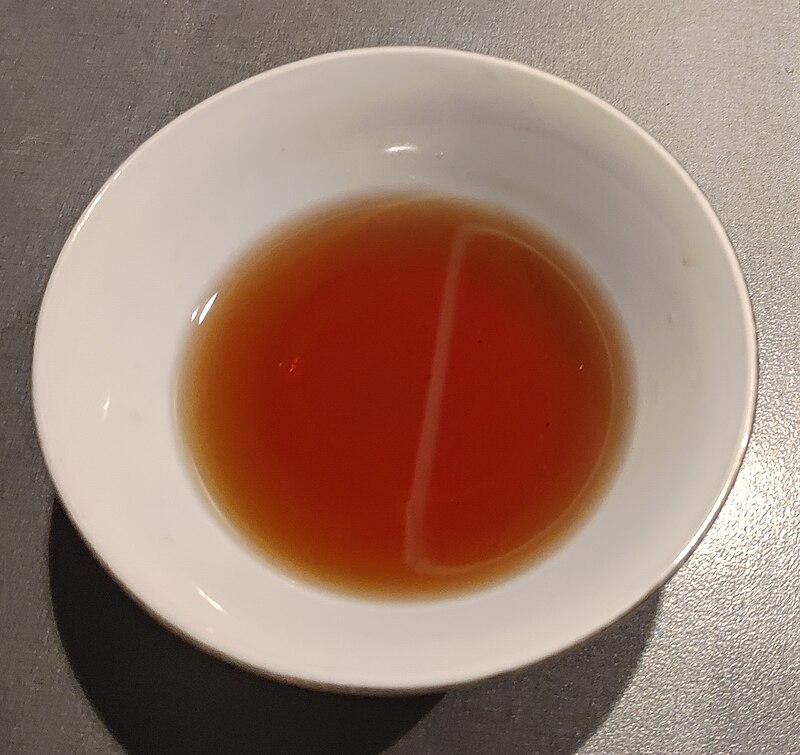
fish sauce
an amber-coloured liquid extracted from the fermentation of fish with sea salt

glutinous rice
type of rice grown mainly in Southeast and East Asia, with opaque grains, very low amylose content; especially sticky when cooked; does not contain gluten

century egg
Chinese egg-based culinary dish

cooked rice
rice that has been cooked either by steaming or boiling

Thai cuisine
culinary traditions of Thailand

Basella alba
species of plant

nasi goreng
Malay, Javanese and Chinese Southeast Asia fried rice

balut
developing poultry embryo boiled and eaten

satay
Satay or sate is a Southeast Asian dish consisting of small pieces of seasoned meat, seafood or vegetables skewered on sticks and grilled over charcoal. It is typically served with a sauce, most commonly peanut-based and accompanied by rice cakes, cucumber or pickled vegetables. Common ingredients include chicken, beef, goat, pork and seafood, while regional and vegetarian variations are also found.

rice flour
form of flour made from finely milled rice

sriracha sauce
Sriracha ( or ; , ) is a type of hot sauce or chili sauce made from a paste of chili peppers, distilled vinegar, pickled garlic, sugar, and salt. It was first produced in 1932 by a native of Si Racha, a town and district of Thailand, though it may have been based on older Cantonese recipes.
shrimp paste
fermented condiment
oyster sauce
condiment
palm sugar
sugar extracted from the sap of palm trees

ketupat
Ketupat (Indonesian and Malay pronunciation: kəˈt̪upat̪̚) is a type of compressed rice cake commonly found across Southeast Asia, particularly in Indonesia, Malaysia, Brunei, Singapore, Timor-Leste and southern Thailand. It is traditionally made by filling a pouch woven from young palm leaves with rice, which is then boiled until the grains expand and form a firm, compact mass. Ketupat is typically served as an accompaniment to meat, vegetable or coconut milk-based dishes and is widely prepared for festive and ceremonial occasions.

thali
thumb|North Indian cuisine|North Indian style vegetarian thali served in a restaurant
fish ball
balls made from fish paste which are then boiled or deep-fried
blood as food
food, often in combination with meat

Shipworm
Teredo navalis

gai lan
type of plant in the Brassica family, source of a leaf vegetable
coconut jam
jam made from a base of coconut milk, eggs and sugar
mung bean sprout
sprout of the mung bean

Ocimum × africanum
species of plant

Senna siamea
species of plant

galangal
thumb|right|200px|Kaempferia galanga
thumb|right|200px|Lesser galangal (Alpinia officinarum)
thumb|right|300px|Galangal rhizome ready to be prepared for cooking
bánh xèo
Vietnamese thin pancakes
char siu
popular style of Cantonese barbecued pork
Canai bread
Tamil Indian flatbread dish

Short mackerel
species of fish
jasmine rice
rice variety
Peanut sauce
Indonesian seasoning originally from Java island
Hainanese chicken rice
Rice and chicken dish originating from Hainan island

shumai
Shumai () is a type of traditional Chinese dumpling meat made of ground pork. In Cantonese cuisine, it is usually served as a dim sum snack, and is served with an additional serving of soy sauce. In addition to accompanying the Chinese diaspora, variations of shumai can be found in Japan, Southeast Asia, and South America. Variations include the Hawaiian pork hash and the Indonesian siomay. In Australia, it developed into dim sim.

krupuk
Krupuk (), also known as keropok () and kropek () refers to traditional deep-fried crackers made from starch combined with flavouring ingredients such as prawn, fish or other seafood. The food has long-standing traditions throughout maritime Southeast Asia and neighbouring coastal regions, particularly in Indonesia, Malaysia, the Philippines, southern Thailand, Brunei and Singapore.
oyster omelette
dish

Java Barb
species of fish

Telosma cordata
species of plant
nam phrik
Thai chili sauce
salted duck egg
traditional Asian dish common in several regions

acar
Acar () is a type of vegetable pickle of Maritime Southeast Asia, most prevalent in Indonesia, Malaysia, Singapore and Brunei. It is a localised version of Indian achar. It is known as atjar in Dutch cuisine, derived from Indonesian acar. Acar is usually prepared in bulk as it may easily be stored in a well-sealed glass jar in refrigerator for a week, and served as a condiment for any meals.
Thai tea
Thai drink made from tea, milk and sugar, and served hot or cold

Acacia pennata
species of plant

Glyphoglossus molossus
species of amphibian
green papaya salad
Southeast Asian salad of Southeast Asia origin made from shredded unripe papaya
Malay cuisine
Sumatran cuisine
squid as food
squid used as food, commonly eaten in the Mediterranean, in East Asia, and elsewhere
bánh cuốn
Vietnamese dish
turnip cake
savory dish in Chinese cuisine popular in Cantonese dim sum
Nasi Kerabu
Mixed rice dish from southern Thailand and Malaysia with herbs and vegetables
Mu kratha
Thai Table-cooked dish
pig's ear
cooked ear of pig for human food consumption

Lethocerus indicus
species of true bug

Marsilea crenata
species of plant
koi
Lao-Thai salad dish with raw beef

popiah
Popiah (, Teochew Peng'im: boh⁸ bian²) is a Fujianese/Teochew-style fresh spring roll filled with an assortment of fresh, dried, and cooked ingredients, eaten during the Qingming Festival and other celebratory occasions. The dish is made by the people and diaspora of Fujian province of China (in Quanzhou, Xiamen, and Zhangzhou), neighbouring Chaoshan district, and by the Teochew and Hoklo diaspora in various regions throughout Southeast Asia and in Taiwan (due to the majority of Taiwanese being Hoklo), The origin of popiah dates back to the 17th century.

Yusheng
thumb|right|200px|Ceremonial tossing of ingredients
Yusheng, yee sang or yuu sahng (), or Prosperity Toss, also known as lo sahng (Cantonese for ) is a Chinese raw fish salad that is popular among the Chinese communities of Malaysia and Singapore. It has become a trend in the neighbouring countries, especially the Chinese diaspora in Indonesia, Brunei, Thailand and even Hong Kong. It usually consists of strips of raw fish (sometimes salmon), mixed with shredded vegetables and a variety of sauces and condiments, among other ingredients. There is also a vegetarian version of this dish, where the
pla ra
Southeast Asian fermented fish seasoning
nam chim
Thai dipping sauce