Category
page 1Thermodynamics

thermodynamics
Thermodynamics is a branch of physics that deals with heat, work, and temperature, and their relation to energy, entropy, and the physical properties of matter and radiation. The behavior of these quantities is governed by the four laws of thermodynamics, which convey a quantitative description using measurable macroscopic physical quantities but may be explained in terms of microscopic constituents by statistical mechanics. Thermodynamics applies to various topics in science and engineering, especially physical chemistry, biochemistry, chemical engineering, and mechanical engineering, as well

heat
In thermodynamics, heat is defined as the form of energy crossing the boundary of a thermodynamic system by virtue of a temperature difference across the boundary. A thermodynamic system does not contain heat. Nevertheless, the term is also often used to refer to the thermal energy contained in a system as a component of its internal energy and that is reflected in the temperature of the system.

pressure
Pressure (symbol: p or P) is the force applied perpendicular to the surface of an object per unit area over which that force is distributed. Gauge pressure (also spelled gage pressure) is the pressure relative to the ambient pressure.

melting
thumb|Melting ice cubes illustrate the process of fusion.|321x321px

cold
thumb|right|300px|An iceberg, which is commonly associated with cold
thumb|right|Signal "cold" – unofficial (except recommended by CMAS* SCUBA Diver|CMAS), it is nonetheless used by many schools of diving and propagated through diving websites as one of the more useful additional signals

Boltzmann constant
Physical constant relating energy with temperature and other intensive physical quantities

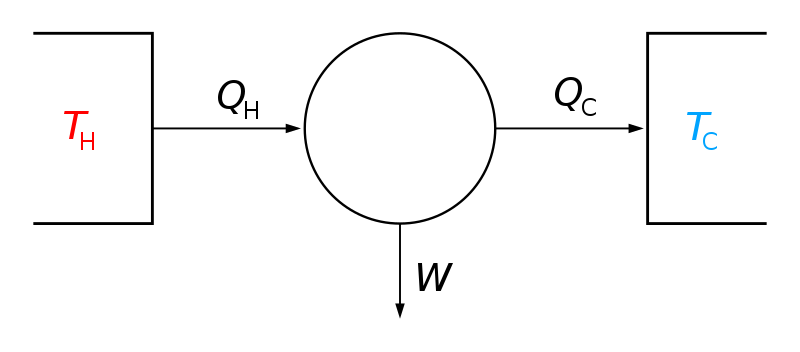
heat engine
system that performs the conversion of heat or thermal energy to mechanical work
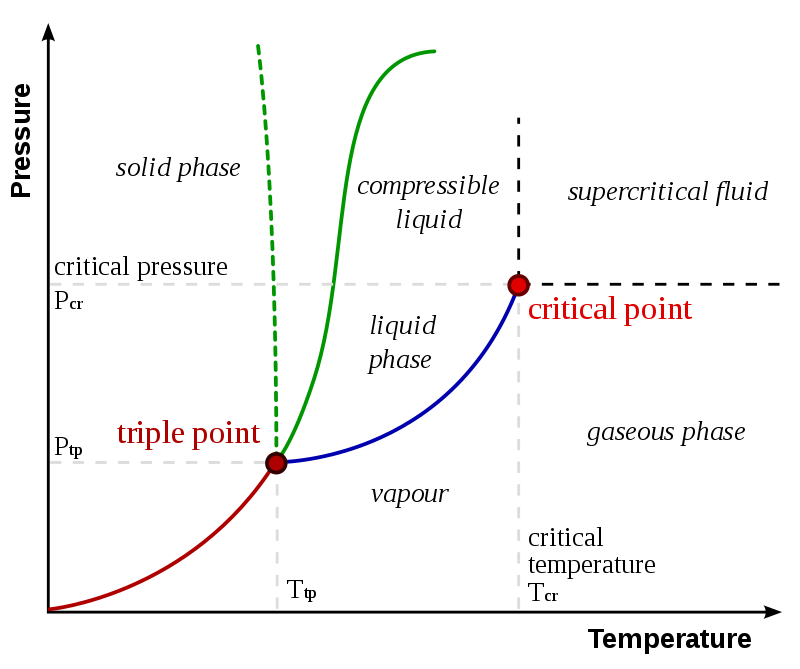
triple point
thermodynamic point where three matter phases exist
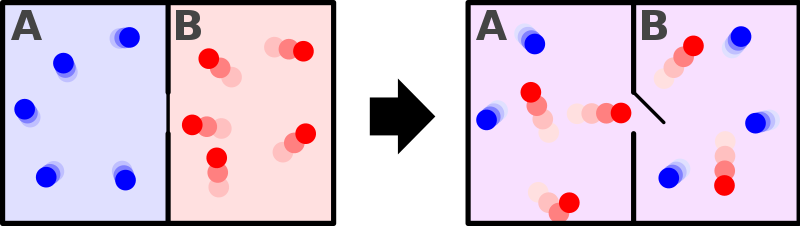
statistical mechanics
physics of large number of particles' statistical behavior
standard temperature and pressure
reference values for temperature and pressure
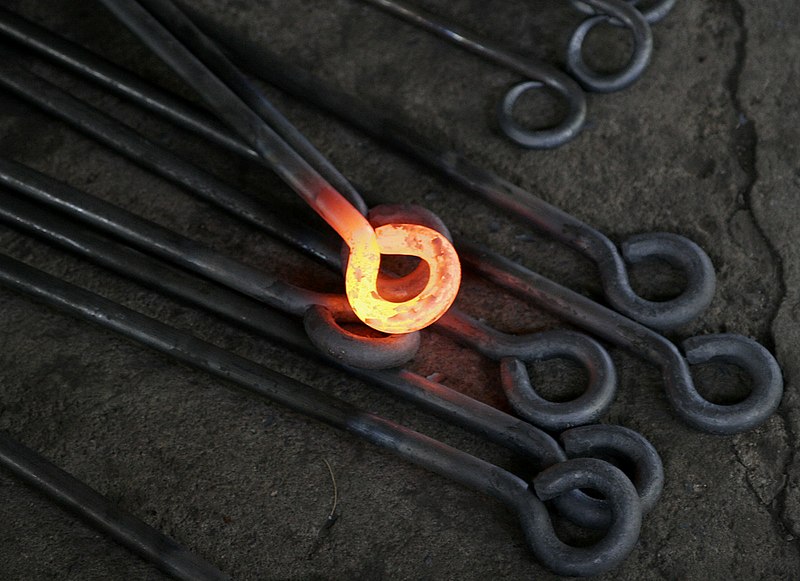
thermal radiation
electromagnetic radiation generated by the thermal motion of charged particles in matter

molar gas constant
physical constant; the molar equivalent to the Boltzmann constant

thermal expansion
tendency of matter to change volume in response to a change in temperature
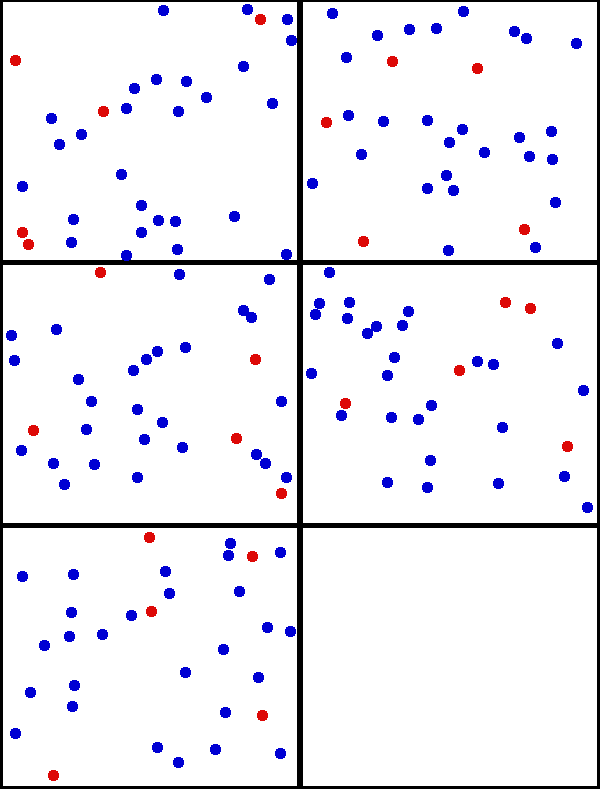
kinetic theory
mathematical model explaining macroscopic properties of gases in microscopic terms
thermodynamic equilibrium
state of thermodynamic system(s) where no net macroscopic flow of matter or energy occurs
latent heat
released or absorbed energy during a constant-temperature process
zero-point energy
lowest possible energy of a quantum system or field
thermodynamic cycle
linked sequence of thermodynamic processes that involve transfer of heat and work into and out of the system,while varying pressure, temperature, and other state variables within the system, and that eventually returns the system to its initial state

refrigeration
thumb|Commercial refrigeration
thermodynamic process
energetic development of a thermodynamic system proceeding from an initial state to a final state
Stefan-Boltzmann constant
ratio between the radiative power of a black body to the fourth power of its temperature
Mpemba effect
the observation that, in some circumstances, warmer water can freeze faster than colder water
flammability
ability to easily ignite in air at ambient temperatures
Joule–Thomson effect
temperature change of a real gas when undergoing a throttled expansion without heat transfer

pyroelectricity
thumb|Internals of a pyroelectric sensor
Pyroelectricity (from Greek: pyr (πυρ), "fire" and electricity) is a property of certain crystals which are naturally electrically polarized and as a result contain large electric fields. Pyroelectricity can be described as the ability of certain materials to generate a temporary voltage when they are heated or cooled. The change in temperature modifies the positions of the atoms slightly within the crystal structure, so that the polarization of the material changes. This polarization change gives rise to a voltage across the crystal. If the temperature
thermodynamic potential
scalar physical quantities representing system states
irreversible process
thermodynamic process that is not reversible
thermal equilibrium
state of no net thermal energy flow between two connected systems
thermal decomposition
chemical decomposition caused by heat
thermodynamic state
state of a thermodynamic system at some point in time; variables/properties comprising the state
primary energy
energy form not subjected to any human conversion process
laser cooling
variety of techniques where atomic samples are cooled via interacting with lasers
standard state
reference point used to calculate the properties of a material under different conditions
temperature measurement
recording of temperature
dynamic equilibrium
statein which a reversible reaction ceases to change its ratio of reactants/products and substances move between the chemicals at an equal rate
Lennard-Jones potential
mathematical model that approximates the interaction between a pair of neutral atoms or molecules
work
energy transfer, or its amount (& direction), in a thermodynamic process due to macroscopic factors external to a thermodynamic system
chimney effect
phenomenon exposing movement of air into and out of buildings, chimneys, flue gas stacks, or other containers, resulting from air buoyancy
ideal solution
solution which obey Raoult's law under all conditions of temperature and concentration
electrochemical gradient
gradient of electrochemical potential, usually for an ion that can move across a membrane
thermogravimetric analysis
method of thermal analysis in which the mass of a sample is measured over time as the temperature changes
electrochemical potential
intensive physical property of substances
sensible heat
heat exchanged by a body or thermodynamic system
waste heat
Waste heat is by necessity produced both by machines that do work and in other processes that use energy, for example in a refrigerator warming the room air or a combustion engine releasing heat into the environment.

T-symmetry
T-symmetry or time reversal symmetry is the theoretical symmetry of physical laws under the transformation of time reversal,
T: t \mapsto -t.
Bose gas
quantum-mechanical phase of matter, analogous to a classical ideal gas
Kullback–Leibler divergence
measurement of how one probability distribution is different from a second, reference probability distribution
temperature scale
method to measure temperature quantitatively
spontaneous process
time-evolution of a system in which it releases free energy and moves to a lower, more thermodynamically stable energy state

backdraft
A backdraft (North American English), backdraught (British English) or smoke explosion is the abrupt burning of superheated gases in a fire caused when oxygen rapidly enters a hot, oxygen-depleted environment; for example, when a window or door to an enclosed space is opened or broken. Backdrafts are typically seen as a blast of smoke and/or flame out of an opening of a building. Backdrafts present a serious threat to firefighters. There is some debate concerning whether backdrafts should be considered a type of flashover.
fire point
lowest temperature at which a fuel will burn continuously

supersaturation
In physical chemistry, supersaturation occurs with a solution when the concentration of a solute exceeds the concentration specified by the value of solubility at equilibrium. Most commonly the term is applied to a solution of a solid in a liquid, but it can also be applied to liquids and gases dissolved in a liquid. A supersaturated solution is in a metastable state; it may return to equilibrium by separation of the excess of solute from the solution, by dilution of the solution by adding solvent, or by increasing the solubility of the solute in the solvent.
volume fraction
dimensionless quantity
pressure–volume diagram
diagram in thermodynamics, ploting pressure versus volume, typically used for thermodynamic processes
Joule heating
heating of a resistive electrical conductor due to current passing through it
thermal physics
branch of physics

economizer
Economizers (US and Oxford spelling), or economisers (UK), are mechanical devices intended to reduce energy consumption, or to perform useful function such as preheating a fluid. The term economizer is used for other purposes as well. Boiler, power plant, heating, refrigeration, ventilating, and air conditioning (HVAC) may all use economizers. In simple terms, an economizer is a heat exchanger.
space-based solar power
technology that enables capturing and wireless sending of solar energy to Earth

flashover
thumb|Simulation of a flashover event in a controlled environment
A flashover is the near-simultaneous ignition of most of the directly exposed combustible material in an enclosed area. When certain organic materials are heated, they undergo thermal decomposition and release flammable gases. Flashover occurs when the majority of the exposed surfaces in a space are heated to their autoignition temperature and emit flammable gases (see also flash point). Flashover normally occurs at between and for ordinary combustibles and an incident heat flux at floor level of .
Unruh effect
prediction that an accelerating observer will observe blackbody radiation where an inertial observer would observe none