Category
page 1Turkish words and phrases

yogurt
Yogurt (; , from , ; also spelled yoghurt, yogourt or yoghourt) is a food produced by bacterial fermentation of milk. Fermentation of sugars in the milk by these bacteria produces lactic acid, which acts on milk protein to give yogurt its texture and characteristic tart flavor. Cow's milk is most commonly used to make yogurt. Milk from water buffalo, goats, ewes, mares, camels, and yaks is also used to produce yogurt. The milk used may be homogenized or not. It may be pasteurized or raw. Each type of milk produces substantially different results.

İstiklâl Marşı
national anthem of Turkey and Northern Cyprus

janissary
A janissary ( , ; , , ) was a member of the elite infantry units that formed the Ottoman sultan's household troops. They were one of the first modern standing armies, and perhaps the first infantry force in the world to be equipped primarily with firearms, adopted during the reign of Murad II (r. 1421–1444, 1446–1451). The corps was established under either Orhan or Murad I, and dismantled by Mahmud II in 1826.
%2C_governor_of_Turfan%2C_who_later_settled_in_Beijing._Painting_by_a_European_Jesuit_artist_at_the_Chinese_court_in_1775.png)
bey
thumb|Uyghurs|Uyghur General [[Khojis (d. 1781), bey of Turfan, who later settled in Beijing; painting by a European Jesuit artist at the Chinese court in 1775]]
Bey, also spelled as Baig, Bayg, Beigh, Beig, Bek, Baeg, Begh, or Beg, is a Turkic title for a chieftain, and a royal, aristocratic title traditionally applied to people with special lineages to the leaders or rulers of variously sized areas in the numerous Turkic kingdoms, emirates, sultanates and empires in Central Asia, South Asia, Southeast Europe, and the Middle East, such as the Ottomans, Timurids or the various khanates and emi

pasha
Pasha (; ; ) was a high rank, aristocratic title in the Ottoman political and military system, typically granted to governors, generals, dignitaries, and others issued by the Sultan carrying the tughra (imperial seal). Pasha, in one of its various ranks, is equivalent to the British title of Lord. Pasha was also one of the highest titles in the 20th-century Kingdom of Egypt and it was also used in Morocco in the 20th century, where it denoted a regional official or governor of a district. Origin of the word is believed to be derived from the Persian Padishah ( پادشاه ).

Bektashi Order
Bektashism (, ) is a Sufi order of Islam that evolved in 13th-century western Anatolia and became widespread in the Ottoman Empire. It is named after the walī (saint) Haji Bektash Veli, with adherents called Bektashis. Origins of Haji Bektash's teachings can be traced back to the scholar Ahmad Yasawi of Turkestan. The highest title in Bektashi chain of succession is Dedebaba, followed by Halifebaba and Baba.

tughra
The first Ottoman tughra, Orhan (1326).|thumb|right
A tughra (; ) is a calligraphic monogram, seal or signature of a sultan that was affixed to all official documents and correspondence. Inspired by the tamgha, it was also carved on his seal and stamped on the coins minted during his reign. Very elaborate decorated versions were created for important documents that were also works of art in the tradition of Ottoman illumination, such as the example of Suleiman the Magnificent in the gallery below.
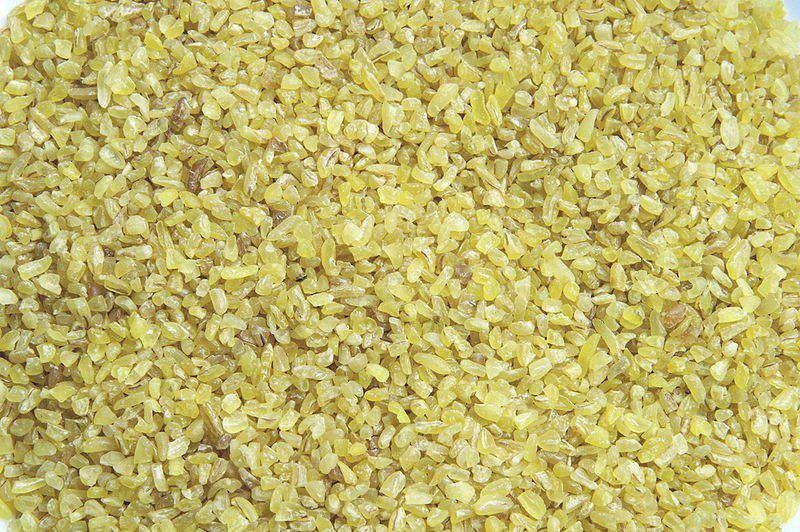
bulgur
thumb|Coarse bulgur
bağlama
The bağlama or saz is a long-necked fretted lute used in the folk music of Turkey and neighbouring regions of the Middle East and Central Asia. It belongs to the wider family of long-necked lutes known as Tanburs, a group of instruments historically distributed from Iran and Mesopotamia across Central Asia and Anatolia.

Akçe
The akçe or akça (anglicized as akche, akcheh or aqcha; ; , , in Europe known as asper) was a silver coin mainly known for being the chief monetary unit of the Ottoman Empire. It was also used in other states including the Anatolian Beyliks, the Aq Qoyunlu, and the Crimean Khanate. The basic meaning of the word is "silver" or "silver money", deriving from the Turkish word () and the diminutive suffix .

Sipahi
The sipahi (, , ) were professional cavalrymen of the Ottoman Empire. Sipahi units included the land grant–holding (timar) provincial timarli sipahi, which constituted most of the army, and the salaried regular kapikulu sipahi, or palace troops. However, the irregular light cavalry ("raiders") were not considered to be . The sipahi formed their own distinctive social classes and were rivals to the Janissaries, the elite infantry corps of the sultans.

sanjak
thumb|The Vilayets and Sanjaks of the Ottoman Empire around 1317 Hijri, 1899 Gregorian

manti
dish

valide sultan
“Queen Mother” in the Ottoman Empire
.png)
beylerbey
thumb|200px|The eyalets of the Ottoman Empire in 1609
Beylerbey (, meaning the 'commander of commanders' or 'lord of lords’, sometimes rendered governor-general) was a high rank in the western Islamic world in the late Middle Ages and early modern period, from the Anatolian Seljuks and the Ilkhanids to Safavid Iran and the Ottoman Empire. Initially designating a commander-in-chief, it eventually came to be held by senior provincial governors. In Ottoman usage, where the rank survived the longest, it designated the governors-general of some of the largest and most important provinces, although

bouzouki
The bouzouki (, also ; ; plural. bouzoukis or bouzoukia, ) is a musical instrument popular in Greece.
dunam
A dunam (Ottoman Turkish, Arabic: ; ; ; ), also known as a donum or dunum and as the old, Turkish, or Ottoman stremma, was the Ottoman unit of area analogous in role (but not equal) to the Greek stremma or English acre, representing the amount of land that could be ploughed by a team of oxen in a day. The legal definition was "forty standard paces in length and breadth", but its actual area varied considerably from place to place, from a little more than 900 m2 in Ottoman Palestine to around 2 500 m2 in Iraq.

kaymak
Kaymak, sarshir, or qashta/ashta ( ; or ; ) is a creamy dairy food similar to clotted cream, made from the milk of water buffalo, cows, sheep, or goats in Central Asia, Turkic regions, some Balkan countries, some Caucasus countries, and the Levant.

uhlan
thumb|Polish uhlans from the army of the Duchy of Warsaw, 1807–1815, [[January Suchodolski painting]]
Uhlan (; ; ; ; ) is a type of light cavalry, primarily armed with a lance. The uhlans started with the tartars in the Lithuanian irregular cavalry, that were later also adopted by other countries during the 18th century, including Poland, France, Russia, Prussia, Saxony, and Austria. The term "lancer" was often used interchangeably with "uhlan"; the lancer regiments later formed for the British Army were directly inspired by the uhlans of other armies (even though they were never known by that
haseki sultan
the chief consort of an Ottoman sultan

bashi-bazouk
thumb|A group of bashi-bazouks, Ottoman postcard
thumb|Bashi-bazouks in Bulgaria, ca. 1877
A bashi-bazouk ( , , , roughly "leaderless" or "disorderly") was an irregular soldier of the Ottoman army, raised in times of war. The army primarily enlisted Albanians and sometimes Circassians as bashi-bazouks, but recruits came from all ethnic groups of the Ottoman Empire, including slaves from Europe or Africa. Bashi-bazouks had a reputation for being undisciplined and brutal, notorious for looting and preying on civilians as a result of a lack of regulation and of the expectation that they would sup

hajduk
thumb|Illustration of a Hungarian Hajduk, from an 1703 book from Bavaria.
thumb|Portrait of Hajduk-Veljko, a prominent Serbian outlaw fighting against Ottoman occupation during the first half of the 19th century.

dondurma
thumb|Turkish desserts served with ice cream
Dondurma is the Turkish name for ice cream. Outside Turkey, it typically refers specifically to mastic ice cream, which is believed to originate from the city and region of Kahramanmaraş and is known as maraş dondurma in Turkish. This is made from cream, salep (the ground-up tuber of an orchid), mastic (plant resin), and sugar.
yatagan
The yatagan, yataghan, or ataghan (from Turkish yatağan), also called varsak, is a type of Ottoman knife or short sabre used from the mid-16th to late 19th century.
The yatagan was extensively used in Ottoman Turkey and in areas under immediate Ottoman influence, such as the Balkans, Caucasus, and North Africa.
Khatun
Khatun ( ) is a title of the female counterpart to a khan or a khagan.

kaymakam
thumb|Binbashi Ismet Pasha, who later became a Kaymakam, after returning from Yemen.
nazar
eye-shaped amulet believed to protect against the evil eye

cezve
thumb|Turkish coffee being poured from a copper

türbe
thumb|The türbe of Gazi Husrev-beg (1480–1541) at the [[Gazi Husrev-beg Mosque in Sarajevo, Bosnia and Herzegovina]]
thumb|Earlier and more eastern examples have straight-sided roofs rather than domes, a Persian style. Divriği, [[Sivas Province, in central eastern Turkey, 13th century.]]
thumb|The Grand Vizier's türbes in the heart of Travnik, Bosnia and Herzegovina
thumb|Momine Khatun Mausoleum in Nakhchivan (city)|Nakhchivan (1186–1187)
Türbe refers to a Muslim mausoleum, tomb or grave often in the Turkish-speaking areas and for the mausolea of Ottoman sultans, nobles and notables. A typica
chorba
Chorba, ( ; ) shorwa, shurba, shurpa, shurbah or shorba ( ) is a broad class of stews or rich soups found in national cuisines across North Africa, The Middle East, Iran, Turkey, Southeast Europe, Central Asia, East Africa and South Asia. It is often prepared with added ingredients but is also served alone as a broth or with bread.
kalpak
The kalpak, qalpaq or calpack, is a Turkic high-crowned cap (usually made of felt or sheepskin) worn by Turks, Turkmens, Karakalpaks, Bulgarians, Circassians, Dagestanis, Chechens, Ukrainians, Poles, Russians and throughout Central Asia and the Caucasus.
Karagöz and Hacivat
Turkish shadow theatre

pastrami
thumb|right|Ben's Best Deli, Rego Park, New York
Pastrami or pastromi is a type of cured meat originating from Jewish community of Romania and surrounding region, usually made from beef brisket. The raw meat is brined, partially dried, seasoned with herbs and spices, then smoked and steamed. Like corned beef, pastrami was created as a way to preserve meat before the invention of refrigeration. One of the iconic meats of Eastern European cuisine as well as American Jewish cuisine and New York City cuisine, hot pastrami is typically served at delicatessen restaurants on sandwiches such as the pa

tamga
thumb|Tamgha of the Bayundur, which represents a [[falcon according to Mahmud al-Kashgari]]
A tamga, or tamgha (from ), was an abstract seal or brand used by Eurasian nomads and cultures influenced by them, initially as a livestock branding. The tamga was used as a livestock branding for a particular tribe, clan or family. They were common among the Eurasian nomads throughout Classical Antiquity and the Middle Ages. As clan and family identifiers, the collection and systematic comparison of tamgas is regarded to provide insights into relations between families, individuals and ethnic groups in
Tarkhan
Tarkhan (, or ; ; ; ; ; alternative spellings Tarkan, Tarkhaan, Tarqan, Tarchan, Turxan, Tarcan, Turgan, Tárkány, Tarján, Tarxan) is an ancient Central Asian title used by various Turkic, Hungarian, Mongolic, and Iranian peoples. Its use was common among the successors of the Mongol Empire and Turkic Khaganate.

sardar
thumb|Prime Minister of Iran|Sardar-I-Azam, Prince [[Abdol Majid Mirza of Qajar Persia .]]
right|thumb|Pakistani President Ayub Khan (general)|Ayub Khan and First Lady [[Jacqueline Kennedy with the prized gelding "Sardar".]]
right|thumb|List of Ottoman Grand Viziers|Grand Vizier [[Ahmet Tevfik Pasha, the last Ottoman Serdar-ı Azam.]]
right|thumb|Serdar (Ottoman rank)|Serdar [[Janko Vukotić of the Principality and Kingdom of Montenegro.]]

kuruş
thumb|upright=.75|right|Current Turkish 50 kuruş coin
Kuruş ( ; ), also gurush, ersh, gersh, grush, grosha, and grosi, are all names for currency denominations in and around the territories formerly part of the Ottoman Empire. The variation in the name stems from the different languages it is used in (Arabic, Amharic, Turkish, and Greek) and the different transcriptions into the Latin alphabet. In European languages, the kuruş was known as the piastre.
timar
A timar was a land grant by the sultans of the Ottoman Empire between the fourteenth and sixteenth centuries, with an annual tax revenue of less than 20,000 akçes. The revenues produced from the land acted as compensation for military service. A holder of a timar was known as a timariot. If the revenues produced from the timar were from 20,000 to 100,000 akçes, the land grant was called a zeamet, and if they were above 100,000 akçes, the grant would be called a hass.

katyk
thumb|Qatiq from Azerbaijan
thumb|Bulgarian qatiq
Qatiq is a fermented milk product from the Turkic countries. It is a more solid form of yogurt than ayran.

dragoman
thumb|Amédée Jaubert (left) was Napoleon's "favourite orientalist adviser and dragoman". He accompanied the Persian envoy Mirza Mohammad-Reza Qazvini at [[Finckenstein Palace to meet with Napoleon on 27 April 1807 for the Treaty of Finckenstein. Detail of a painting by François Mulard.]]
thumb|Plate from The Crescent and the Cross by Elliot Warburton entitled "Encampment at Baalbec, lady and dragoman in foreground."
A dragoman (ترجمان) was an interpreter, translator, and official guide between Turkish-, Arabic-, and Persian-speaking countries and polities of the Middle East and European embass
sevdalinka
Sevdalinka (), also known as sevdah, Bosanski sevdah is a traditional genre of folk music originating in Bosnia and Herzegovina. Sevdalinka is an integral part of the Bosniak culture, but it is spread among the other peoples of Bosnia and Herzegovina and across the ex-Yugoslav region as well, including Croatia, Montenegro, North Macedonia and Serbia. The actual composers of many sevdalinka songs are unknown because these are traditional folk songs. In 2024, sevdalinka was included on the UNESCO Representative List of the Intangible Cultural Heritage of Humanity.
menemen
Turkish tomato, fresh pepper and optional onion with egg.
Tumen
Mongol Empire military unit
gözleme
Gözleme is a savory Turkish stuffed turnover. The dough is usually unleavened, and made only with flour, salt and water, but gözleme can be made from yeast dough as well. It is similar to bazlama, but is lightly brushed with butter or oil, whereas bazlama is prepared without fat. The dough is rolled thin, then filled with various toppings, sealed, and cooked over a griddle. Gözleme may sometimes be made from prepackaged hand-rolled leaves of yufka dough.

Kafes
upright=1.2|thumb|The apartments of the Crown Prince in the Topkapı Palace, which was also called kafes
The Kafes (, from ), literally "cage", was the part of the Imperial Harem of the Ottoman Palace where possible successors to the throne were kept under a form of house-arrest and constant surveillance by the palace guards.
İskender kebap
Turkish meat dish (variety of "döner")

dönme
thumb|230px|right|Illustration of Sabbatai Zevi|Shabbetai Tzevi from the [[Jewish Encyclopedia (1906), Joods Historisch Museum, Amsterdam]]
Khwaja
Khawaja () is an honorific title used across the Middle East, South Asia, Southeast Asia and Central Asia, particularly towards Sufi teachers.

bashlyk
thumb|right|250px|Ossetians|Ossetian poet [[Kosta Khetagurov wearing a bashlyk (white)]]
A bashlyk, also spelled bashlik, is a traditional Iranian, Caucasian, Turkic and Cossack cone-shaped hooded headdress, usually of leather, felt or wool, featuring a round topped bonnet with lappets for wrapping around the neck. Local versions determine the trim, which may consist of decorative cords, embroidery, jewelry, metallized strings, fur balls or tassels. Among dozens of versions are winter bashlyks worn atop regular headdress, cotton bashlyks, homeknitted bashlyks, silk bashlyks, scarf bashlyks, do
dolman
A dolman is either a military shirt, or a jacket decorated with braiding, first worn by Hungarian hussars. The word is of Turkish origin, and after being adopted into Hungarian, has propagated to other languages. The garment was worn by peasants from the 16th century onward and eventually spread throughout the country, mainly within wealthy peasant circles. It reached people living in the poorest conditions only at the end of the 19th century.
chalga
Chalga (), often referred to as pop-folk or ethno-pop, is a genre of Bulgarian pop music. Chalga is a folk-inspired dance music genre, with a blend of traditional Bulgarian music along with influences from Greek, Serbian, Turkish, Romani and Arabic music. It is heavily associated with the Bulgarian Romani ethnic minority. It is the most popular form of music in Bulgaria.
ustad
Ustad, ustadh, ustaz or ustadz (abbreviated as Ust., Ut. or Ud.; from Persian ustād) is an honorific title used in West Asia, North Africa, Central Asia, South Asia and Southeast Asia. It is used in various languages, including Persian, Arabic (as ’ustāḏ), Azerbaijani, Urdu, Hindi, Bengali, Marathi, Dhivehi, Punjabi, Pashto, Turkish, Kazakh, Uzbek, Indonesian, Malay and Kurdish.
Kizlar Agha
head of the aghas who guarded the Ottoman imperial harem

dürüm
thumb|Döner kebab as dürüm
A dürüm (, "roll") or dürme is a wrap that is usually filled with typical döner kebab ingredients. The wrap is made from lavash or yufka flatbreads. It is common as a street food in Turkey and many other European countries, but can also be found in sit-down restaurants.
It is usually more expensive than a normal döner. Some people prefer it to the döner, either because the portion is bigger or because the fillings-to-bread-ratio is higher in a dürüm.
Most döner-joints in Germany where the bread is freshly-baked use the same leavened dough-portion as for the döner bun
kısır
Kısır is a bulgur based salad found in Turkish cuisine. The main ingredients are finely ground bulgur, parsley, and tomato paste. Common additional ingredients include onion, garlic (in some regions), sour pomegranate molasses, olive oil and lemon juice, cucumber, cornichons and spices. It can be served with lettuce leaves. It has a reddish color due to tomato paste admixture. It is served at room temperature as either a side-dish or meze appetizer.

dey
thumb|170px|The United States|American commander [[William Bainbridge paying tribute to the dey, circa 1800]]
Dey (, from ) was the title given to the rulers of the regencies of Algiers, Tripolitania, and Tunis under the Ottoman Empire from 1671 onwards. Twenty-nine deys held office from the establishment of the deylicate in Algeria until the French conquest in 1830.
manele
Manele (from Romanian, fem. sg. manea; pl. manele, the plural form being more common) is a genre of pop folk music from Romania.

şehzade
thumb|right|Costume of a Şehzade
Şehzade () is the Ottoman form of the Persian title Shahzadeh, and refers to the male descendants of an Ottoman sovereign in the male line. This title is equivalent to "prince of the blood imperial" in English.
yashmak
A yashmak, yashmac or yasmak (from , "a veil") is a Turkish, Egyptian and Turkmen type of veil or niqāb| worn by women to cover their faces in public. During the Ottoman Empire, the garment eventually became transparent in the middle part of the 19th century. Upper-class women wore the transparent yashmak, while the peasants still had to cover their faces.

damat
Damat (, from (dâmâd) "bridegroom") was an official Ottoman title for men who entered the imperial House of Osman by means of marriage, literally becoming the bridegroom to the Ottoman sultan and the dynasty. In almost all cases, this occurred when a man married an Ottoman princess.