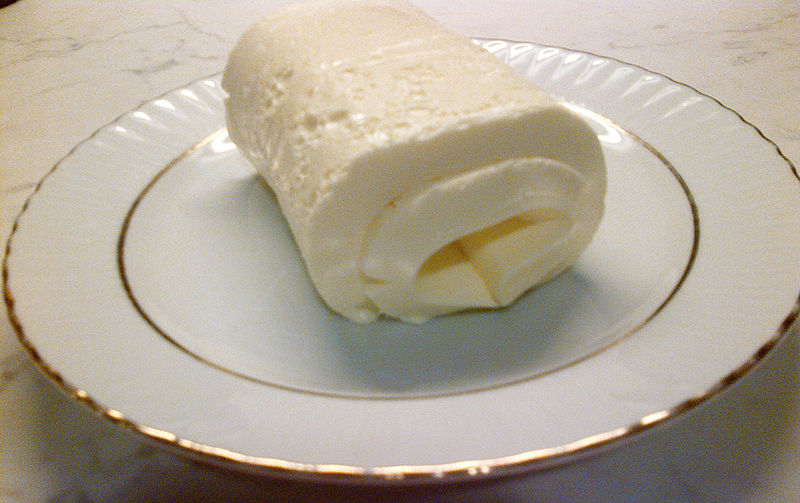
File:Kaymak_in_Turkey.jpg · Wikimedia Commons · See Wikimedia Commons
kaymak
Sign in to saveAlso known as kajmak
Kaymak, sarshir, or qashta/ashta ( ; or ; ) is a creamy dairy food similar to clotted cream, made from the milk of water buffalo, cows, sheep, or goats in Central Asia, Turkic regions, some Balkan countries, some Caucasus countries, and the Levant.
In the Vinony graph
Within Vinony's link graph, kaymak is referenced by 296 other articles, and connects out to Turkish cuisine, kofta and vinegar.
It sits within the topics Balkan cuisine, Central Asian cuisine and Condiments.
Its subject is documented across 40 Wikipedia language editions.
Key facts
- Prepared food.name
- Kaymak
- Prepared food.image
- Kaymak in Turkey.jpg
- Prepared food.image_size
- 250px
- Prepared food.caption
- Kaymak from Turkey
- Prepared food.alternate_name
- Malai
- Prepared food.country
- Central Asia
- Prepared food.region
- Turkey, Albania, Bosnia and Herzegovina, Bulgaria, Montenegro, North Macedonia, Serbia, Iran, Iraq, Afghanistan, Azerbaijan, Kazakhstan, Uzbekistan, Tajikistan
- Prepared food.course
- Breakfast and dessert
- Prepared food.main_ingredient
- Milk
- Prepared food.variations
- Kaymer, Qaymer, Qeimer, Qaymiq, Qashta, Ashta, Makahan
via Wikipedia infobox
Wikidata facts
- Subclass of
- dairy product
- Has part
- milk
- Country of origin
- Central Asia
- Material used
- goat milk
- Image
- Kaymak in Turkey.jpg
Show 3 more facts
- Commons category
- Kaymak
- different from
- dulce de leche
- described by source
- Dīwān ul-Lughat al-Turk
via Wikidata · CC0
~5 min read
Encyclopedic overview
15 sectionsContents
- Etymology
- Origin
- By region
- Turkey
- Balkans
- Afghanistan
- Georgia
- Greece
- Iraq
- Iran
- Armenia
- See also
- Citations
- References
- External links
Kaymak, sarshir, or qashta/ashta ( ; or ; ) is a creamy dairy food similar to clotted cream, made from the milk of water buffalo, cows, sheep, or goats in Central Asia, Turkic regions, some Balkan countries, some Caucasus countries, and the Levant.
The traditional method of making kaymak is to boil the raw milk slowly, then simmer it for two hours over a very low heat. After the heat source is shut off, the cream is skimmed and left to chill (and mildly ferment) for several hours or days. Kaymak has a high percentage of milk fat, typically about 60%. It has a thick, creamy consistency (not entirely compact, because of milk protein fibers) and a rich taste.
Excerpted from Wikipedia’s “kaymak” article, available under the CC BY-SA 4.0 licence.