Category
page 1Water ice

snow
Snow consists of individual ice crystals that grow while suspended in the atmosphere—usually within clouds—and then fall, accumulating on the ground where they undergo further changes. It consists of frozen crystalline water throughout its life cycle, starting when, under suitable conditions, the ice crystals form in the atmosphere, increase to millimeter size, precipitate and accumulate on surfaces, then metamorphose in place, and ultimately melt, slide, or sublimate away.

ice
Ice is water that is frozen into a solid state, typically forming at or below temperatures of 0 °C, 32 °F, or 273.15 K. It occurs naturally on Earth, on other planets, in Oort cloud objects, and as interstellar ice. As a naturally occurring crystalline inorganic solid with an ordered structure, ice is considered to be a mineral. Depending on the presence of impurities such as particles of soil or bubbles of air, it can appear transparent or a more or less opaque bluish-white color.

glacier
thumb|upright=1.2|Glacier of the Geikie Plateau in Greenland
thumb|upright=1.2|The Taschachferner in the Ötztal Alps in [[Austria. The mountain to the left is the Wildspitze (3.768 m), second highest in Austria]]
thumb|upright=1.2|With 7,253 known glaciers, Pakistan contains more glaciers than any other country on Earth outside the polar regions. At in length, the pictured [[Baltoro Glacier is the fifth longest alpine glacier in the world.]]
A glacier (; or ) is a persistent body of natural ice, a form of
rock, that is constantly moving under its own weight. A glacier forms where the accumulat

hail
thumb|A large hailstone, about in diameter

iceberg
thumb|upright=1.2|An iceberg in the Arctic Ocean
thumb|Tabular iceberg
thumb|Iceberg from overhead showing above and submerged ice

frost
thumb|upright=1.35|A patch of grass showing three zones.

glaciology
thumb|right|Lateral moraine on a glacier joining the [[Gorner Glacier, Zermatt, Swiss Alps. The moraine is the high bank of debris in the top left hand quarter of the image.]]
thumb|Glaciologist Erin Pettit in Antarctica, 2016|upright

cryosphere
thumb|right|300px|Overview of the cryosphere and its larger components
The cryosphere is an umbrella term for those portions of Earth's surface where water is in solid form. This includes sea ice, ice on lakes or rivers, snow, glaciers, ice caps, ice sheets, and frozen ground (which includes permafrost). Thus, there is an overlap with the hydrosphere. The cryosphere is an integral part of the global climate system. It also has important feedbacks on the climate system. These feedbacks come from the cryosphere's influence on surface energy and moisture fluxes, clouds, the water cycle, atmospher
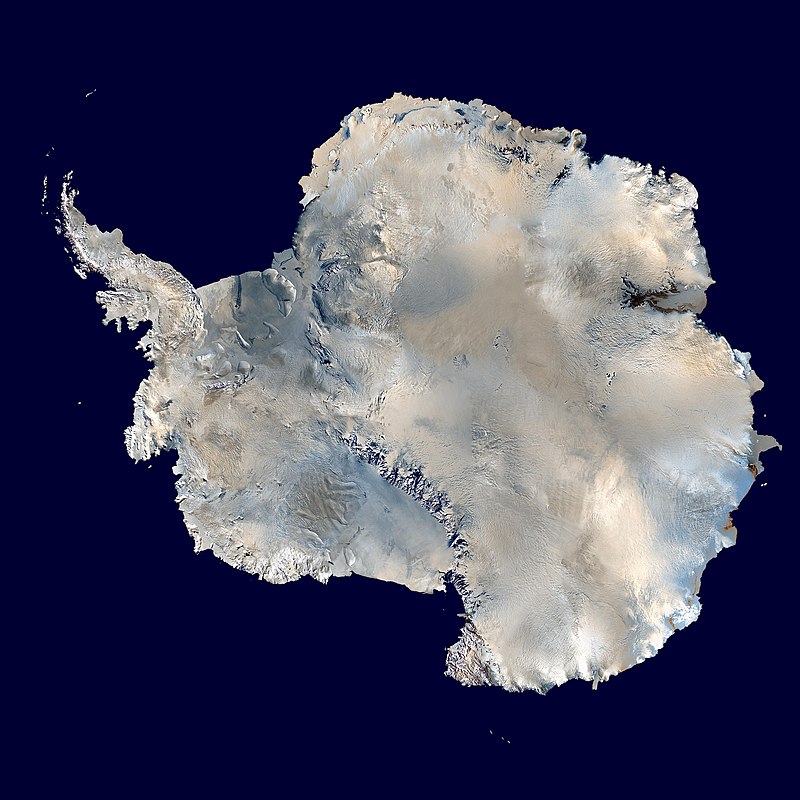
ice sheet
large mass of glacier ice

sea ice
ice formed from frozen seawater

ice shelf
floating platform of ice on the ocean surface, at outlet of a glacier or ice sheet

firn
__NOTOC__
thumb|right|Sampling the surface of a glacier. There is increasingly dense firn between surface snow and blue glacier ice.
thumb|right|Firn field on the top of Säuleck, [[Hohe Tauern, in the Central Alps]]
Firn (; from Swiss German "last year's", cognate with before) is partially compacted névé, a type of snow that has been left over from past seasons and has been recrystallized into a substance denser than névé. It is ice that is at an intermediate stage between snow and glacial ice. Firn has the appearance of wet sugar, but has a hardness that makes it extremely resistant to shovel

icicle
thumb|Icicles – the "growth rings" or banding on the icicles occurs as the water in the soil above the cliff thaws during the day and freezes during the night.
An icicle is a spike of ice formed when water falling from an object freezes.
== Formation and dynamics ==
Icicles can form during bright, sunny, but subfreezing weather, when ice or snow melted by sunlight or some other heat source (such as a poorly insulated building), refreezes as it drips off under exposed conditions. Over time continued water runoff will cause the icicle to grow. Another set of conditions is during ice storms, when

black ice
transparent coating of glazed ice on a surface

rime ice
granular whitish deposit of ice formed by freezing fog

ice cap
ice mass that covers less than 50,000 km² of land area
Snowball Earth
worldwide glaciation episodes during the Cryogenian Period of the Neoproterozoic Era
ice core
core sample of ice, typically removed from a glacier or ice sheet
glaze
smooth, transparent and homogeneous ice coating occurring when freezing rain or drizzle hits a surface
ice cube
frozen water ice cubes
diamond dust
ground-level cloud of ice crystals

pykrete
thumb|A slab of pykrete
thumb|Pykrete is made of 14% sawdust and 86% water by mass.
Harbin International Ice and Snow Sculpture Festival
annual winter festival in Harbin, China
frost weathering
mechanical weathering processes induced by the freezing of water into ice
ice crystal
solid frozen water molecules
ice fishing
winter activity of catching fish in frozen-over bodies of water
ice planet
planetary type
ice field
extensive area of interconnected valley glaciers
ice storm
storm characterized by a fall of freezing liquid precipitation
icy moon
natural satellite with a surface mainly composed of ice
ice fog
fog consisting of fine ice crystals suspended in the air
%20D130902%203.jpg)
névé
thumb|Névé in a valley of Haute-Savoie, France
Névé is a young, granular type of snow which has been partially melted, refrozen and compacted, yet precedes the form of ice. This type of snow can contribute to glacier formation through the process of nivation. Névé that survives a full season of ablation turns into firn, which is both older and slightly denser. Firn eventually becomes glacial ice – the long-lived, compacted ice that glaciers are composed of. Glacier formation can take years to hundreds of years, depending on freeze-thaw factors and snow-compaction rates. Névé is annually observ

slush
thumb|Slush on a window
ice congestion
accumulation of ice on a river caused by ice break-up forming a barrier that in turn can cause floods

aufeis
thumb|upright|Laminations of ice in a sheet of aufeis
Aufeis ( ) (German for "ice on top") is a sheet-like mass of layered ice that forms from successive flows of ground or river water during freezing temperatures. This form of ice is also called overflow, icings, or the Russian term, naled (). The term "Aufeis" was first used in 1859 by Alexander von Middendorff following his observations of the phenomenon in northern Siberia.
hair ice
type of ice that forms on dead wood and takes the shape of fine, silky hair
needle ice
ice column formed when liquid groundwater rises into freezing air
ice calving
breaking of ice chunks from the edge of a glacier

icebox
thumb|upright=1.2|alt=Labeled black-and-white image of an icebox|Icebox used in cafés of Paris in the late 1800s
An icebox (also called a cold closet) is a compact, non-mechanical refrigerator which was a common early-twentieth-century kitchen appliance before the development of safely powered refrigeration devices. They were insulated cabinets, to which large chunks of ice would need to be added every several days to maintain refrigeration.
ice spike
ice crystal growing against gravity
frazil ice
ice crystals that form in supercooled water that is too turbulent to permit coagulation into sheet ice
anchor ice
ice attached to the beds of streams, lakes, and shallow seas, irrespective of its nature of formation
ice cave
natural cave, often lava or limestone, containing percolated water at temperarure ≤︎0°C.
ice shove
event where a surge of ice is pushed onshore from a river or sea (due to water movements or wind)

icemaker
thumb|250px|Slabs of manufactured ice at the Grimsby Ice Factory prior to being crushed, 1990

Welteislehre
thumb|The 1925 "Journal of World Ice Theory"
' (WEL; "World Ice Theory" or "World Ice Doctrine"), also known as ' (Glacial Cosmogony), is a discredited cosmological concept proposed by Hanns Hörbiger, an Austrian engineer and inventor. According to his ideas, ice was the basic substance of all cosmic processes, and ice moons, ice planets, and the "global ether" (also made of ice) had determined the entire development of the universe. Hörbiger did not arrive at his ideas through research, but said that he had received it in a "vision" in 1894. He published a book about the theory in 1912 and he

ice disc
big circular ice floe (ca 1 m ... 50 m diameter) rotating on a river

frost flower
thin layer of ice extruded from a plant
Shuga
form of ice
ice-nine
thumb|The fictional ice-nine is depicted as being capable of causing any liquid water to permanently freeze unless heated far above room temperature.
Ice-nine is a fictional material that appears in Kurt Vonnegut's 1963 novel ''Cat's Cradle''. Ice-nine is described as a polymorph of ice which instead of melting at 0°C (32°F) melts at 45.8°C (114.4°F). When ice-nine comes into contact with liquid water below 45.8°C, it acts as a seed crystal and causes the solidification of the entire body of water, which quickly crystallizes as more ice-nine. As humans are 55-60% water, ice-nine kills nearly i
Ice dune
Dune made of ice
ice divide
boundary on an ice sheet, ice cap or glacier separating opposing flow directions of ice
accretion
accumulation of frozen water as precipitation over time as it descends through the atmosphere
ice cutting
cutting of ice in winter stored for cooling in summer
Interstellar ice
ice that forms in the interstellar medium
clear ice
smooth, compact, and transparent deposit of amorphous ice formed by freezing fog
congelation ice
ice that forms on the bottom of an established ice cover
Freeze-casting
thumb|upright=2.0|Freeze-cast alumina that has been partially sintered. The freezing direction in the image is up.
Pumpable ice technology
ice prods
a pair of metal spikes with handles like sharpened screwdrivers for hauling yourself out of holes in the ice