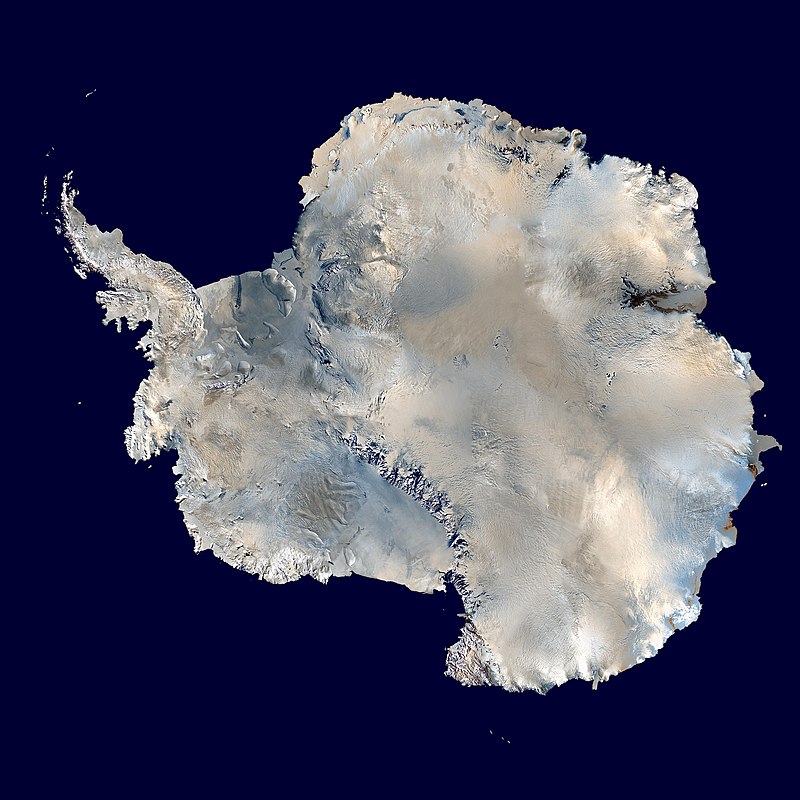
File:Antarctica_6400px_from_Blue_Marble.jpg · Wikimedia Commons · See Wikimedia Commons
An ice sheet is a large, continuous mass of glacier ice that covers vast areas of land. Ice sheets matter because they store enormous amounts of fresh water and significantly influence global sea levels and climate patterns.
AI-generated from the Wikipedia summary — may contain errors.
Wikidata facts
Show 6 more facts
- topic's main category
- Category:Ice sheets
- Commons category
- Ice sheets
- different from
- ice shelf
- on focus list of Wikimedia project
- Wikipedia:Vital articles/Level/4
- exact match
- purl.obolibrary.org/obo/ENVO_00000132
- studied by
- glaciology
Sources (6)
via Wikidata · CC0
~31 min read
Encyclopedic overview
One of Earth's two ice sheets: The Antarctic ice sheet covers about 98% of the Antarctic continent and is the largest single mass of ice on Earth. It has an average thickness of over 2 kilometers.
In glaciology, an ice sheet, also known as a continental glacier, is a mass of glacial ice that covers surrounding terrain and is greater than 50,000 km (19,000 sq mi). The two currently existing ice sheets are the Antarctic ice sheet and the Greenland ice sheet. Ice sheets are the largest glacial bodies on Earth, distinguished from smaller ice caps or alpine glaciers. Ice sheets can have multiple ice domes, the topographic highs from which ice flows outwards, and are typically drained by ice streams and outlet glaciers around their periphery.
Excerpted from Wikipedia’s “ice sheet” article, available under the CC BY-SA 4.0 licence.