Category
page 1Western culture
.jpg)
Christianity
Christianity is an Abrahamic monotheistic religion, which states that Jesus is the Son of God and rose from the dead after his crucifixion, whose coming as the messiah (Christ) was prophesied in the Old Testament and chronicled in the New Testament. It is the world's largest and most widespread religion with over 2.3 billion followers, comprising around 28.8% of the world population. Its adherents, known as Christians, are estimated to make up a majority of the population in 120 countries and territories.

Roman Empire
period of ancient Rome following the Republic

human rights
inalienable fundamental rights to which a person is inherently entitled

capitalism
Capitalism is an economic system based on the private ownership of the means of production and its use for the purpose of obtaining profit. This socioeconomic system has developed historically in several stages, and is defined by a number of constituent elements: private property, profit motive, capital accumulation, competitive markets, commodification, wage labor, and an emphasis on innovation and economic growth. Capitalist economies may experience business cycles of economic expansion followed by recessions.

Renaissance
The Renaissance ( , ) is a European period of history and cultural movement, very roughly defined as covering the 14th through 17th centuries, though sometimes more narrowly defined for instance as only covering the 15th through 16th centuries. It marked the transition from the Middle Ages to modernity and was characterized by the European rediscovery and revival of the literary, philosophical, and artistic achievements of classical antiquity. Associated with great social change in most fields and disciplines, including art, architecture, politics, literature, exploration and science, the Rena

Age of Enlightenment
period of European history and cultural movement of the 17th and 18th centuries

pop music
genre of popular music

Abrahamic religion
category of religions considered as coming from the legacy of Abraham

Western world
countries with an originally European shared culture

country music
genre of American popular music

East-West Schism
division of Christianity into two large parts in 1054

Scramble for Africa
1880s–1900s Western European colonisation of Africa

scholasticism
upright=1.2|right|thumb|14th-century image of a university lecture
modern period
era from ca. 1500 until present

multiculturalism
280px|thumb|right| James Fearon's ranking of countries by ethnic and [[cultural diversity level in 2003, blue is lower and orange is higher.]]
Multiculturalism is the coexistence of multiple cultures. The word is used in sociology, in political philosophy, and colloquially. In sociology and everyday usage, it is usually a synonym for ethnic or cultural pluralism in which various ethnic and cultural groups exist in a single society. It can describe a mixed ethnic community area where multiple cultural traditions exist or a single country. Groups associated with an indigenous, aboriginal or auto

analytic philosophy
20th-century tradition of Western philosophy
Western philosophy
philosophical tradition of Western civilization

European colonization of the Americas
European colonization of the Americas between 1492 and c.1800
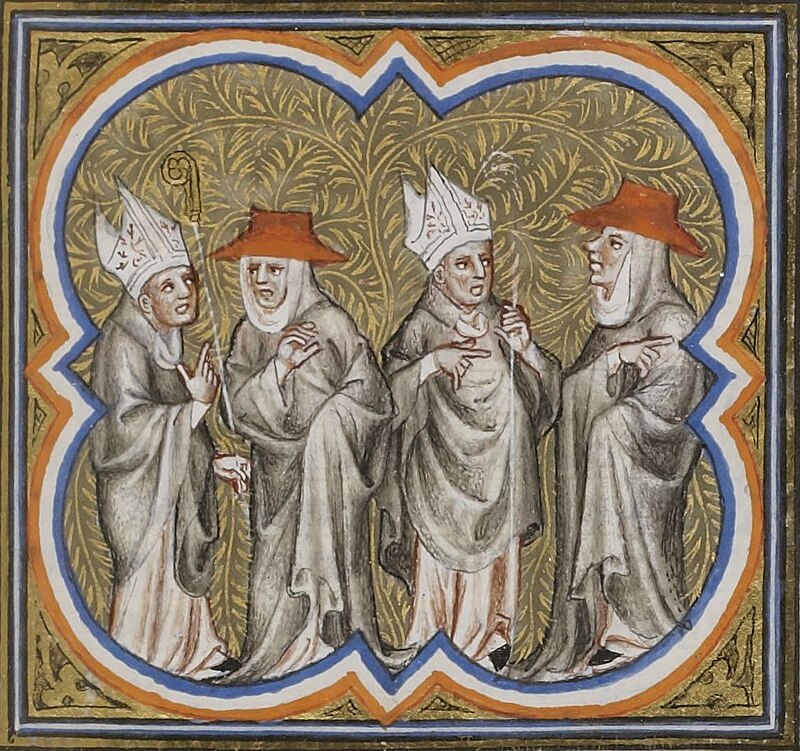
Western Schism
split within the Catholic Church from 1378 to 1417, in which bishops in Rome and Avignon both claimed to be the pope, joined by a third line of Pisan popes in 1409

Western Christianity
Christianity originating from the tradition of the Western Roman Empire, with its capital in Rome. consists of the Latin Church of the Catholic Church and its derivatives
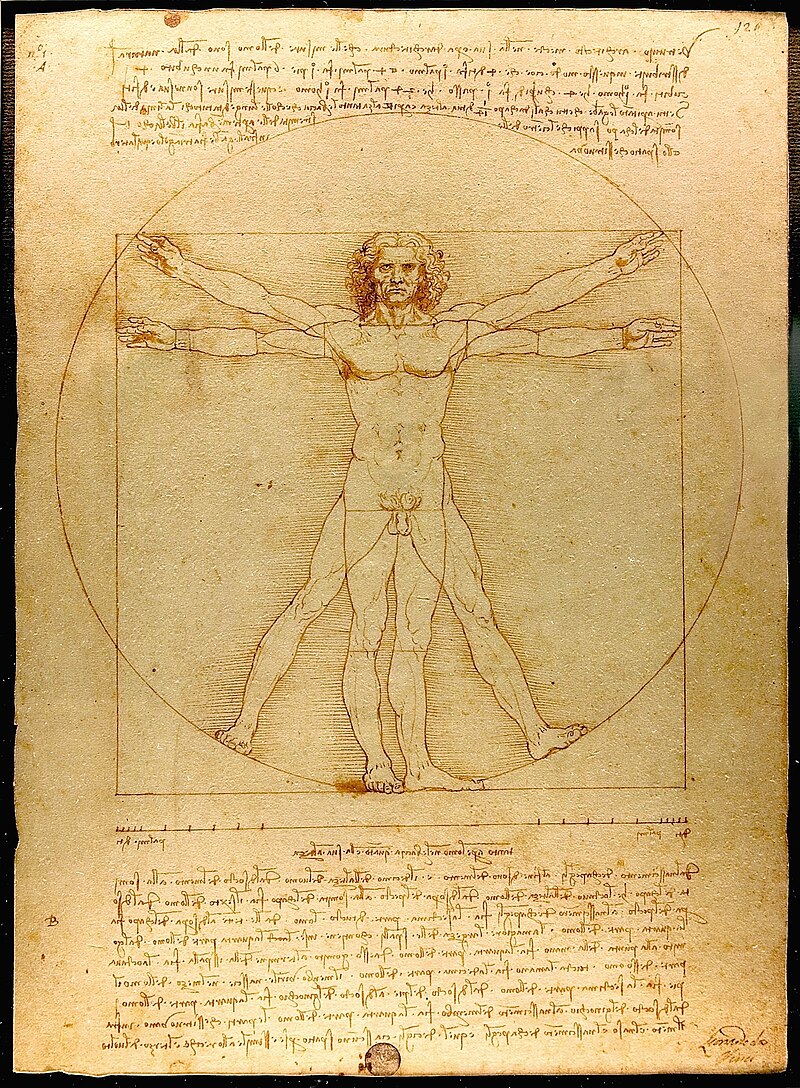
Western culture
heritage of norms, customs, belief and political systems, and artifacts and technologies associated with Europe (both indigenous and foreign origin)

Information Age
historical period

ancient Greek literature
literature written in ancient Greece or in the Ancient Greek language

Westminster system
democratic, parliamentary system of government which developed in the United Kingdom
continental philosophy
set of 19th- and 20th-century philosophical traditions from mainland Europe
.jpg)
constitutionalism
Constitutionalism is "a compound of ideas, attitudes, and patterns of behavior elaborating the principle that the authority of government derives from and is limited by a body of fundamental law".
.jpg)
Eurocentrism
thumb|right|300px|A map of the Eastern Hemisphere from [[Adams Synchronological Chart or Map of History. "The bright colors denote those countries that are the Subjects of history, previous to the discovery of America".]]

equality before the law
principle that each individual must be treated equally by the law without discrimination or privileges by the government
biomedicine
Biomedicine (also referred to as Western medicine, mainstream medicine or conventional medicine) is a branch of medical science that applies biological and physiological principles to clinical practice. Biomedicine stresses standardized, evidence-based treatment validated through biological research, with treatment administered via formally trained doctors, nurses, and other such licensed practitioners.

Columbian Exchange
biological exchange across Atlantic Ocean
Anglosphere
The Anglosphere, also known as the Anglo-American world, is a sphere of influence among Anglophone countries. The core group of this sphere of influence comprises five developed countries that maintain close social, cultural, political, economic, and military ties with each other: Australia, Canada, New Zealand, the United Kingdom, and the United States. Anglosphere countries are generally aligned with each other on global issues and collaborate extensively in matters of security, as exemplified by alliances like Five Eyes. The core countries of the Anglosphere are either NATO members or desig
media franchise
use of a creative work across several different media
New Imperialism
period of colonial expansion by European powers, the United States and the Empire of Japan

Atlanticism
thumb|US government poster promoting the Marshall Plan (1950)
Atlanticism, also known as Transatlanticism or North Atlanticism, is the ideology which advocates a close alliance between nations in Northern America (the United States and Canada) and in Europe on political, economic, and defense issues. The term derives from the North Atlantic Ocean, which is bordered by North America and Europe. It is a geopolitical ideology in the same regard as Eurasianism or Gulfism.
colonisation of Africa
ancient and modern colonialism in Africa
dark wave
music genre
retro style
style that is consciously derivative or imitative of trends, music, modes, fashions, or attitudes of the past
Postmodernity
Postmodernity (post-modernity or the postmodern condition) is the economic or cultural state or condition of society which is said to exist after modernity. The idea of the postmodern condition is sometimes characterized as a culture stripped of its capacity to function in any linear or autonomous state like regressive isolationism, as opposed to the progressive mind state of modernism.
material culture
physical aspect of culture in the objects and architecture that surround people
Greco-Roman world
regions historically influenced by the language, culture, government and religion of the ancient Greeks and Romans
Western literature
literature written in the context of Western culture in the languages of Europe
ethnic groups in Europe
indigenous peoples of Europe
Judeo-Christian
The term Judeo-Christian is used to group Christianity and Judaism together, either in reference to a shared history before Christianity split from Judaism, Christianity's recognition of Jewish scripture (constituting the Old Testament of the Christian Bible), or values supposed to be shared between them. The term Judæo Christian first appeared in the 19th century as a word for Jewish converts to Christianity. In the United States, the term was widely used during the Cold War in an attempt to invoke a unified American identity that stood opposed to communism.
Great Divergence
a period in European history during which a very swift and radical socioeconomic shift occurs
Western canon
books, music and art traditionally accepted by Western scholars as the most important in shaping Western culture
Westphalian sovereignty
concept of the sovereignty of nation-states in Europe

occidentalism
Occidentalism refers to a discipline that discusses the Western world (the Occident). In this context the West becomes the object, while the East is the subject. The West in the context of Occidentalism does not refer to the West in a geographical sense, but to culture or custom, especially covering the fields of thought, philosophy, sociology, anthropology, history, religion, colonialism, war, apartheid, and geography. It is not as popular as Orientalism in the general public and in academic settings.
European values
norms and values that Europeans have in common
аrt of Europe
art created in any of the current or historical locations of the European continent
cognitive revolution
intellectual movement in the second half of the 20th century
post–Cold War era
time period after the Cold War in the 1990's and early 21st century
history of colonialism
aspect of history
cultural Christian
people who adhere to Christianity primarily because of its cultural legacy
%20-%20Geographicus%20-%20RomanEmpireWest-anville-1763.jpg)
Occident
thumb|Ancient Occident of the Roman Empire
The Occident is a term for the West, traditionally comprising anything that belongs to the Western world. It is the antonym of the term Orient, referring to the Eastern world. In English, it has largely fallen into disuse. The term occidental is often used to describe objects from the Occident but can be considered an outdated term by some. The term originated with geographical divisions mirroring the cultural divide between the Greek East and the Latin West, and the political divide between the Western and Eastern Roman Empires.
Western painting
art produced in the Western world
Islamic contributions to Medieval Europe
influence of Islamic civilisation on Medieval Europe
formal wear
class of clothing for special occasions or events

Europeanisation
thumb|The flag of Europe
Europeanisation (or Europeanization, see spelling differences) refers to a number of related phenomena and patterns of change:
The process in which a notionally non-European subject (be it a culture, a language, a city or a nation) adopts a number of European features (often related to Westernisation).
Outside the social sciences, it commonly refers to the growth of a European continental identity or polity over and above national identities and polities on the continent.
Europeanization also mean a trend in Orthodox countries (Russia and the Balkans) catching up w
role of Christianity in civilization
Christianity played a prominent role in the development of Western civilization
Western imperialism in Asia
european Expansion and the Transformation of Asia