Category
page 1Yemeni cuisine
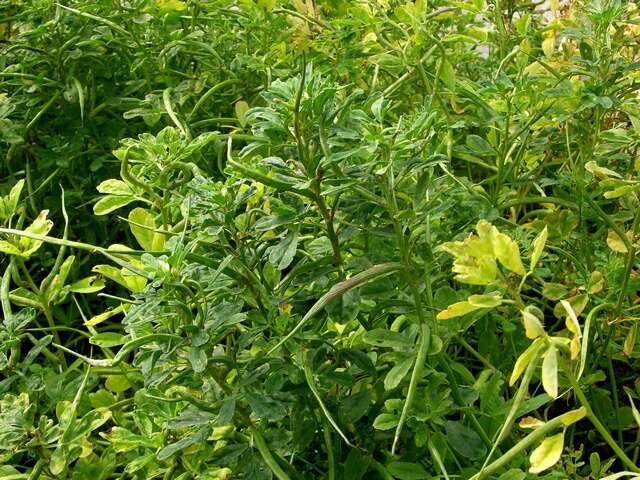
Trigonella foenum-graecum
thumb|Fenugreek greens

pilaf
Pilaf (), pilav, pilau or plov () is a rice dish, or in some regions, a wheat dish, whose recipe usually involves cooking in stock or broth, adding spices, and other ingredients such as vegetables and meat, and employing some technique for achieving cooked grains that do not adhere.

baklava
Baklava (, or ) is a layered pastry dessert made of filo pastry, filled with chopped nuts, and sweetened with either syrup or honey.

shakshuka
thumb|Individual portion of shakshouka

Kabsa
Kabsa (), also known as Makboos () or Machboos ( ), is an Arab mixed rice dish that originates from Saudi Arabia or Yemen. It is commonly regarded as a national dish in all the countries of the Gulf Cooperation Council. It can also be found in regions such as southern Iran and Gaza in Palestine.
tulumba
Tulumba, tolomba or bamiyeh (; ) is a deep-fried dessert found in Egypt, the Levant, Greece and the regional cuisines of the former Ottoman Empire. It is a fried batter soaked in syrup, similar to jalebis or churros. It is made from unleavened choux pastry dough, usually about 3 inches long, piped with a pastry bag using an open star or similar tip. It is first deep-fried to golden colour and then sugar-sweet syrup is poured over it when still hot.
ful medames
Syrian salad of fava beans, chopped tomatoes, onion, parsley, lemon juice, olive oil, pepper and salt)

Mutabak
Murtabak, or mutabbaq (, ), is a Yemeni stuffed pancake or pan-fried bread commonly found in the Arabian Peninsula, parts of the Indian subcontinent, and Southeast Asia (especially Maritime Southeast Asia), notably in Saudi Arabia, Yemen, parts of South India, Indonesia, Malaysia, Singapore, Brunei, and Southern Thailand. Depending on the location, the name and ingredients can vary significantly. The name mutabbaq means "folded" in Arabic.
skhug
Zhug (from Yemenite Arabic or IPA: [zħuːq] through ), also known as sahawiq (Yemeni Arabic: , IPA: [saħaːwiq]), is a hot sauce originating in Yemeni cuisine. In other countries of the Arabian Peninsula it is also called mabooj (), and bisbaas.
Yemeni cuisine
culinary traditions of Yemen
Asida
Asida (, or Maghrebi ġsydë, ), a common dish in the Arab world, is a lump of dough made by stirring wheat flour into boiling water, sometimes with added butter or honey. Similar in texture to fufu, it is eaten mainly in Middle East and African countries. It is considered one of the best-known desserts and traditional dishes in many Arab countries.
Mandi
Yemeni dish
Tharid
Tharid () also known as thareed, trid, tashrib, tashreeb or taghrib is a bread soup that originates from Mecca, Saudi Arabia, an Arab cuisine also found in many other Arab countries. Like other bread soups, it is a simple meal of broth and bread, in this instance crumbled flatbread moistened with broth or stew. Historically, the flatbread used was probably stale and unleavened. As an Arab national dish it is considered strongly evocative of Arab identity during the lifetime of the Islamic prophet Muhammad. According to a widespread cultural tradition, this unremarkable and humble dish was the
fatayer
Fatayer (; ; ) are meat pies that can alternatively be stuffed with spinach or cheese such as feta or akkawi. They are part of Arab and Levantine cuisine and are eaten in Lebanon, Syria, Palestine, Jordan, Iraq, Egypt, Fatayer are also popular in Argentina, where they are considered a variety of empanada under the name (singular form ), and in Brazil, where they are known as ("closed sfihas", singular form ).

smen
Smen (from also called sman, semn, semneh, or sminn) is a salted, fermented butter native to North African cuisine (Algeria, Morocco and Tunisia), as well as a traditional Yemeni dish. In countries like Jordan and Lebanon, samneh is a type of butter similar to clarified butter, while north African smen is a type of fermented butter similar to ghee.

Fatteh
Fatteh ( meaning crushed or crumbs, also romanized as fette, fetté, fatta or fattah) is a dish eaten in the Arab world consisting of pieces of fresh, toasted, grilled, or fried flatbread covered with other ingredients that vary according to region. It is also some times referred to as shâmiyât ( "Damascene") in the Levant area.
Jachnun
Jachnun or jahnun (, , ) is a Jewish pastry, originating from the Adeni Jews, and traditionally served on Shabbat morning, with resek agvaniyot (a freshly grated tomato dip), hard-boiled eggs, and zhug (a type of spicy green herbal condiment).

Quzi
Quzi (), also spelled as qoozi or ghoozi, is a popular rice-based dish and is considered one of Iraq's national dishes. It is served with very slowly cooked lamb, roasted nuts, and raisins served over rice. The dish can also be found in some Arab states of the Persian Gulf.
hawaij
Hawaij ( , ), also spelled hawayej or hawayij, is a class of Yemeni ground spice mixtures used primarily for soups and Yemeni coffee.
.jpg)
Zalabiyeh
Zalabiyeh () is a fritter or doughnut found in several cuisines across the Arab world, West Asia and some parts of Europe influenced by the former. The fritter version is made from a semi-thin batter of wheat flour which is poured into hot oil and deep-fried. The earliest known recipe for the dish comes from a 10th-century Arabic cookbook and was originally made by pouring the batter through a coconut shell. Zalabiyeh differs from lokma in that it is made from batter rather than yeast dough, though the names are sometimes used interchangeably.
Fatoot
Fatoot () is a group of Yemeni dishes based on shredded bread. Fatoot is commonly served as a side dish or breakfast item, especially during the Islamic holiday of Ramadan.
maraq
broth soup
haneeth
Haneeth is a slow-roasted lamb dish from Yemen. It is very popular dish throughout the Arabian Peninsula. It is cooked in a tannour oven and has a different spice rub. Haneeth is usually served on a plate of rice.
Hulbah
Hilbeh () is a condiment made from ground fenugreek seeds. A traditional Yemeni food, now popularized among other cultures as well, especially by Yemenite Jews in Israel, who have introduced it to other ethnic groups. Hulbah greatly expands when added to water. When whisked in a bowl, it takes on a light, frothy texture. It is consumed almost every day domestically in Yemen, and can be eaten by itself or added to saltah and fahsa. A dollop of hulbah is often dished out of the larger batch and added to hot soup.

Baladi cheese
mediterranean cheese
Khaliat Nahl
arabian sweet bread dish