
(208) Lacrimosa
Also known as Lacrimosa
Asteroid des Hauptgürtels
Picture of the Day · NASA
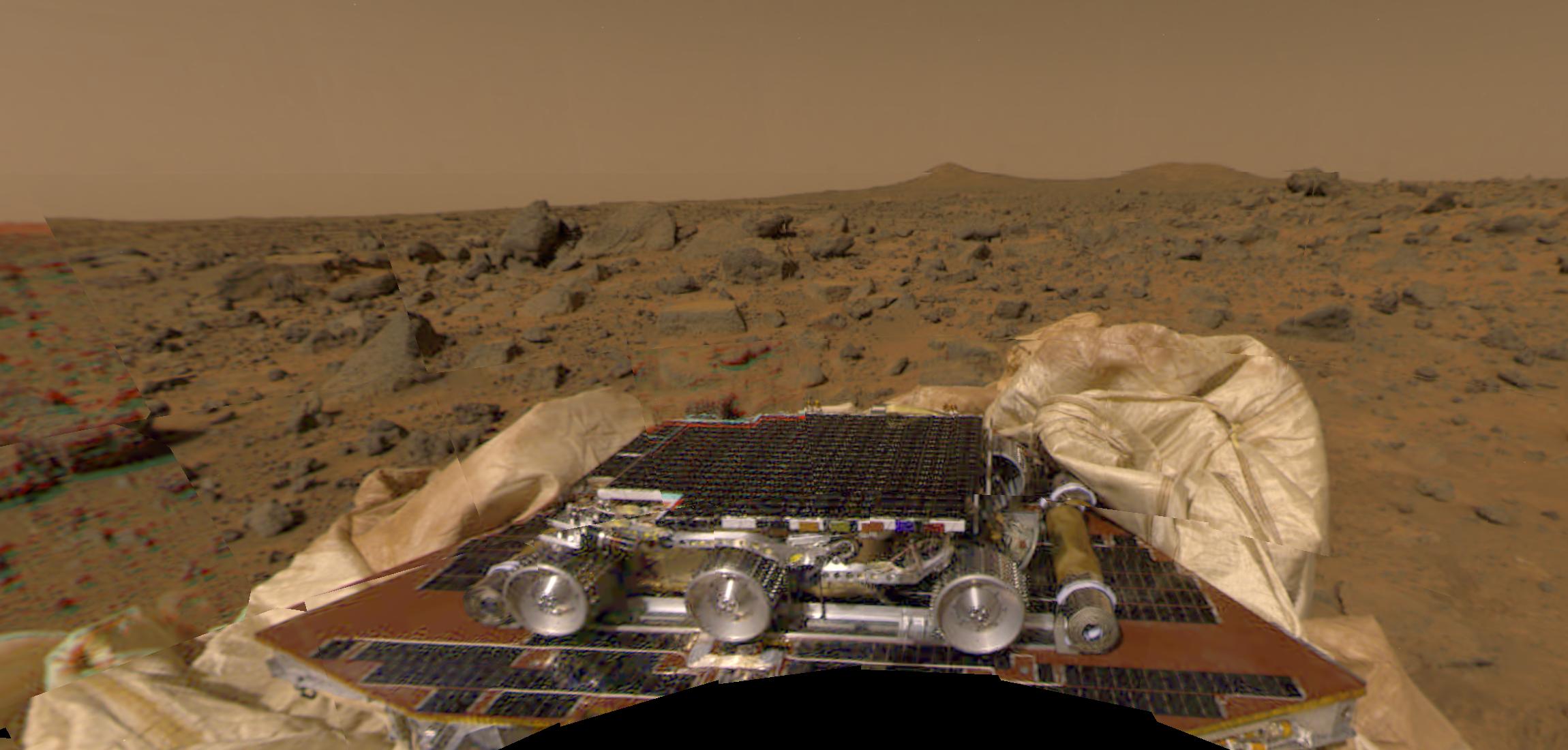
Pathfinder on Mars
2026-07-04
On July 4th, 1997, using its own array of fireworks, a parachute, and a cocoon of airbags, the Mars Pathfinder spacecraft bounced like a giant beach ball at least 15 times before it came to rest on the surface of Mars at 10:07 AM Pacific Daylight Time. After its then novel airbag-assisted landing sequence was completed, Pathfinder transmitted this color mosaic to mission operators on Earth. In the scene from another world, the Mars Sojourner robot rover is visible in the foreground, crouched on top of the unfolded Pathfinder. About the size of a large house cat, the six-wheeled, solar-powered Sojourner became the first successful Martian rover. Surrounding Pathfinder are deflated airbags and the rock-strewn terrain of the Ares Vallis floodplain. In the distance Martian hills appear against a dusty brownish sky. The Pathfinder lander was subsequently renamed the Carl Sagan Memorial Station.
via NASA APOD
Key facts
- Discovered by
- Johann Palisa
- Discovery date
- 21 October 1879
- Pronunciation
- / l æ k r ɪ ˈ m oʊ s ə /
- Named after
- Our Lady of Sorrows ( lacrimōsa )
- Alternative designations
- A879 UB
Article · Deutsch
(208) Lacrimosa ist ein Asteroid des Asteroiden-Hauptgürtels, der am 21. Oktober 1879 von Johann Palisa entdeckt wurde. Der Name ist lateinisch und bedeutet die Tränenreiche. Gemeint ist damit Maria, die Mutter von Jesu von Nazaret im Kontext der Leiden und Trauer bei der Hinrichtung von Jesus am Pfahl auf der Anhöhe von Golgotha. Lacrimosa bewegt sich in einem Abstand von 2,8507 (Perihel) bis 2,9383 (Aphel) astronomischen Einheiten in 4,925 Jahren um die Sonne. Die Bahn ist 1,7507° gegen die Ekliptik geneigt, die Bahnexzentrizität beträgt 0,0151. Lacrimosa hat einen Durchmesser von 41 Kilometern, gehört zu den S-Asteroiden und ist eines der größten Mitglieder der Koronis-Familie, die nach (158) Koronis benannt ist. Sie besitzt eine relativ helle, silikatreiche Oberfläche mit einer Albedo von 0,207. In rund 14 Stunden und 5 Minuten rotiert sie um die eigene Achse.
Abstract from DBpedia / Wikipedia · CC BY-SA