Abraham Palatnik
Sign in to saveBrazilian plastic artist, pioneer in kinetic art in Brazil (1928–2020)
Person · Open Library
- Born
- 1928
- Works
- 1
Top works
- Abraham Palatnik
via Open Library + Wikidata
Described at
Brazilian artist Abraham Palatnik has died from coronavirus, aged 92 - The Art Newspaper - International art news and events
As the inventor of kinechromatic art, leaves behind "an ineffable legacy"
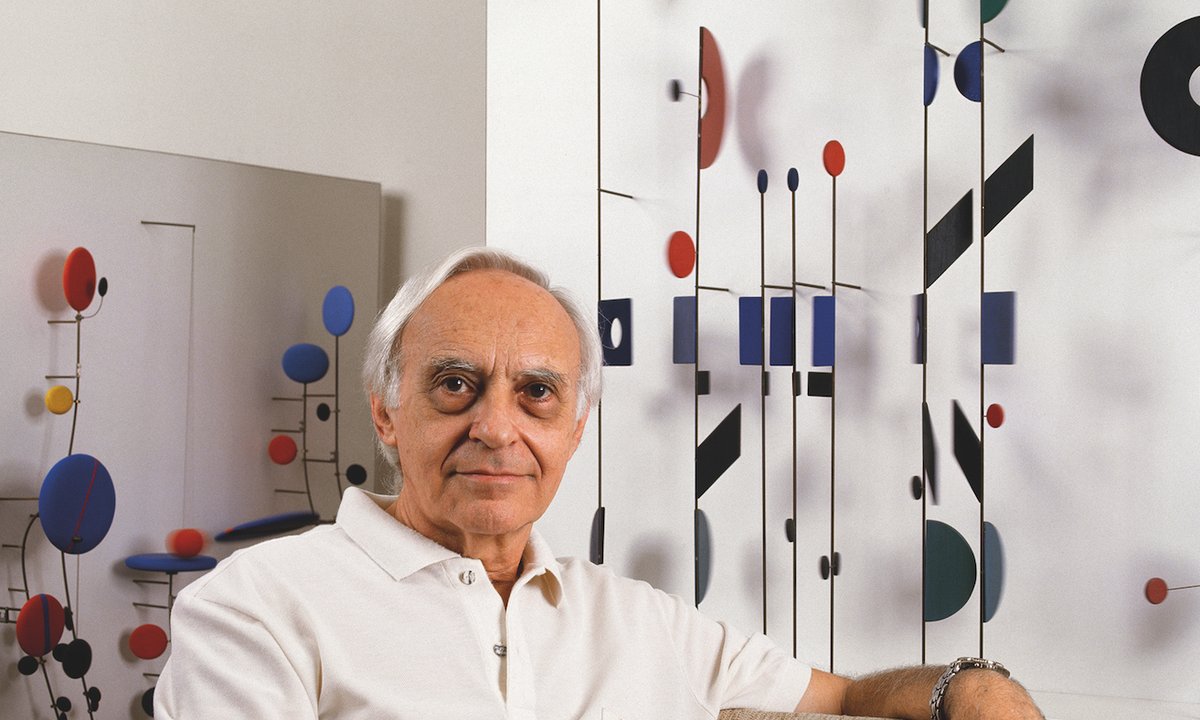
theartnewspaper.com →The son of Jewish immigrants who left Russia in 1919, Palatnik was born in 1928 in Natal, a city in Brazil’s northeastern coast. The Palatniks were among the first Jewish families to settle in Natal, although the artist and his parents moved to Tel Aviv, Israel, in 1932 when he was just four years old. At 20, he returned to Brazil, taking up residence in Rio de Janeiro where he befriended artists like Ivan Serpa and the art critic Mário Pedrosa. With them, he later formed Grupo Frente—a movement associated with Concrete art movement between 1952 and 1964, which rejected the figuration and nationalism of the dominant Modernist Brazilian style—alongside Lygia Clark, Franz Weissman and others. Before returning to Brazil, Palatnik had studied engineering at the Montefiori Technical School in Tel Aviv, and took art classes at the Municipal Art Institute, where he focused on painting. Yet, while living in Rio de Janeiro, Palatnik found himself drawn to the artwork of psychiatric patients—none of whom had formal art training—under the care of the physician Nise da Silveira, a student of Carl Jung who was conducting art therapy workshops at the city's Dom Pedro II Psychiatric Hospital in Rio de Janeiro. It was then that the artist abandoned painting with brushes to focus on creating works with light and technologically-derived movement. His first “kinechromatic device”, Kinechromatic Device, Objeto Cinecromático: Azul e Roxo em Primeiro (1949), was a motorised light sculpture that cast light and shadow into space. Featured in the first São Paulo Bienal in 1951, it garnered critical acclaim—although it did not fit within any of the existing art categories, its originality won it an honourable mention from the international jury. In 1964, Palatnik showed some of his motorised devices in the 32nd Venice Biennale but he had already started to expanded his practice beyond kinetic objects to cardboard and wood compositions. From the 1970s, the artist began working with paint again, cutting up and compiling his paintings to create multi-layered, geometric patterns in the process. “Palatnik leaves behind an ineffable legacy and an artistic trajectory that lasted over 60 years," the Brazilian dealer Nara Roesler, who has represented Palatnik since 1999, writes in an open letter. "His kinetic artworks broke aesthetic boundaries, placing him ahead of his time. We feel honoured to have supported and fomented this seminal artist for a great part of his career.” “Without a doubt he was and always will be a source of inspiration for all Brazilian artists," says Fabio Szwarcwald, the executive director São Paulo Museum of Modern Art. "May he rest in peace.”
Excerpt from a page describing this subject · 8,837 chars · not written by Vinony
Wikidata facts
- Instance of
- human
- Given name
- Abraham
- Gender
- male
- Citizenship
- Brazil
- Place of birth
- Natal
- Place of death
- Rio de Janeiro
- Occupation
- glass artist
- Languages spoken
- Portuguese
- Image
- Abraham palatnik cni.jpg
- Residence
- Rio de Janeiro
- Significant event
- COVID-19 pandemic in Brazil
Show 10 more facts
- date of birth
- 1928-02-19
- has works in the collection
- Royal Museums of Fine Arts of Belgium
- date of death
- 2020-05-09
- manner of death
- natural causes
- cause of death
- COVID-19
- described at URL
- arteforadomuseu.com.br/artistas/abraham-palatnik
- medical condition
- COVID-19
- ethnic group
- Jewish people
- name in native language
- Abraham Palatnik
- Commons category
- Abraham Palatnik
Sources (6)
via Wikidata · CC0