Adoration of the Magi
painting by Peter Paul Rubens, Museo del Prado
Described at
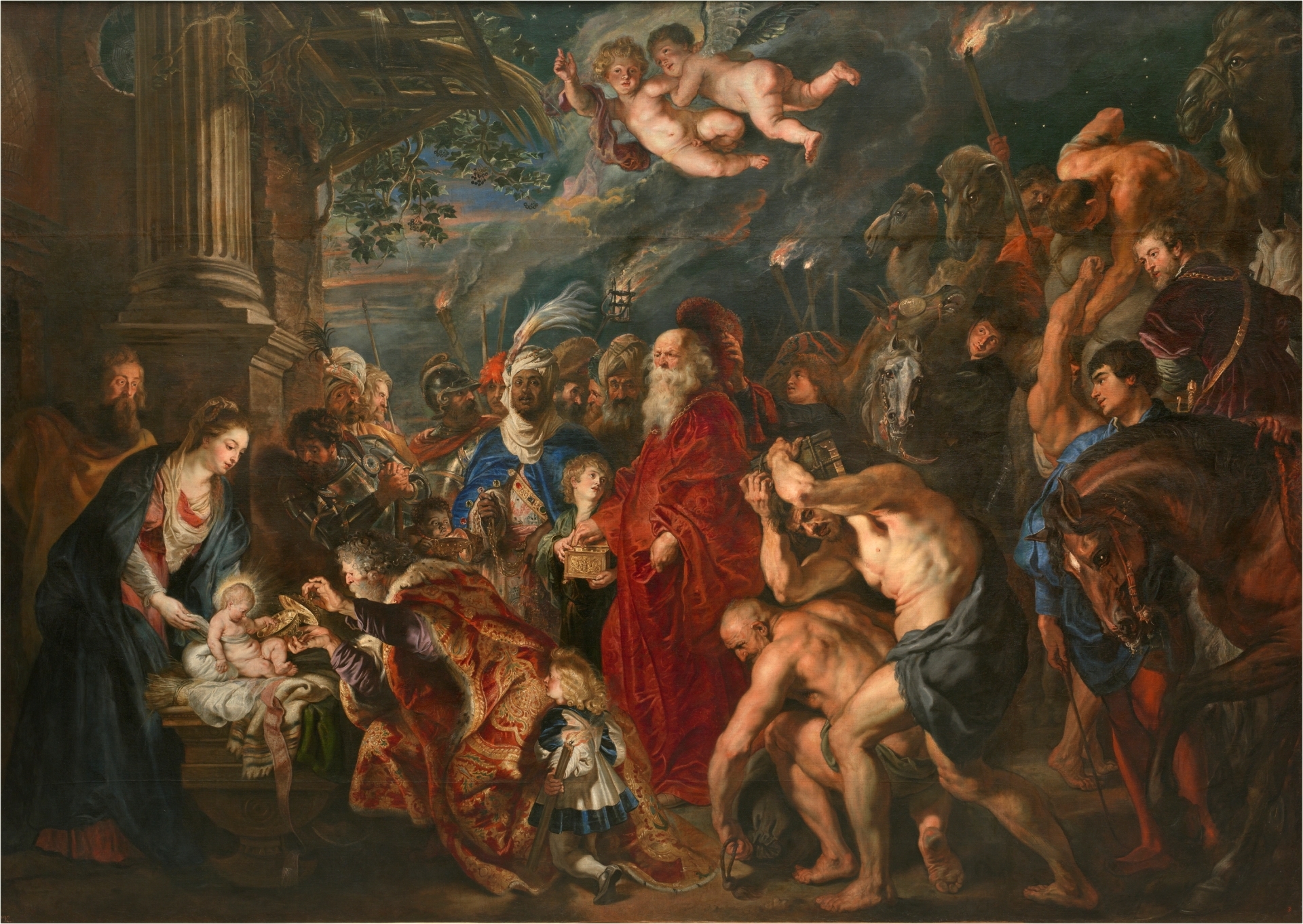
The Adoration of the Magi - The Collection - Museo Nacional del Prado
The Adoration of the Magi is one of the most important works within the Rubens collection in the Museo del Prado, not only because it is the largest but also because of its historical and technical importance.
museodelprado.es →The itinerary TITULORECORRIDO has been successfully created. Now you can add in works from the Collection browser The Adoration of the Magi is one of the most important works within the Rubens collection in the Museo del Prado, not only because it is the largest but also because of its historical and technical importance. Iconographically, it depicts the moment when the three kings, accompanied by a large entourage, present their gifts to the infant Jesus. The child, in his mother´s arms, seems to be playing with the incense presented to him by Gaspar, who is kneeling before him. The scene is set outside, with a reference to the manger on the left, transformed into classical architecture. The richly coloured and richly embroidered robes of the kings, such as Balthazar’s adornments of precious-stones… + The Adoration of the Magi is one of the most important works within the Rubens collection in the Museo del Prado, not only because it is the largest but also because of its historical and technical importance. Iconographically, it depicts the moment when the three kings, accompanied by a large entourage, present their gifts to the infant Jesus. The child, in his mother´s arms, seems to be playing with the incense presented to him by Gaspar, who is kneeling before him. The scene is set outside, with a reference to the manger on the left, transformed into classical architecture. The richly coloured and richly embroidered robes of the kings, such as Balthazar’s adornments of precious-stones and jewels, and the number of companions, evince the luxury of this procession. The scene takes place at night, as can be seen in the sky in the background. However, the luminosity is clear and the focus is on the figure of the child Jesus, who radiates the light that falls on the rest of the figures. The grandeur of the work arises in the multitude of figures. Their position allows to trace a diagonal from the upper right corner that converges on the figure of the child, the central point of the piece. This composition is full of movement and dynamism, where each of the characters is studied both individually and as part of the whole, revealing different postures and plains. The work was executed in two stages: the first carried out around 1608–1609, then twenty years later the painting was enlarged by the artist himself. The first version is known thanks to a sketch kept in the Groninger Museum in Groningen, making it possible to work out Rubens´ first idea; a more horizontal composition that recalls the narrative friezes of classical antiquity. It reveals traces of his apprenticeship during his trip to Italy, immediately prior to the present work. The influence can be seen in the bearers in the foreground, which recall the vigorous, strong figures of Michelangelo and Caravaggio, with the detail of the dirty soles of the feet that one of them displays to the viewer. The additions are focused on the right and upper part of the composition, where the artist used the opportunity to paint his self-portrait as the man in the purple coat behind the horse. Another reference to Italian tradition is present with the two servants trying to hold each other, inspired by The Fire in the Borgo in the Vatican rooms painted by Raphael. In addition to enlarging the composition, Rubens also made some changes to his work and retouched some of the parts already painted, using a much looser technique. The work was commissioned by the city of Antwerp around 1608 to decorate the Salon des États of the City Hall, which was to host the signing of a peace treaty between Spain and the United Provinces known as the Twelve Years´ Truce. The symbolic importance of the work was linked to the decorative programme of the room, where Scaldis and Antwerpia, an allegory of the river Scheldt and the city of Antwerp by A. Janssen, were also hung, and are now extant in the Royal Museum of Fine Arts in Antwerp. Both works were an attempt to express the desire for peace and the