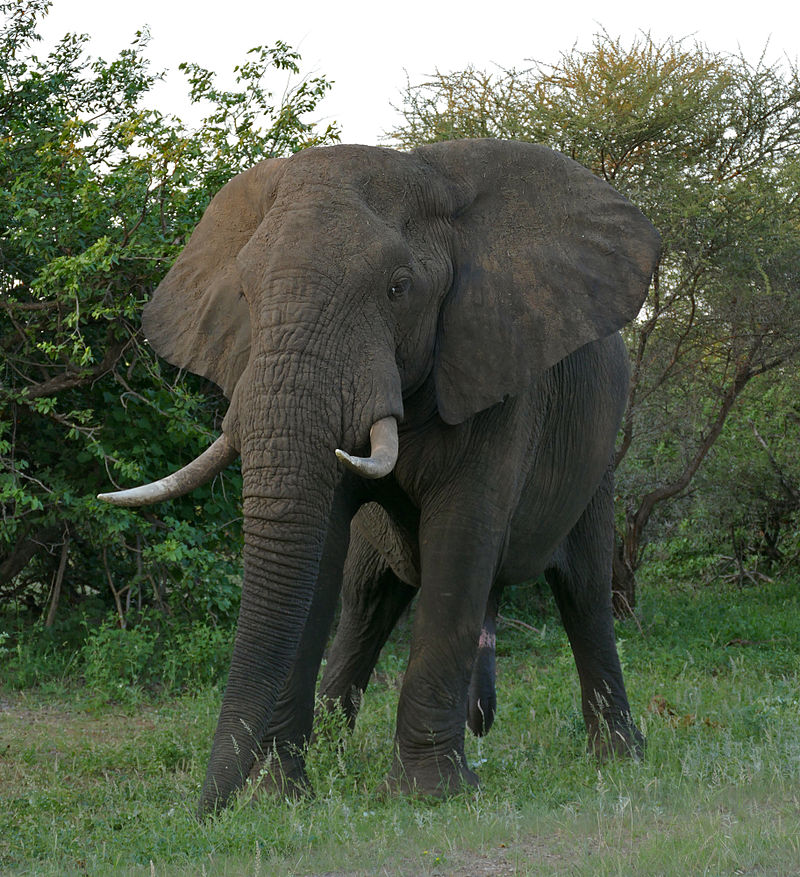
File:African_Elephant_(Loxodonta_africana)_male_(17289351322).jpg · Wikimedia Commons · See Wikimedia Commons
OverviewAI-generated
The African elephant is a taxon belonging to the genus Loxodonta within the family Elephantidae. It is classified as a subclass of elephant and is part of the class Mammalia. The species is commonly known as the African Savanna Elephant, with the taxon name Loxodonta. Its temporal range begins in the Pliocene epoch.
Physical characteristics include a height of 370 and a gestation period of 22. The organism has been recorded in 28,308 observations. The subject is referenced by 651 other encyclopedia articles.
Synthesized by Vinony from 18 facts across 3 sources: Wikidata, iNaturalist, Vinony graph. Generated from structured data (not the Wikipedia text) and checked against those facts — may still contain errors.
Species
African Savanna Elephant
species
非洲象属(学名:Loxodonta)是象科的一个属,于1825年由乔治·库维叶男爵命名。成年非洲雄象高於3.5公尺,最高更可達4.1公尺。體重約為4至5噸,最重記錄有10噸。牠們的長牙最高記錄有102.7公斤重。由於牠的臼齒有菱形齒冠,非洲象的屬名「Loxodonta」,便是從「菱形」(losange)此字演變而成。 非洲象的化石仅在非洲有发现,上新世中期非洲象在非洲进化成。 在象群中,最老的雌象永远是领导者。 野生非洲象非常凶猛且攻擊性強,比亞洲象 更暴躁,是非洲草原上危險的動物。
via
Wikidata facts
Show 8 more facts
- taxon rank
- genus
- Commons category
- Loxodonta
- taxon name
- Loxodonta
- topic's main category
- Category:African elephants
- Commons gallery
- Loxodonta
- gestation period
- 22
- taxon common name
- afriški slon
- temporal range start
- Pliocene
via Wikidata · CC0
~27 min read
Encyclopedic overview
African elephants are members of the genus Loxodonta comprising two living elephant species, the African bush elephant (L. africana) and the smaller African forest elephant (L. cyclotis). Both are social herbivores with grey skin. However, they differ in the size and colour of their tusks as well as the shape and size of their ears and skulls.
Both species are at a pertinent risk of extinction according to the IUCN Red List; as of 2021, the bush elephant is considered endangered while the forest elephant is considered critically endangered. They are threatened by habitat loss and fragmentation, along with poaching for the illegal ivory trade in several range countries.
Excerpted from Wikipedia’s “African elephant” article, available under the CC BY-SA 4.0 licence.
Gallery (14)
Available in 74 languages
- Español
- Français
- Deutsch
- 中文
- 日本語
- Русский
- Português
- Italiano
- العربية
- हिन्दी
- Afrikaans
- Albanian
- Armenian
- Azerbaijani
- Bahasa Indonesia
- Bangla
- Basque
- Bosnian
Show 55 more
- Breton
- Bulgarian
- Catalan
- Cebuano
- Central Kurdish
- Chuvash
- Egyptian Arabic
- Estonian
- Filipino
- Finnish
- Galician
- Georgian
- Greek
- Hebrew
- Hungarian
- Irish
- Kazakh
- Kotava
- Latvian
- lbe
- Macedonian
- Malagasy
- Malay
- Malayalam
- Māori
- Marathi
- Minangkabau
- Nederlands
- Norwegian
- Occitan
- Ossetic
- Romanian
- Rundi
- Saterland Frisian
- Serbian
- simple
- Slovak
- Slovenian
- Svenska
- Tamil
- Tiếng Việt
- Türkçe
- Ukrainian
- Urdu
- Waray
- Welsh
- Western Frisian
- Western Panjabi
- Wu Chinese
- Yakut
- Zaza
- zh_yue
- فارسی
- ไทย
- 한국어
via Wikidata sitelinks · CC0