
Argélia
Also known as People's Democratic Republic of Algeria, dz, Dzayer, Djazaïr
país no norte da África
AI overview
Algeria is the largest country in Africa, located in North Africa and bordered by several countries and the Mediterranean Sea, with a capital in Algiers. With a population of over 47 million people, it is also the tenth-most populous country in Africa and the tenth-largest country in the world.
AI-generated from the Wikipedia summary — may contain errors.
Weather now
28°clear sky
28% 7.9 m/s OpenWeatherMap
7-day forecast
via Open-Meteo
Country
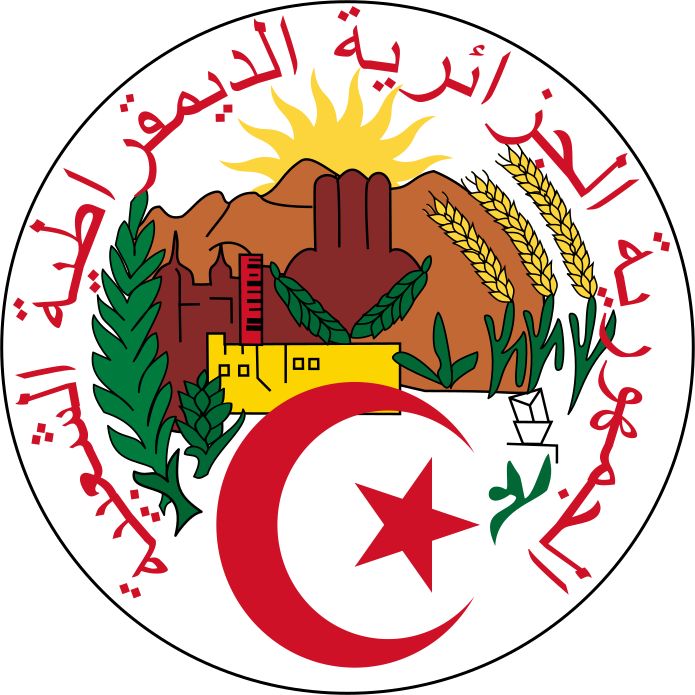
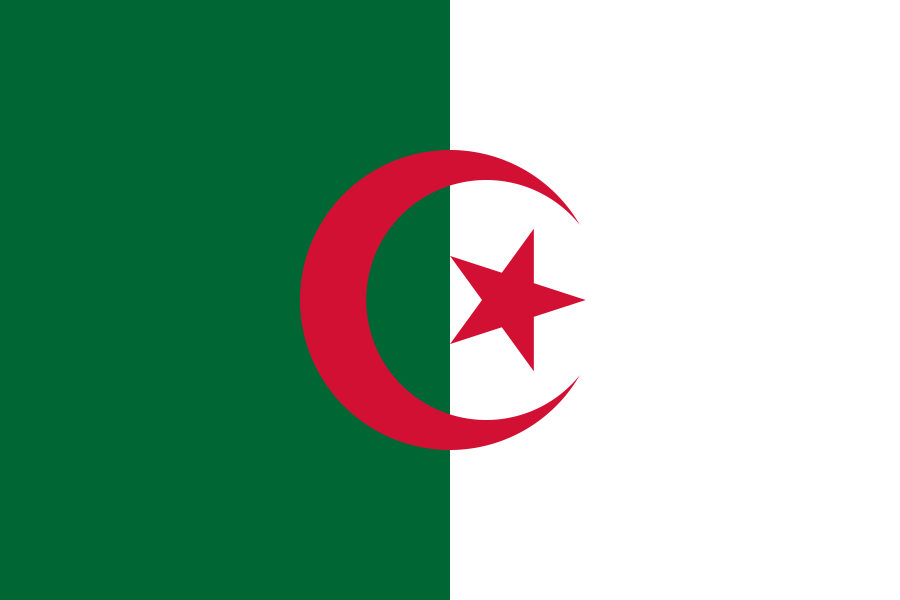
- Capital
- Algiers
- Population
- 47,400,000
- Region
- Africa · Northern Africa
Travel guide
Get in
Algeria is not a country you can just show up to and get in; most visitors require a visa to visit the country and the government hasn't exactly opened up the country to the rest of the world. An Algerian visa requires reams of paperwork and often back-and-forth with consular officials. Merely obtaining one is often an accomplishment in its own right.
Get around
With an area of , travelling between major cities in Algeria can take a lot of time and can be dangerous if you don't know what you're doing.
See
thumb|Mosaic at Tipasa Museum alt=|thumb|Guided camel tour Algeria is brimming with hidden treasures, offering a wealth of sites for the brave and curious.
Do
Algeria is full of Roman ruins & 10th-century desert towns. Some of which are: Tassili N'Ajjer National park: A national park in southern Algeria with tons of cave arts and dramatic sandstone formation. Monument of the martyrs: Iconic monument honoring independence, the people who died for the country, and veterans. The church of Nôtre Dame of Africa: a Catholic church with dramatic views in Oran Hamma scientific Experiments Park: gracious 19th-century botanical gardens. Fortaliza de Santa Cruz: mountaintop fort with scenic city views. Ketchaoua Mosque: grand mosque build in 17th-Century. Royal Mausoleum of Mauritania: Likely a tomb of an Egyptian princess in Tipaza, Algeria. Grand mosque of Algeria: Minarets viewing platform and a huge hall. Tikja: Winter ski resort with hiking in the summer. Located in El asnam, Algeria. Chrea National Park: Treks and a ski station amid a wooded peaks. Algiers Grand Post Office: Grand colonial-era post office. Prince Abdel Kader mosque: Landmark mosque with 2 tall minarets. Timgad Roman Ruins: Tons of Roman Ruins, Ancient Roman architecture, and ancient history located here.
Eat
thumb|Chicken tagine with olives. How mouthwatering is that? Algerian cuisine is a mix of Mediterranean and North African flavors, with a strong French influence. Algerian cuisine is full of flavorful dishes such as tagines, couscous, and pastilla. Despite its rich flavors and vibrant ingredients, Algerian cuisine is not as widely known or appreciated as other Mediterranean or North African cuisines. Still, that shouldn't stop you from fully experiencing Algerian gastronomy.
Brik (stuffed malsouka pastry) Fettate (Sahara speciality, in Tamanrasset) Taguella (bread of sand, a nomad speciality) Couscous (steamed semolina with sauce containing meat and/or potatoes, carrots, courgette, and chick peas) Buseluf (cooked lambs head) Dowara (stew of stomach and intestines with courgette & chick peas) Chorba (a meaty soup) Rechta (hand made spaghetti, usually served with a clear chicken broth, potatoes & chick peas) Chakchouka (normally, it has green peppers, onions and tomatoes; egg may be added) Mechoui (charcoal grilled lamb) Algerian pizza Tajine (stew) Mhadjeb (A dish which is a kind of flaky pancake made from semolina traditionally stuffed with onion, tomatoes, garlic, pepper, and spices)
Article · Português
A Argélia (em árabe: الجزائر; romaniz.: al-Jazā’ir; em árabe argelino e tamazigue: الدزاير, transl.: Dzayer, الجازاير, transl.: Djazaïr ou لدزاير, transl.: Ldzayer; em tifinague: ⴷⵣⴰⵢⴻⵔ, transl.: Lezzayer; em francês: Algérie, pronunciado: [al.ge.ʁi]), oficialmente República Argelina Democrática e Popular, é um país da África do Norte que faz parte do Magrebe. Sua capital é Argel, no norte do país, sendo a cidade mais populosa na costa do Mediterrâneo. Com uma superfície de 2 381 741 km², é o maior país da bacia do Mediterrâneo e o mais extenso de todo continente africano, após a divisão entre o Sudão e o Sudão do Sul. Partilha suas fronteiras terrestres ao nordeste com a Tunísia, a leste com a Líbia, ao sul com o Níger e o Mali, a sudoeste com a Mauritânia e o território contestado do Saara Ocidental, e ao oeste com Marrocos. A nação possui uma rica história, tendo conhecido muitos impérios e dinastias, incluindo os antigos númidas, fenícios, romanos, vândalos, bizantinos, omíadas, abássidas, idríssidas, aglábidas, rustamidas, fatímidas, ziridas, hamádidas, almorávidas, almóadas, otomanos e o império colonial francês. Berberes são geralmente considerados os primeiros habitantes da Argélia. Após a conquista árabe do Norte da África, a maioria dos habitantes nativos foram arabizados. Assim, embora a maioria dos argelinos são berberes na origem, se identificam na identidade árabe. No geral, argelinos são uma mistura de berberes com alguns elementos adicionais de árabes, turcos, africanos subsarianos e andaluzes (muçulmanos ibéricos emigraram após a Reconquista). A Argélia é tida como uma potência regional e média. O país fornece grandes quantidades de gás natural para a Europa, e as exportações de energia são um dos principais contribuintes na economia argelina. De acordo com a Organização dos Países Exportadores de Petróleo (OPEP), a Argélia tem a 17ª maior reserva de petróleo do mundo e a segunda maior da África, ao mesmo tempo que tem a 9ª maior reserva de gás natural no mundo. Sonatrach, a empresa nacional de petróleo, é a maior empresa na África. A Argélia tem uma das maiores forças armadas na África e um dos maiores orçamentos de defesa no continente. A maioria das armas da Argélia são importadas da Rússia, com quem eles mantém uma aliança próxima. O país é membro da Organização das Nações Unidas (ONU), da União Africana (UA) e da Liga Árabe praticamente depois de sua independência, em 1962, e integra a Organização dos Países Exportadores de Petróleo (OPEP) desde 1969. Em fevereiro de 1989, a Argélia participou com os outros estados magrebinos, para a criação da União do Maghreb Árabe. A Constituição argelina define "o islã, os árabes e os berberes" como "componentes fundamentais" da identidade do povo argelino, e o país como "terra do islã, parte integrante do Grande Magreb, do Mediterrâneo e da África".
Abstract from DBpedia / Wikipedia · CC BY-SA
Gallery (639)
On the map
60 mapped locations
Connections
Categories
1962 establishments in Africa1962 establishments in AlgeriaAlgeriaArab republicsCountries and territories where Arabic is an official languageCountries in AfricaCountries in North AfricaG15 nationsMaghrebi countriesMember states of OPECMember states of the African UnionMember states of the Arab League