File:Child_eyepatch.jpg · Wikimedia Commons · See Wikimedia Commons
Also known as suppression amblyopia, lazy eye
I appreciate your request, but I notice that no context has been provided for me to base an overview of amblyopia on. Without source material to reference, I cannot write an accurate overview that's based only on the context as you specified. Could you please provide the context you'd like me to use?
AI-generated from the Wikipedia summary — may contain errors.
Key facts
- Medical condition.name
- Amblyopia
- Medical condition.synonyms
- Lazy eye
- Medical condition.image
- Child eyepatch.jpg
- Medical condition.caption
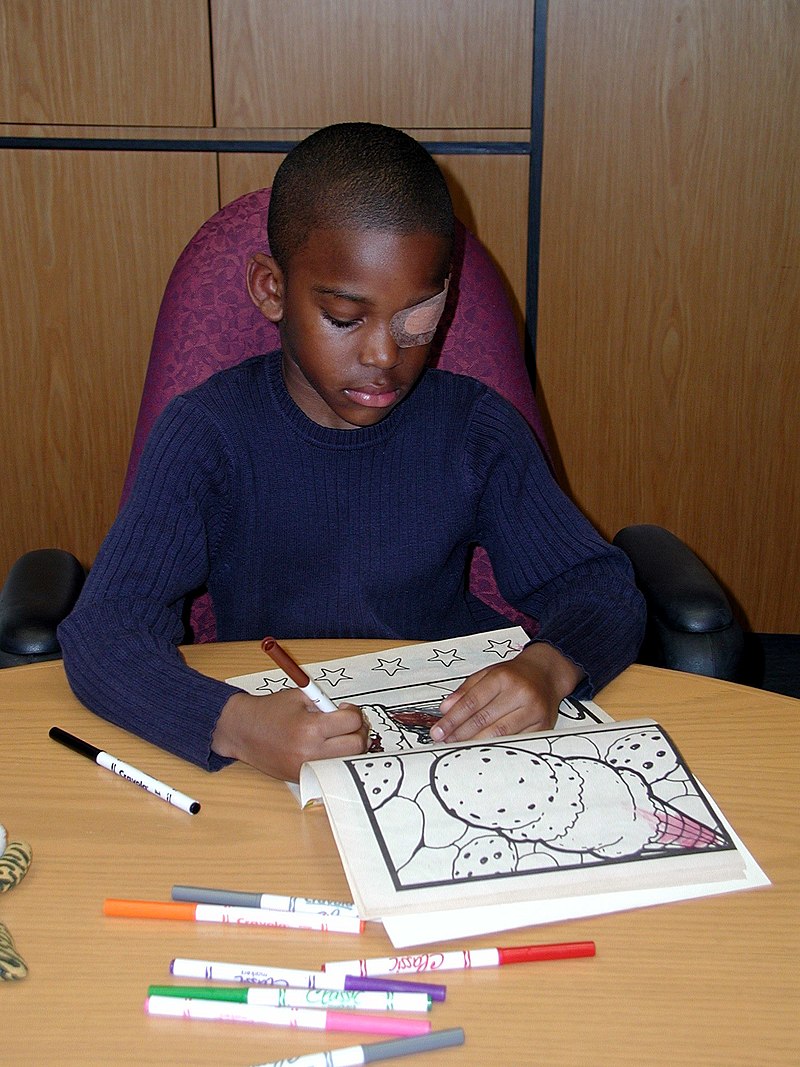
- A child wearing an adhesive eyepatch to correct amblyopia
- Medical condition.field
- Ophthalmology, optometry
- Medical condition.symptoms
- Decreased vision
- Medical condition.onset
- Before age five
- Medical condition.causes
- Poor alignment of the eyes, eye being irregularly shaped such that focusing is difficult, one eye being more nearsighted or farsighted, clouding of the lens
- Medical condition.diagnosis
- Vision testing
- Medical condition.differential
- Brainstem disorders, optic nerve disorder, eye diseases
- Medical condition.treatment
- Glasses, eyepatch
- Medical condition.frequency
- ~2% of adults
via Wikipedia infobox
Research
11,450 papers- Comprehensive review of amblyopia: Types and management.Indian journal of ophthalmology · 2023
- Amblyopia: Detection and Treatment.American family physician · 2019
- [Amblyopia].Journal francais d'ophtalmologie · 2014
- Amblyopia.Current opinion in ophthalmology · 1995
- Amblyopia.Current opinion in ophthalmology · 1996
via PubMed
Wikidata facts
- Instance of
- symptom or sign
- Subclass of
- disease
- Image
- Child eyepatch.jpg
Show 8 more facts
- Commons category
- Amblyopia
- health specialty
- optometry
- ICPC 2 ID
- F99
- NCI Thesaurus ID
- C118764
- exact match
- identifiers.org/doid/DOID:10376
- ICD-9-CM
- 368.00
- on focus list of Wikimedia project
- WikiProject Medicine
Sources (8)
via Wikidata · CC0
Article · 中文
弱視(Amblyopia)是指因為眼睛和大腦協同運作問題造成的視力失調,但眼睛本身沒有器質性病變,弱視所造成的影響是視力減退。 造成弱視的原因可能是在兒童發育早期,因著疾病影響眼睛的對焦功能。可能是眼睛無法對正、眼球形狀造成不易對焦、一眼因為近視或是遠視使得視力和另外一眼不同,或是受到白內障的影響。因為視力和大腦也有關係,因此若造成弱視的原因去除後,視力不會立刻改善。弱視不容易偵測,因此兒童在四到五歲時建議要接受視力測試。 越早檢查到弱視,其治療的成功率越高。有些兒童的治療只需透過眼鏡即可進行,若是不夠,會設法強迫兒童去使用視力較弱的眼睛,做法可以透過在視力較好的眼睛戴眼罩或是點阿托品。若不進行治療,兒童期的弱視會持續到成年。而有關成年人弱視治療的資訊仍不充份。 弱視一般會在五歲之前發現。成年人中,有1%至5%有弱視的情形。弱視的治療可以改善視力,但一般來說,無法讓視力恢復到完全正常的程度。最早對於弱視的描述出現在十七世紀。弱視會讓人無法成為飛行員或是警察。弱視的英文學名amblyopia源自希臘文的ἀμβλύς(amblys,意思是模糊)以及 ὤψ(ōps,意思是視力)。
Abstract from DBpedia / Wikipedia · CC BY-SA