
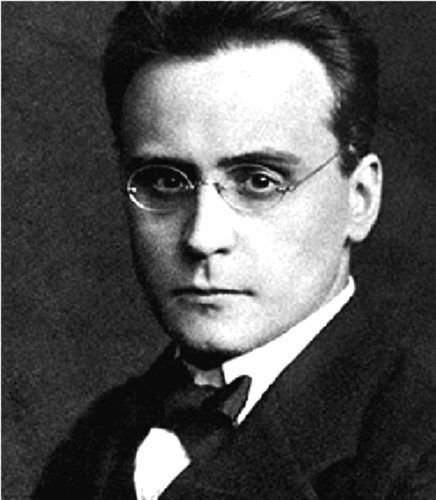
File:Anton_Webern_in_Stettin,_October_1912.jpg · Wikimedia Commons · See Wikimedia Commons
Anton Webern
Sign in to saveAlso known as Webern, Anton Friedrich Wilhelm von Webern
compositore austriaco
OverviewAI-generated
Anton Webern was an Austrian conductor, musician, composer, and music arranger. Born in Vienna in 1883, he studied at the University of Vienna under Arnold Schoenberg. He was a member of the Second Viennese School and spoke German. His musical output included works in the genres of impressionism in music, serialism, and atonality, with his professional career beginning in 1908.
Webern played the piano and is associated with contemporary classical and 20th Century Classical music. He had students including Humphrey Searle and Hans Swarowsky. His compositions are categorized under Category:Compositions by Anton Webern, and he is described by the source UbuWeb. Webern died in Mittersill in 1945 as a result of homicide. He is buried in Mittersill, the same location where he passed away.
Synthesized by Vinony from 28 facts across 4 sources: Wikidata, MusicBrainz, Last.fm, Europeana Sparql. Generated from structured data (not the Wikipedia text) and checked against those facts — may still contain errors.
Music · MusicBrainz
- Type
- Person
- Gender
- Male
- Country
- Austria
- Active from
- 1883
- Active to
- 1945
Discography
- Symphony, op. 211950
- The Complete Music Recorded Under the Direction of Robert Craft1957
- Complete Music for String Quartet1970
- Complete Works Op. 1 - Op. 311978
- Orchestral Music: op. 1 / op. 6 / op. 10 / op. 21 / op. 30 / Ricercata1980
- Webern: String Trio / Quartet Rondo / Piano Quintet / Schoenberg: Ode to Napoleon1986
- Orchesterstücke1987
- Lieder1988
- The Orchestral Pieces1992
- Webern: String Quartet 1905 / Slow Movement / Rondo for String Quartet / 5 Movements, op. 5 / Bagatelles, op. 9 / String Quartet, op. 28 / Gielen: Variations for String Quartet1992
via MusicBrainz · CC0
Listeners · Last.fm
- Listeners
- 133,998
- Total plays
- 1,566,750
Tags
Anton Webern (3 December 1883 – 15 September 1945) was an Austrian composer and conductor. He was a member of the Second Viennese School. As a student and significant follower of Arnold Schoenberg, he became one of the best-known exponents of the twelve-tone technique; in addition, his innovations regarding schematic organization of pitch, rhythm and dynamics were formative in the musical technique later known as total serialism. Webern was not a prolific composer; just thirty-one of his compos
Wikidata facts
- Instance of
- human
- Given name
- Anton
- Gender
- male
- Citizenship
- Austria
- Place of birth
- Vienna
- Place of death
- Mittersill
- Occupation
- composer
- Educated at
- University of Vienna
- Languages spoken
- German
- Student of
- Arnold Schoenberg
- Instrument
- piano
- Record label
- Naxos
- Official website
- www.antonwebern.com
- Image
- Anton Webern (1883–1945) 1927 © Georg Fayer (1891–1950) OeNB 10450290.png
Show 15 more facts
- Commons category
- Anton Webern
- date of birth
- 1883-12-03
- date of death
- 1945-09-15
- Commons gallery
- Anton Webern
- member of
- Second Viennese School
- student
- Hans Swarowsky
- manner of death
- homicide
- topic's main category
- Category:Anton Webern
- start of work period
- 1908-00-00
- place of burial
- Mittersill
- name in native language
- Anton Webern
- related category
- Category:Compositions by Anton Webern
- Commons Creator page
- Anton Webern
- birth name
- Anton Friedrich Wilhelm von Webern
- P12674
- sauerkraut
Sources (8)
via Wikidata · CC0
Works in European collections
10 objects attributed to Anton Webern, held across European museums, libraries & archives · via Europeana
Article · Italiano
Anton Friedrich Wilhelm von Webern, meglio noto come Anton Webern (Vienna, 3 dicembre 1883 – Mittersill, 15 settembre 1945), è stato un compositore austriaco. Fu uno dei primi allievi e seguaci di Arnold Schönberg e appartenne alla cosiddetta seconda scuola di Vienna. Nel 1925 Webern adottò definitivamente la dodecafonia appena essa fu teorizzata dal suo maestro Arnold Schönberg: tecnica compositiva della quale - anche per gli sviluppi tecnici che ebbero le sue idee da parte della successiva generazione di compositori - si sarebbe rivelato esponente originalissimo. La sua embrionale organizzazione dei sistemi di altezze, ritmo e dinamica divenne infatti il modello originario di una delle principali tecniche compositive della seconda metà del XX secolo, del quale si parla in generale come di serialismo integrale.
Abstract from DBpedia / Wikipedia · CC BY-SA