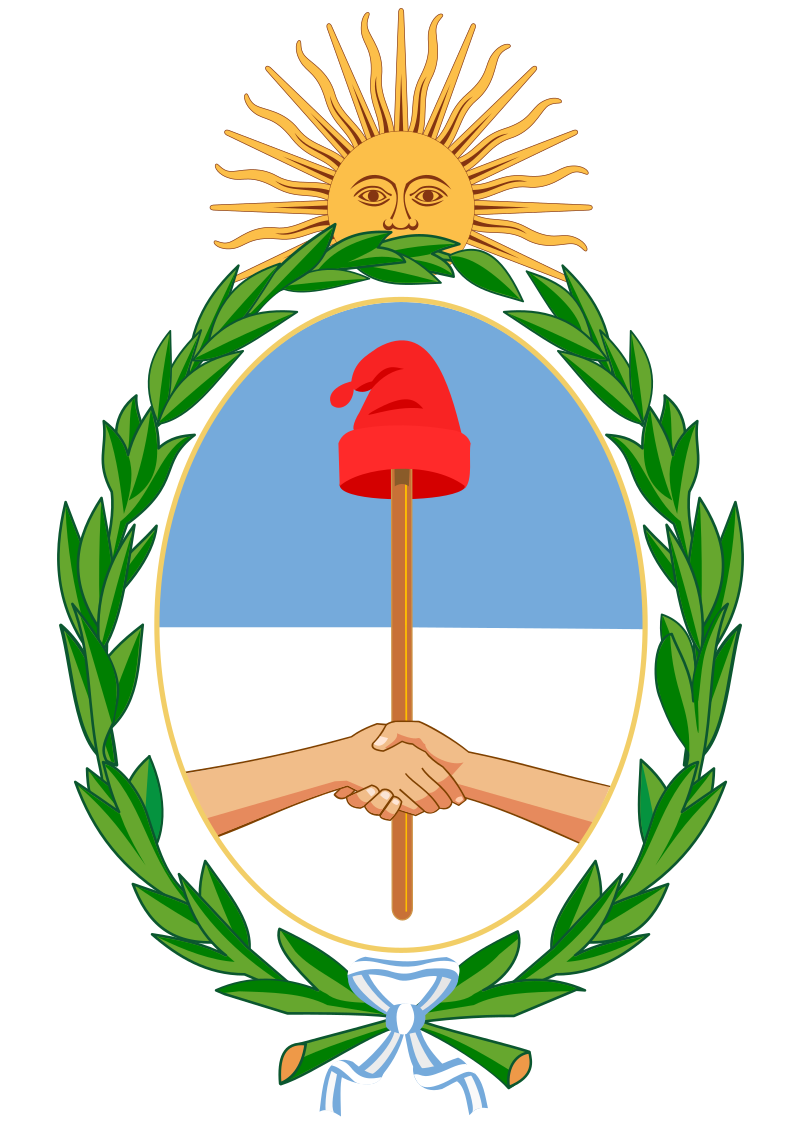
Also known as Argentine Republic, Republic of Argentina, Republica Argentina
美洲南部國家
Argentina is a large South American country located in the southern cone of the continent, making it the second-largest country in South America and the eighth-largest in the world. It is significant as a major regional power that borders multiple countries including Chile, Bolivia, Paraguay, Brazil, and Uruguay, and also claims territory in Antarctica.
AI-generated from the Wikipedia summary — may contain errors.
via Open-Meteo
Argentina, officially the Argentine Republic (Spanish: República Argentina), is in South America, and is the eighth-largest country in the world. The highest and the lowest points of South America are also in Argentina: At 6,960 m, Cerro Aconcagua is the tallest mountain in the Americas while Laguna del Carbón, at 105 m below sea level, in Santa Cruz Province is the lowest point in South America.
At the southern tip of Argentina there are several routes between the South Atlantic and the South Pacific Oceans including the Strait of Magellan, the Beagle Channel, and the Drake Passage – as alternatives to sailing around Cape Horn in the open ocean between South America and Antarctica.
The name Argentina derives from argentinos, the Ancient Greek diminutive (tinos) form for silver (argentos), which is what early Spanish explorers sought when they reached the region in the 16th century.
Argentina is a colossal country. With a land area of , travelling from one region to another can take a lot of time.
It is a government requirement that travellers produce identification when buying plane or long distance bus tickets. You are always asked for identification when buying bus tickets and many bus drivers ask again to see your passport as you are boarding. Some of the provinces have restrictions on the transport of fresh fruit and vegetables. Police will occasionally search buses and check the luggage of plane passengers when they disembark.
For many visitors, Argentina as a country has the same seductive appeal as the tango for which it's famous. Just like that iconic partner dance, Argentina embraces you, constantly moving to the rhythm of the streets and improvising every step of the way.
thumb|Bife de chorizo Argentinian breakfasts are somewhat light compared to what those from English-speaking countries are accustomed to. Typically, it consists of a hot drink (coffee, tea, milk) with some toast, medialunas (croissants, literally "halfmoons") or bread.
Hotels typically provide a free buffet consisting of coffee, tea, drinkable yogurt, assorted pastries and toast, fruit and perhaps cereal. These kinds of breakfasts are also readily available in the many cafes.
阿根廷共和国(西班牙語:República Argentina),通称阿根廷(西班牙語:Argentina),是位于南美洲南部的主权国家。由23个省和布宜諾斯艾利斯自治市组成的联邦共和国,占有南錐體的大部分,北邻玻利维亚与巴拉圭,东北与巴西接壤,东临乌拉圭与南大西洋,西接智利,南濒德雷克海峡。领土面积达2,780,400平方公里,位居世界第八,拉丁美洲第二,西班牙语诸国之首,横跨多个气候带。阿根廷主张对南极洲的一部分、马尔维纳斯群岛(英国称福克兰群岛)、南乔治亚岛和南桑威奇群岛拥有主权。 在文化上阿根廷呈現深度欧化,例如首都文化幾乎是歐洲城市文化的延伸。而社會素質、教育文化、市場經濟與法規上的發達,使阿根廷今日在民主和人權上有很大發展,也是南美唯一掌握人造衛星操作技術的國家。长久以来,阿根廷是一个中等强国和拉丁美洲的地域大国,它也是联合国、世界银行集团、世界贸易组织、南方共同市場、南美洲国家联盟、拉美及加勒比国家共同体和的创始国。作为一个传统农业大国和新兴市场国家,阿根廷是20国集团成员和拉美第三大经济体。以购买力平价来计的人均国内生产总值处于中高水平,与智利和乌拉圭同属拉美第一集团,與東南歐相同,人类发展指数处于极高级。收入不平等程度虽高,但低于拉美国家平均水平。 这一地区已知最早的人类活动发生在旧石器时代。西班牙殖民始于1512年。在1810年至1825年的独立战争中,阿根廷以拉普拉塔联合省的国名于1816年发表《》,继承了原西班牙拉普拉塔总督辖区的大部分地区,在之后与西班牙和葡萄牙的战争中,联合省政府继而失去乌拉圭、玻利维亚和秘鲁等地区。其后多年的最终在1861年,布宜诺斯艾利斯邦击败了邦联政府,与当时其它八个省重新统一为阿根廷共和国。至此,大规模的欧洲移民潮架起了阿根廷与欧洲之桥,无与伦比的发展使阿根廷于20世纪早期跻身世界第七富国。然而在1930年代軍事政變以后,政局不稳和周期性经济危机使其陷入衰退。1945年後發展的庇隆主義至今仍然影響阿根廷政治。
Abstract from DBpedia / Wikipedia · CC BY-SA
4 mapped locations
Discovered by embedding cosine similarity (sentence-transformers MiniLM, 384-dim).
via REST Countries
via World Bank Open Data · CC BY 4.0
via Wikimedia Pageviews API
via Wikipedia infobox
via PubMed
via Wikidata · CC0
Lunch is a big meal in Argentina, typically taken in the early afternoon. Lunch is so big because dinner is not until late: 20:30 to 21:00 at the earliest, more commonly at 22:00 or even later. Most restaurants do not serve food until then except for pastries or small ham-and-cheese toasted sandwiches (tostados), for afternoon tea 18:00-20:00. Tea is the one meal that is rarely skipped. A few cafés do offer heartier fare all day long, but don't expect anything more substantial than pizza or a milanesa (breaded meat fillets) or a lomito (steak sandwiches) outside of normal Argentine mealtimes. Dinner is usually eaten at 22:00 and typically consists of appetizers, a main course, and desserts.
North Americans should beware that Argentinians use the term "entrée" to refer to appetizers. This is common outside of North America but can surprise some Canadians and most Americans. In Argentina the main dish is a "plato principal".
The appetizers in Argentina typically consist of empanadas (baked pastries wit…
thumb|Bottle and glass of Malbec wine Yerba mate (pronounced in two syllables, 'MAH-teh') is a traditional Argentine herbal drink, prepared in a hollowed-out gourd which is passed around in a social setting and drunk through a metal straw. Although usually drunk hot, mate can also be served cold, usually known as "tereré"; the version that is preferred in Paraguay and Mato Grosso, Brazil. Mate contains less caffeine than coffee, but contains other vitamins and minerals that give it a stimulating effect, particularly to those who are not used to it. It is naturally rather bitter, so it's not uncommon to add sugar, though it's polite to ask before adding sugar to it. The drinking of mate with friends is an important social ritual in Argentina. The informal tea ceremony is led by a "cebador" or server and people arrange themselves in a "rueda" or wheel.
Argentina is renowned for its excellent selection of wine. The most famous wine region is Mendoza, whose terrain seems to complement the European grape varietals with interesting notes not present when produced in other climates. The best way to experience and understand the selection of Argentine varietals is one of the many tasting events.
The legal drinking age is officially 18, although most establishments will serve anyone approximately 16 or older. Most restaurants serve a broad range of liquors. Beer is offered in drought form in a chopp (small glass) or served in bottles or cans, and is typically a light, easily drinkab…
thumb|There are hotels everywhere, ranging from luxury to budget It is a government requirement that travellers produce identification when checking in to their accommodation.
A wide range of accommodation possibilities are available in Buenos Aires and the rest of the country, from student hostels to homey bed and breakfasts to trendy boutique hotels in the city to luxurious palaces and modern five-star hotels. There are also many beautiful lake-side lodges in Patagonia, and fabulous regional farms (estancias) outside the cities.
Many vacation cabañas (cabins or weekend houses) are available for short-term rent directly from the owners in the mountains, seaside, and in rural areas. Drive around and look for signs saying alquiler ("rental"), or check the classified section of any major newspaper.
Argentina is a vast country and camping is possible at many places (free or including amenities), especially near the beach. In addition, many villages and towns offer inexpensive "municipal camping". However, consider that many grounds are private property, so you should not camp here. Consult OpenStreetMap, which many mobile Apps like OsmAnd or Mapy.cz use, to find places which have been tagged by other people as possible camping sites.
thumb|Argentina police Because it is well known that tourists bring hard currency to Argentina to avoid the official exchange rate, tourists can be targets of crime. Exercise extra caution here, don't go to Western Union alone, be careful changing on the street, and bring a lock for your bags, take the $1-2 Uber instead of walking at night. The 500 or so dollars you may bring represents 3 months at the minimum wage, so be careful.
Argentina has a relatively high traffic mortality rate, with about 20 road deaths per day, and with more than 120,000 injured people each year, including tourists. Pedestrians should exercise extreme caution. Do not jaywalk if you do not feel comfortable, and be careful crossing even when allowed.
There is plenty of activity and foot traffic throughout the night. Nice areas have a very thorough police presence, perhaps one officer per 3 blocks, plus store security and auxiliary patrols. Public security in all major cities like Buenos Aires, Córdoba and Rosario is handled by the Federal Police and the National Gendarmerie or the Naval Prefecture, especially in the Puerto Madero area of Buenos Aires.
As in any large city, certain particular neighborhoods in Buenos Aires and other cities are very dangerous. Some shady neighborhoods include Retiro, Villa Lugano, La Boca and Villa Riachuelo. Ask trusted locals, such as hotel desk staff or police officers, for advice. Pay attention to your environment and trust your instincts. If an area seems questio…
thumb|San Ignacio Miní, one of the world heritage listed Jesuit missions in the north of Argentina Visiting Argentina doesn't raise any major health worries. Certain vaccinations may be necessary for visitors, depending on what parts of Argentina you plan to visit. Yellow fever vaccinations are recommended for those visiting the Northern forests. If you missed your vaccination at home, it is possible to receive a free yellow fever shot in Argentina, in one of the bigger cities. This can be of advantage if you travel further to other Amazonian countries. However, be prepared to be queued at the very end—first the locals are treated. Also, there are specific days of the week when the vaccination takes place.
Dengue, a mosquito borne illness, is a serious and potentially fatal illness. Mosquito bites should be prevented at all costs, where they have many bug repellents, from lotions to sprays, as well as citronella candles, and 'espirales' (a spiral shaped incense). These are purchasable at most kiosks or pharmacies.
Different climate conditions might take your body by surprise, so be aware of the weather before you arrive. An upset stomach is the most you're likely to have to worry about as your body adjusts to local microorganisms in the food.
It's also best to ease yourself gently into the local diet – sudden quantities of red meat, red wine, strong coffee and sweet pastries can be very unsettling for a stomach used to gentler repasts – and though tap water in Argent…
Generally speaking, Argentines are expressive and emotive conversationalists.
Argentina borders Brazil and Uruguay to the northeast, Chile to the east, and Bolivia and Paraguay to the north.
The capital of Uruguay, Montevideo, is just an hour away by ferry from the Argentinean capital Buenos Aires. Porto Alegre, in the Brazilian state of Rio Grande do Sul, is a 14-hour drive from Buenos Aires. A popular summer vacation destination for many Argentines is Florianópolis, in the Brazilian state of Santa Catarina, a 19-hour drive away or by flight from Buenos Aires.
Travel guide from Wikivoyage (CC BY-SA 4.0)
via Wikidata sitelinks · CC0