
The Artemis program is NASA's plan to return astronauts to the Moon for the first time since the Apollo missions and to establish a permanent base there. It matters because it represents a major step forward in human space exploration and could serve as a stepping stone for future missions to Mars and beyond.
AI-generated from the Wikipedia summary — may contain errors.
Wikipedia views (30d)
113,990 totalvia Wikimedia Pageviews API
Official website
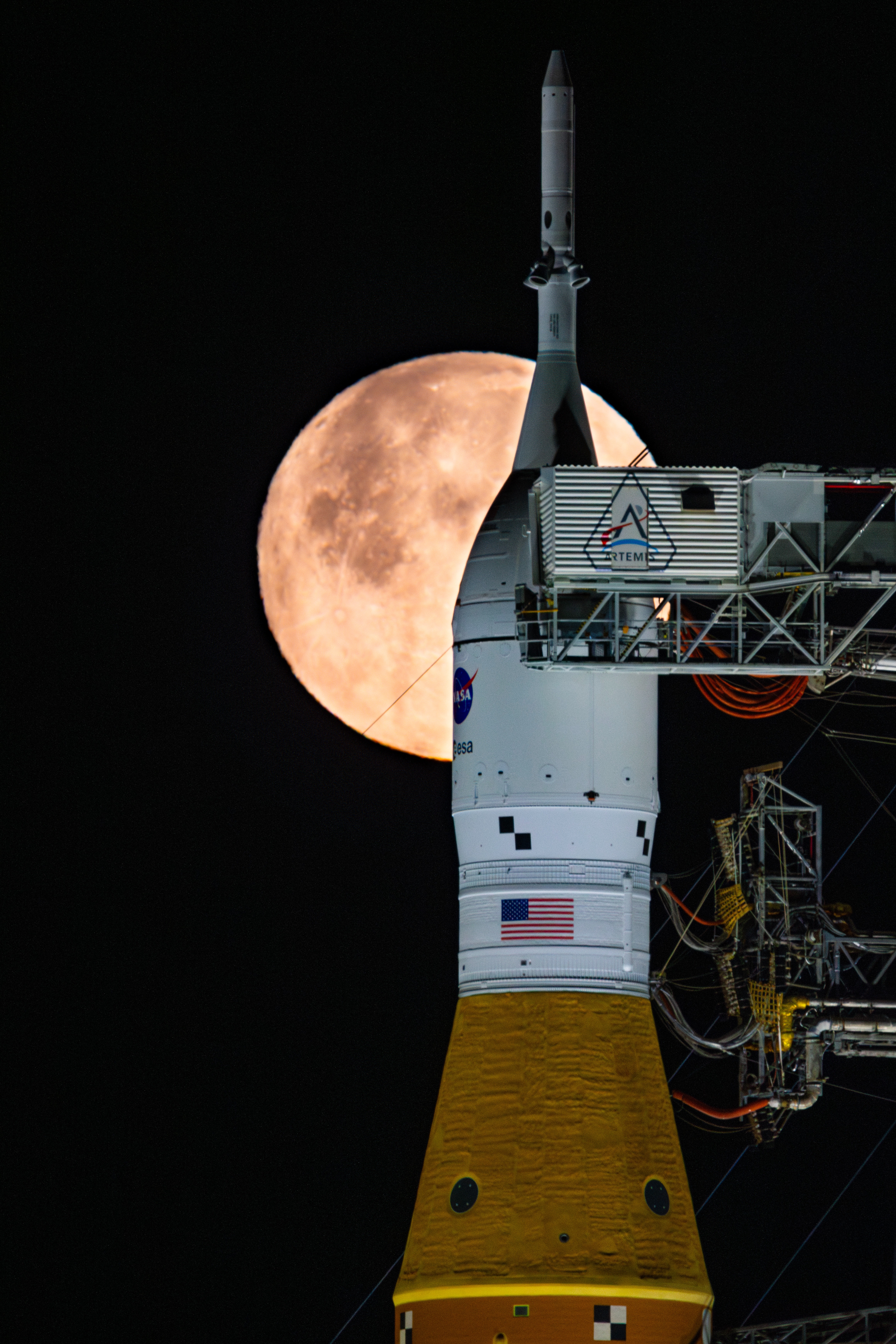
Moon to Mars | NASA's Artemis Program - NASA
Explore how NASA’s Artemis mission will return humans to the Moon, prepare for Mars, and shape the future of space exploration.
nasa.gov →NASA explores the unknown in air and space, innovates for the benefit of humanity, and inspires the world through discovery. Technicians inside the Payload Hazardous Servicing Facility at Kennedy Space Center in Florida install and test antennas on a solar array on Wednesday, March 20, 2024, for the agency’s Europa Clipper spacecraft. NASA’s future will continue to be a story of human exploration, technology, and science. We will go back to the Moon to learn more about what it will take to support human exploration to Mars and beyond. We will continue to nurture the development of a vibrant low-Earth orbit economy that builds on the work done to date by the International Space Station. NASA engineers will develop new technologies to improve air transport at home and meet the challenges of advanced space exploration. Our scientists will work to increase an understanding of our planet and our place in the universe. The Artemis II crew, from left: NASA astronauts Reid Wiseman and Christina Koch; CSA (Canadian Space Agency) astronaut Jeremy Hansen; and NASA astronaut Victor Glover pose for a group photo after viewing the Orion spacecraft in the well deck of the USS John P. Murtha, Saturday, April 11, 2026, in the Pacific Ocean off the coast of California. When NASA opened for business on October 1, 1958, it accelerated the work already started on human and robotic spaceflight, and over the last 65 years it has continued to push the boundaries of aeronautics and space exploration. Now NASA is preparing to take humankind farther than ever before, as it helps to foster a robust commercial space economy near Earth, and pioneers further human and robotic exploration as we venture into deep space. NASA’s Perseverance Mars rover took a selfie with the Ingenuity helicopter, seen here about 13 feet from the rover. This image was taken by the WASTON camera on the rover’s robotic arm on April 6, 2021, the 46th Martian day, or sol, of the mission. Jared “Rook” Isaacman is the 15th Administrator of the National Aeronautics and Space Administration. An entrepreneur and skilled pilot, Isaacman commanded Inspiration4, the first all-civilian orbital spaceflight aboard the Dragon spacecraft. The mission was a major milestone in commercial spaceflight. Matt Anderson is NASA’s deputy administrator. Anderson is a decorated Air Force command pilot in multiple aircraft with more than 5,000 flight hours, including more than 650 in combat. Throughout his 24-year Air Force career, he served on several senior U.S. Department of War staffs and commanded at multiple levels before retiring in 2021. Amit Kshatriya is NASA’s associate administrator. Kshatriya serves as the highest-ranking civil servant at the agency and as a senior advisor to the administrator. Kshatriya leads the agency’s 10 center directors, as well as the mission directorate associate administrators at NASA Headquarters in Washington. Align your talents with your passion and find out why NASA consistently is named a best place to work in the federal government. At NASA, you'll have an opportunity to work on unique and challenging projects that truly make an impact on humanity. Stay up-to-date on the latest news from NASA–from Earth to the Moon, the Solar System and beyond.
Read more on their site →Excerpt from the official site · 40,000 chars · not written by Vinony
Article · 日本語
アルテミス計画(アルテミスけいかく、英: Artemis program)は、アメリカ合衆国政府が出資する有人宇宙飛行(月面着陸)計画である。当初計画では2024年までに「最初の女性を、次の男性を」月面(特に付近)に着陸させることを目標としている。計画名と計画の詳細は2019年5月に発表された。なお、アルテミスはギリシア神話に登場する月の女神で、アポロ計画の由来となった太陽神アポロンとは双子とされる。 この計画は、主にアメリカ航空宇宙局(NASA)とNASAが契約している米国の民間宇宙飛行会社、そして欧州宇宙機関(ESA)、日本の宇宙航空研究開発機構(JAXA)、カナダ宇宙庁(CSA)、(ASA)などの国際的パートナーによって実施される。計画自体はNASAが主導しているものの、月面での持続的な駐留を確立し、民間企業が月面経済を構築するための基盤を築き、最終的には人類を火星に送る(有人火星探査)という長期的目標に向けた次のステップとして、国際的なパートナーシップが計画を前進させる上で重要な役割を果たすことが期待されている。 2017年12月、アメリカ合衆国大統領ドナルド・トランプは月探査計画を承認する宇宙政策指令第1号に署名した。アルテミス計画は、オリオン宇宙船と月軌道プラットフォームゲートウェイ、そしてを始めとする進行中の宇宙機の計画を利用して実施される予定であり、将来開発される有人着陸船も追加される予定である。オリオンの打ち上げにはスペース・ローンチ・システム(SLS)が用いられ、商用ロケットは他の様々な構成物を打ち上げるために使用される見込みである。NASAはアルテミス計画のために16億ドルの2020年度追加予算を要求し、アメリカ合衆国議会のは議会の評価と承認に必要な5年間の予算プロファイルをNASAに要求した。2021年4月17日、NASAは月着陸船の開発・運用に、スペースXを選定。翌2022年11月16日に第1段階となるロケットを打ち上げた。
Abstract from DBpedia / Wikipedia · CC BY-SA
Gallery (14)
Available in 66 languages
- Español
- Français
- Deutsch
- 中文
- 日本語
- Русский
- Português
- Italiano
- العربية
- हिन्दी
- Afrikaans
- Aragonese
- Asturian
- Azerbaijani
- Bahasa Indonesia
- Bangla
- Basque
- Belarusian
Show 47 more
- Bhojpuri
- Bosnian
- Breton
- Bulgarian
- Catalan
- Central Kurdish
- Chuvash
- Croatian
- Czech
- Esperanto
- Estonian
- Finnish
- Galician
- Greek
- Hebrew
- Hungarian
- Irish
- Kazakh
- Kurdish
- Latin
- Lithuanian
- Macedonian
- Malay
- Malayalam
- Nederlands
- Norwegian
- Pashto
- Polski
- Punjabi
- Romanian
- Sicilian
- simple
- Sinhala
- Slovak
- Slovenian
- Svenska
- Tiếng Việt
- Toki Pona
- Türkçe
- Ukrainian
- Urdu
- Welsh
- Western Panjabi
- zh_yue
- فارسی
- ไทย
- 한국어
via Wikidata sitelinks · CC0