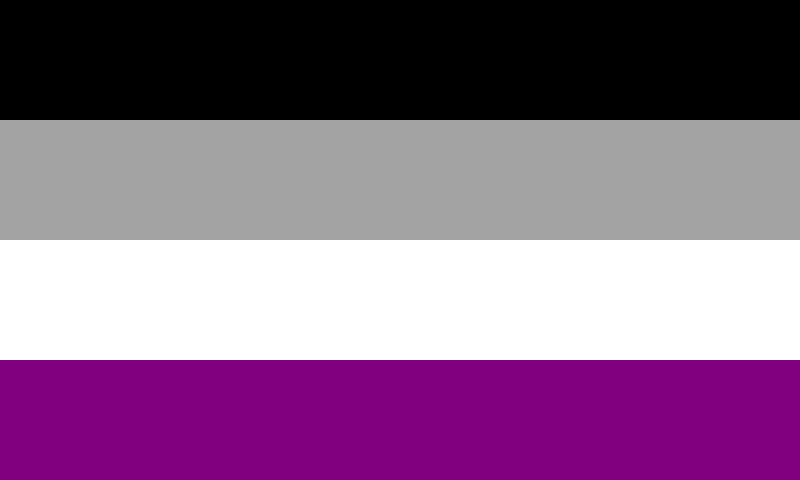
File:Asexual_Pride_Flag.svg · Wikimedia Commons · See Wikimedia Commons
asexuality
Sign in to saveAlso known as nonsexuality, asexual, ace, aces
Asexuality is the lack of sexual attraction to others, or low or absent interest in or desire for sexual activity. It may be considered a sexual orientation, or the lack thereof. It may also be categorized more widely to include a broad spectrum of asexual sub-identities.
Asexuality refers to experiencing little to no sexual attraction to others or having minimal interest in sexual activity, and it's recognized by some as a sexual orientation or identity spectrum. Understanding asexuality matters because it helps people recognize and articulate their own experiences, and it broadens how we think about the different ways people experience sexuality and relationships.
AI-generated from the Wikipedia summary — may contain errors.
Key facts
- Sexuality.title
- Asexuality
- Sexuality.flag
- Asexual Pride Flag.svg
- Sexuality.flag_alt
- A flag consisting of 4 equal-spaced horizontal stripes, from top to bottom: black, grey, white, purple.
- Sexuality.flag_name
- Asexual pride flag
- Sexuality.flag_meaning
- Black for asexuality; gray for gray-asexuality; white for allosexuality; purple for community
- Sexuality.definition
- Little to no sexual attraction to others; low or absent sexual desire or interest in sexual activity
- Sexuality.abbreviations
- ace
via Wikipedia infobox
Wikidata facts
- Instance of
- sexual orientation
- Subclass of
- sexuality
- Image
- WorldPride 2017 - Madrid - Manifestación - 170701 210528.jpg
Show 6 more facts
- Commons category
- Human asexuality
- topic's main category
- Category:Asexuality
- different from
- asexual reproduction
- opposite of
- allosexuality
- hashtag
- asexual
- used by
- asexual person
Sources (15)
via Wikidata · CC0
~49 min read
Encyclopedic overview
27 sectionsContents
- Definition, identity and relationships
- Relationships
- Romantic and interpersonal relationships
- Gray asexuality
- Research
- Prevalence
- Sexual orientation, mental health and cause
- Sexual activity and sexuality
- Feminist research
- Intersections with race and disability
- Bogaert's psychological work and theories
- Community
- Symbols
- Microlabels
- Events
- Arts and literature
- Fiction
- Non-fiction
- Religion
- Christianity
- Discrimination and legal protections
- In media
- See also
- Explanatory notes
- References
- Further reading
- External links
Asexuality is the lack of sexual attraction to others, or low or absent interest in or desire for sexual activity. It may be considered a sexual orientation, or the lack thereof. It may also be categorized more widely to include a broad spectrum of asexual sub-identities.
Asexuality is distinct from sexual abstinence and from celibacy, which are behavioral and generally motivated by factors such as an individual's personal, social, or religious beliefs. Sexual orientation, unlike sexual behavior, is believed to be "enduring". Some asexual people engage in sexual activity despite lacking sexual attraction or a desire for sex, for a number of reasons, such as a desire to physically please themselves or romantic partners, or a desire to have children.
Excerpted from Wikipedia’s “asexuality” article, available under the CC BY-SA 4.0 licence.
Gallery (28)
Available in 84 languages
- Español
- Français
- Deutsch
- 中文
- 日本語
- Русский
- Português
- Italiano
- العربية
- हिन्दी
- Afrikaans
- Albanian
- Armenian
- Assamese
- Azerbaijani
- Bahasa Indonesia
- Bangla
- Basque
Show 65 more
- be_x_old
- Belarusian
- Bikol
- Bosnian
- Breton
- Bulgarian
- Catalan
- Central Kurdish
- Croatian
- Czech
- Danish
- Erzya
- Esperanto
- Estonian
- Faroese
- Filipino
- Finnish
- Galician
- Georgian
- Greek
- Hebrew
- Hungarian
- Icelandic
- Ido
- Inari Sami
- Kurdish
- Kyrgyz
- Lao
- Latin
- Latvian
- Lithuanian
- Macedonian
- Malay
- Malayalam
- Marathi
- Mingrelian
- Moroccan Arabic
- Nederlands
- Nepali
- Newari
- Norwegian
- Papiamento
- Polski
- Punjabi
- Romanian
- Sardinian
- Serbian
- Serbian (Latin)
- simple
- Somali
- Svenska
- Tatar
- Tiếng Việt
- Türkçe
- Ukrainian
- Urdu
- Uzbek
- Welsh
- Western Frisian
- Wu Chinese
- Zaza
- zh_yue
- فارسی
- ไทย
- 한국어
via Wikidata sitelinks · CC0