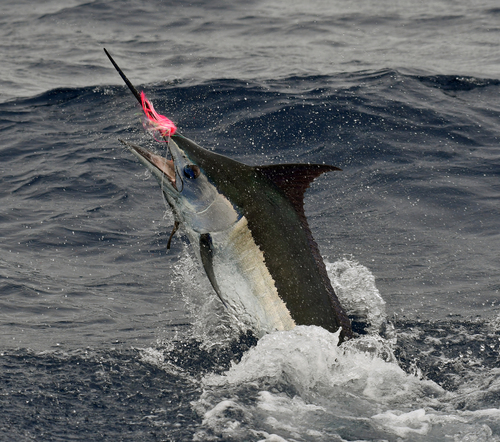
(c) Keith Martin-Smith, some rights reserved (CC BY-NC-SA), uploaded by Keith Martin-Smith · cc-by-nc-sa
Atlantic blue marlin
Sign in to saveAlso known as Makaira nigricans, Indo-Pacific blue marlin, blue marlin
species of fish
Species
VulnerableAtlantic blue marlin
Species
- PhylumChordata
- ClassTeleostei
- OrderCarangiformes
- FamilyIstiophoridae
二名法 Makaira nigricansLacépède, 1802 大西洋藍槍魚的分佈地 大西洋藍槍魚(學名:Makaira nigricans)是大西洋特有的一種旗魚,被IUCN列為次級保育類動物,。牠們主要吃海面上多種的生物。牠們會用其槍來刺、傷害或殺死獵物,之後再回來享用。大西洋藍槍魚是出名供垂釣的魚,其肉質含有高脂肪,故具有很高的商業價值。 大西洋藍槍魚分佈在大西洋的熱帶及溫帶海域,但較多出沒於西部。牠們主要都會生活在海洋,遠離陸地。[1]雌魚可以生長到比雄魚重4倍,達到540-1800公斤。[2]除了人類外,牠們只有少數天敵,世界自然保護聯盟並未將牠們列為瀕危物種。 目录 1 分類及命名 2 特徵 3 分佈及遷徙 4 掠食者及寄生蟲 5 生命周期 5.1 生長及成熟 5.2 食性及攝食 6 經濟效益 7 保育 8 參考 9 扩展阅读 分類及命名 大西洋藍槍魚是槍魚屬下三個物種之一。其屬名的希臘文意思是「短劍」[3][4],種小名的拉丁文意思是「變黑」。[5]大西洋藍槍魚屬於旗魚科及鱸形目。[6][7] 大西洋藍槍魚最初是由博內德·拉塞佩德(Bernard Germain de Lacépède)於1802年描述。以往也有其他的學名,包括Histiophorus herschelii、Tetrapturus herschelii、Makaira ampla ampla、Tetrapturus amplus、Orthocraeros bermudae及Makaira perezi。[8] 印度槍魚成為獨立物種備受爭議。基因數據顯示印度槍魚與大西洋藍槍魚雖然是獨立的兩類,但卻是同一物種。[9]另一項研究則指印度槍魚及大西洋藍槍魚在線粒體及微衛星基因座上有門顯的親緣地理學上的分野。[10]故此認為這兩類是屬於同一物種,只有在印度槍魚遷徙及提供基因予大西洋藍槍魚進行基因交換。 特徵 大西洋藍槍魚的骨骼。 大西洋藍槍魚最大的雌魚可以比雄魚重4倍。雄魚很少會重多於160公斤,雌魚一般重超過540公斤。[11]雌魚可以長達4米,由眼睛到尖端就已佔了總長度的20%。雌魚及雄魚都有24節脊骨,其中11節為尾前椎,13節為尾椎。[12] 大西洋藍槍魚有兩條背鰭及兩條臀鰭,都是由骨質的鰭條所支撐。第一背鰭共有39-43條鰭條。[12]第二背鰭只有6-70條鰭條。[12]第一臀鰭與第二臀鰭的形狀及大小相似,有13-16條鰭條[12],但第二臀鰭卻只有6-7條鰭條。[12]胸鰭有19-22條鰭條[12],形狀窄長。腹鰭比胸鰭短小,鰭膜不怎麼發達,可以收縮到腹面溝。第一臀鰭與胸鰭及尾鰭都可以收入此溝內,這可以令牠們更為流線形及減低阻力。 大西洋藍槍魚的背部呈藍黑色,腹部呈銀白色。牠們有15排淡鈷色的斑紋,每條斑紋上有圓點或幼紋。[12]第一背鰭鰭膜是深藍色或接近黑色的,沒有
via IUCN
Wikidata facts
Show 7 more facts
- taxon rank
- species
- IUCN conservation status
- Vulnerable
- Commons category
- Makaira nigricans
- taxon name
- Makaira nigricans
- taxon common name
- 油旗魚
- taxon range
- Atlantic Ocean
- short name
- M. nigricans
Sources (2)
via Wikidata · CC0
~15 min read
Encyclopedic overview
The Atlantic blue marlin (Makaira nigricans) is a species of marlin endemic to the Atlantic Ocean. It is closely related to, and usually considered conspecific with, the Indo-Pacific blue marlin, then simply called blue marlin. Some authorities consider both species distinct. Blue marlin are distributed throughout the tropical and subtropical waters of the Atlantic Ocean. It is a bluewater fish that spends the majority of its life in the open sea far from land.
The blue marlin preys on a wide variety of marine organisms, mostly near the surface, often using its bill to stun or injure its prey then returning to eat the injured or stunned fish. Females can grow up to four times the weight of males. The maximum published weight is 818 kg (1,803 lb) and length 5 m (16.4 ft). Greater lengths have been claimed unofficially. Estimates of the maximum swimming speed of the blue marlin commonly go as high as 72 km/h, though the casual swimming speed at which it moves most of the time is under 4.5 km/h.
Excerpted from Wikipedia’s “Atlantic blue marlin” article, available under the CC BY-SA 4.0 licence.