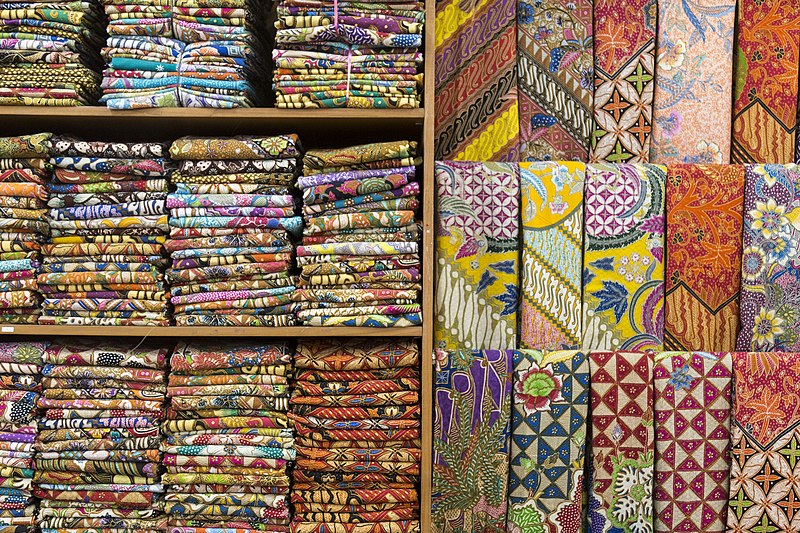
File:Batik_Trusmi_Cirebon_(23).jpg · Wikimedia Commons · See Wikimedia Commons
باتيك
Sign in to saveAlso known as Javanese fabric, Javanese dyeing technique, Javanese heritage cloth, bathik, royal Javanese cloth
Batik is a dyeing technique using wax resist. The term is also used to describe patterned textiles created with that technique. Batik is made by drawing or stamping wax on a cloth to prevent colour absorption during the dyeing process. This creates a patterned negative when the wax is removed from the dyed cloth. Artisans may create intricate coloured patterns with multiple cycles of wax application and dyeing. Patterns and motifs vary widely even within countries. Some patterns hold symbolic significance and are used only in certain occasions, while others were created to satisfy market deman
Batik is a textile dyeing technique where wax is applied to cloth to block dye from reaching certain areas, creating patterns when the wax is removed. Artisans can layer multiple cycles of wax application and dyeing to produce intricate designs, with some patterns holding cultural or symbolic significance while others developed to meet commercial demand.
AI-generated from the Wikipedia summary — may contain errors.
Key facts
- Textile.name
- Batik
- Textile.image
- Batik Trusmi Cirebon (23).jpg
- Textile.caption
- Cirebon-style batik at the Trusmi Batik Village, West Java
- Textile.type
- Art fabric
- Intangible heritage.ICH
- Indonesian Batik
- Intangible heritage.State Party
- Indonesia
- Intangible heritage.ID
- 00170
- Intangible heritage.Region
- APA
- Intangible heritage.Year
- 2009
- Intangible heritage.Session
- 4th
- Intangible heritage.List
- Representative
via Wikipedia infobox
Wikidata facts
- Instance of
- paint
- Subclass of
- painting
- Country
- Indonesia
- Country of origin
- Indonesia
- Material used
- cloth
- Location
- Banyuwangi
- Image
- Batik Indonesia.jpg
Show 8 more facts
- Commons category
- Batik
- topic's main category
- Category:Batik
- different from
- Apache Batik
- culture
- Javanese culture
- intangible cultural heritage status
- Representative List of the Intangible Cultural Heritage of Humanity
- native label
- ꦧꦛꦶꦏ꧀
- indigenous to
- Indonesia
- described at URL
- ich.unesco.org/es/RL/00170
via Wikidata · CC0
Article · العربية
باتيك (بالإنجليزية: Batik) هي إحدى طرق الصباغة الفنية، تشتهر بها أندونيسيا للحصول على التصميمات الملونة على الأقمشة القطنية. تعتمد هذه الطريقة على تغطية القماش بطبقة من الشمع، وبعد جفاف الشمع على القماش يشرَّخ إلى الدرجة المطلوبة، ثم يصبغ القماش فيظهر اللون في الأماكن غير المغطاة بالشمع (المشرخة). يستخدم للعملية خليط شمع النحل وشمع البرافين. يفيد شمع النحل في ثبات الخليط على القماش، بينما يفيد شمع البرافين في التشريخ وهو ميزة الباتيك. يمكن استخدم عدة ألوان من خلال سلسلة من عمليات الصباغة والتجفيف والتشميع. ترسم خطوط الشمع الدقيقة على القماش باستعمال إبرة منحنية، مجهزة بمقبض خشبي مع كأس معدني صغير ذو ميزاب صغير ينز منه الشمع. هناك طريقة أخرى للتشميع بمهر القماش باستعمال كتلة خشبية أو معدنية مجهزة بأسلاك مدهونة بالشمع. يستعمل القماش المصبوغ بطريقة الباتيك الأندونيسي لألبسة ذات الرسوم المعقدة. وهناك رسمات خاصة بالنبلاء. ونجد الرسوم والشعارات الغامضة، بالإضافة إلى رسوم الحيوانات. * قماش أندونيسي مصبوغ بطريقة باتيك * باتيك برسمة امرأتين هنديتين
Abstract from DBpedia / Wikipedia · CC BY-SA
Gallery (36)
Available in 66 languages
- Español
- Français
- Deutsch
- 中文
- 日本語
- Русский
- Português
- Italiano
- العربية
- Afrikaans
- Armenian
- Asturian
- Azerbaijani
- Bahasa Indonesia
- Balinese
- Bashkir
- Basque
- Belarusian
Show 47 more
- Bulgarian
- Catalan
- Croatian
- Czech
- eml
- Esperanto
- Estonian
- Filipino
- Finnish
- Hausa
- Hebrew
- Hungarian
- Javanese
- Kazakh
- kge
- Latin
- Lombard
- Low German
- Macedonian
- Madurese
- Malay
- map_bms
- Marathi
- Minangkabau
- Nederlands
- Norwegian Nynorsk
- Polski
- Romanian
- Serbian
- Serbian (Latin)
- simple
- Slovenian
- Sundanese
- Svenska
- Swahili
- Tajik
- Tamil
- Tiếng Việt
- Türkçe
- Ukrainian
- Uzbek
- Wu Chinese
- zh_min_nan
- zh_yue
- فارسی
- ไทย
- 한국어
via Wikidata sitelinks · CC0