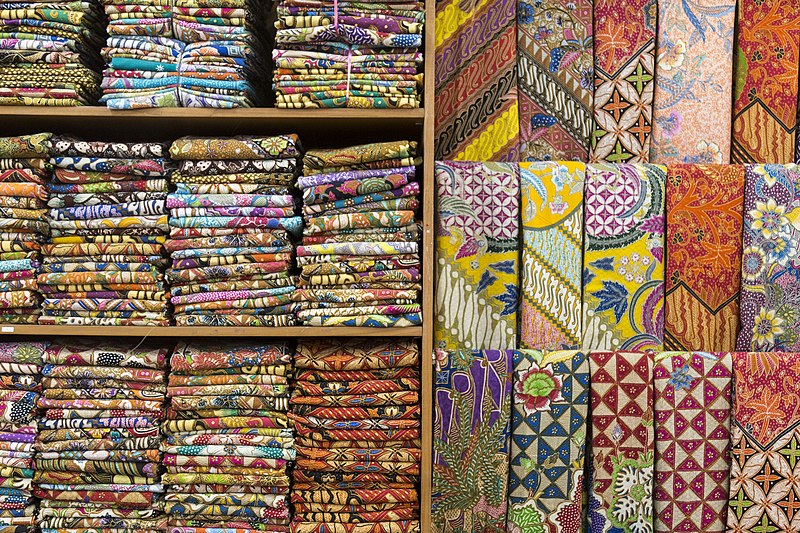
File:Batik_Trusmi_Cirebon_(23).jpg · Wikimedia Commons · See Wikimedia Commons
蜡染
Also known as Javanese fabric, Javanese dyeing technique, Javanese heritage cloth, bathik, royal Javanese cloth
Batik is a dyeing technique using wax resist. The term is also used to describe patterned textiles created with that technique. Batik is made by drawing or stamping wax on a cloth to prevent colour absorption during the dyeing process. This creates a patterned negative when the wax is removed from the dyed cloth. Artisans may create intricate coloured patterns with multiple cycles of wax application and dyeing. Patterns and motifs vary widely even within countries. Some patterns hold symbolic significance and are used only in certain occasions, while others were created to satisfy market deman
AI overview
Batik is a textile dyeing technique where wax is applied to cloth to block dye from reaching certain areas, creating patterns when the wax is removed. Artisans can layer multiple cycles of wax application and dyeing to produce intricate designs, with some patterns holding cultural or symbolic significance while others developed to meet commercial demand.
AI-generated from the Wikipedia summary — may contain errors.
Key facts
- Textile.name
- Batik
- Textile.image
- Batik Trusmi Cirebon (23).jpg
- Textile.caption
- Cirebon-style batik at the Trusmi Batik Village, West Java
- Textile.type
- Art fabric
- Intangible heritage.ICH
- Indonesian Batik
- Intangible heritage.State Party
- Indonesia
- Intangible heritage.ID
- 00170
- Intangible heritage.Region
- APA
- Intangible heritage.Year
- 2009
- Intangible heritage.Session
- 4th
- Intangible heritage.List
- Representative
via Wikipedia infobox
Wikidata facts
Article · 中文
蜡染,古称蠟纈,是一种古老的手工。蠟染的傳統在全球許多國家都有發現,包含印尼、馬來西亞、新加坡、印度、斯里蘭卡、菲律賓、以及奈及利亞;不過印尼的蠟染是最為世人所熟知的。印尼爪哇島的蠟染製法有歷經很長時期的文化適應,受到多種文化影響的結果而擁有豐富多元的樣式,也是目前世界上樣式、技術、以及工匠技巧發展最完整的地區 。2009年10月,聯合國教科文組織將納入。 蠟纈与绞缬(现代称扎染)、夹缬(现代称)并列为中国傳統染缬工艺的三种基本类型。
Abstract from DBpedia / Wikipedia · CC BY-SA