
File:Bartók_Béla_1927.jpg · Wikimedia Commons · See Wikimedia Commons
Béla Bartók
Sign in to saveAlso known as Béla Viktor János Bartók, Bela Bartok, Bela Viktor Janos Bartok, Bartók, Bartok
Hungarian composer and pianist (1881–1945)
Béla Bartók was a Hungarian composer and pianist who lived from 1881 to 1945 and became one of the most important musical figures of the 20th century. He is remembered for creating innovative compositions that blended traditional Hungarian folk music with modern classical techniques, influencing countless musicians and expanding what was possible in contemporary music.
AI-generated from the Wikipedia summary — may contain errors.
Film & TV
Sânnicolau Mare, Austria–Hungary [now Romania]
Béla Viktor János Bartók ( 25 March 1881 – 26 September 1945) was a Hungarian composer, pianist and ethnomusicologist.
Known for
- Images cinématographiques de Bartok1989
- Cantata — Self (voice) (archive footage)1963
via TMDB
Wikidata facts
- Instance of
- human
- Given name
- Béla
- Gender
- male
- Citizenship
- United States
- Place of birth
- Sânnicolau Mare
- Place of death
- New York City
- Occupation
- politician
- Educated at
- Gymnasium Grösslingová
- Employer
- Nyugat
- Political party
- independent politician
- Languages spoken
- Hungarian
- Religion
- Unitarianism
- Notable work
- Concerto for Orchestra
- Student of
- István Thomán
- Field of work
- etnomusicology
- Genre
- classical music
- Instrument
- piano
- Official website
- www.bartok.hu
- Image
- Béla Bartók 1943.jpg
Show 19 more facts
- Commons category
- Béla Bartók
- place of burial
- Farkasréti Cemetery
- Commons Creator page
- Béla Bartók
- cause of death
- leukemia
- date of birth
- 1881-03-25
- date of death
- 1945-09-26
- member of
- Romanian Academy
- Commons gallery
- Béla Bartók
- topic's main category
- Category:Béla Bartók
- student
- Emma Kodály
- list of works
- list of compositions by Béla Bartók
- partner in business or sport
- Zoltán Kodály
- name in native language
- Bartók Béla
- related category
- Category:Compositions by Béla Bartók
- P8168
- Hicham Arazi
- on focus list of Wikimedia project
- Wikipedia:Vital articles/Level/4
- P12674
- Too Cool
- manner of death
- natural causes
- P12749
- Ulmus laevis
Sources (8)
via Wikidata · CC0
Works in European collections
20 objects attributed to Béla Bartók, held across European museums, libraries & archives · via Europeana


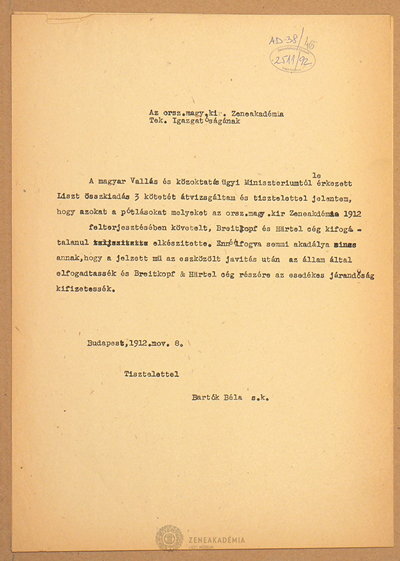
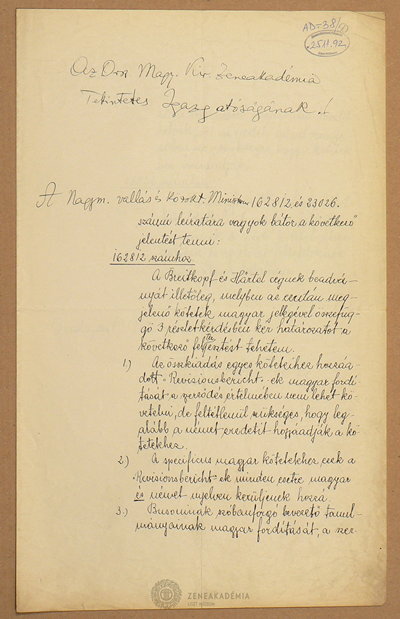
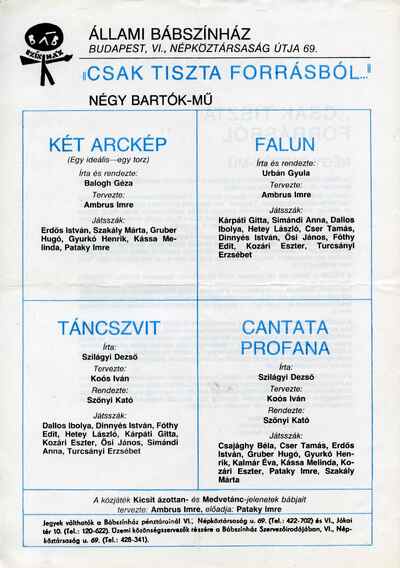
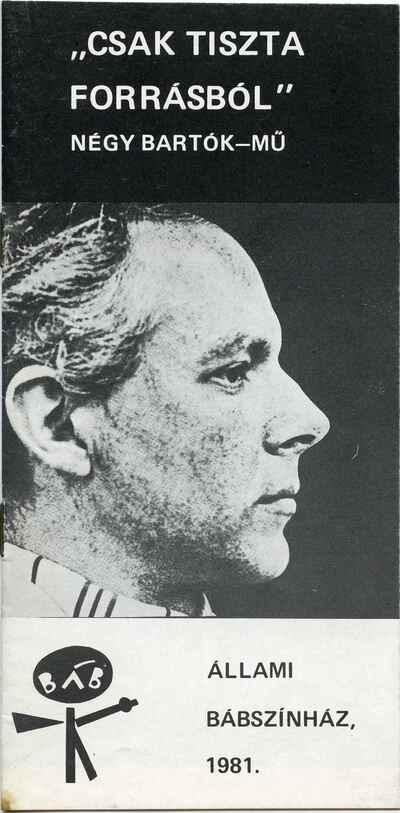
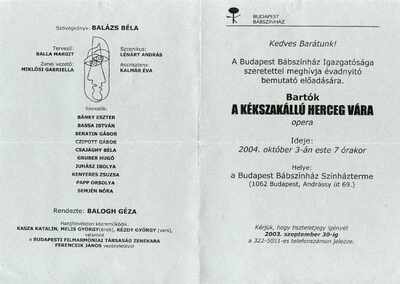
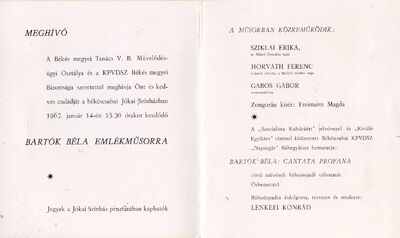


~40 min read
Encyclopedic overview
Béla Viktor János Bartók (/ˈbeɪlɒ ˈbɑːrtɒk/; Hungarian: [ˈbɒrtoːk ˈbeːlɒ]; 25 March 1881 – 26 September 1945) was a Hungarian composer, pianist and ethnomusicologist. He is considered one of the most important composers of the 20th century; he and Franz Liszt are regarded as Hungary's greatest composers. Among his notable works are the opera Bluebeard's Castle, the ballet The Miraculous Mandarin, Music for Strings, Percussion and Celesta, the Concerto for Orchestra and six string quartets. Through his collection and analytical study of folk music, he was one of the founders of comparative musicology, which later became known as ethnomusicology. Per Anthony Tommasini, Bartók "has empowered generations of subsequent composers to incorporate folk music and classical traditions from whatever culture into their works," and was "a formidable modernist who in the face of Schoenberg’s breathtaking formulations showed another way, forging a language that was an amalgam of tonality, unorthodox scales and atonal wanderings." His work is often described as being a combination of traditional peasants' folk music and avant-garde music.
Biography
Excerpted from Wikipedia’s “Béla Bartók” article, available under the CC BY-SA 4.0 licence.
Gallery (12)
Available in 87 languages
- Español
- Français
- Deutsch
- 中文
- 日本語
- Русский
- Português
- Italiano
- العربية
- हिन्दी
- Afrikaans
- Albanian
- Albanian
- Aragonese
- Armenian
- Asturian
- Azerbaijani
- Bahasa Indonesia
Show 68 more
- Bashkir
- Basque
- bat_smg
- be_x_old
- Belarusian
- Bosnian
- Breton
- Bulgarian
- Catalan
- Cornish
- Croatian
- Czech
- Danish
- Egyptian Arabic
- Esperanto
- Estonian
- Filipino
- Finnish
- Galician
- Georgian
- Greek
- Hebrew
- Hungarian
- Icelandic
- Ido
- Interlingua
- Interlingue
- kbp
- Kyrgyz
- Latin
- Latvian
- Ligurian
- Lithuanian
- Luxembourgish
- Macedonian
- Malagasy
- Manx
- nah
- Nederlands
- Norwegian
- Norwegian Nynorsk
- Occitan
- Pampanga
- Polski
- Quechua
- Romanian
- Serbian
- Serbian (Latin)
- simple
- Slovak
- Slovenian
- Svenska
- Swahili
- Tajik
- Tiếng Việt
- Türkçe
- Ukrainian
- Urdu
- Uzbek
- Waray
- Welsh
- Western Mari
- Wu Chinese
- Zaza
- zh_yue
- فارسی
- ไทย
- 한국어
via Wikidata sitelinks · CC0