Betaproteobacteria
Betaproteobacteria are a class of Gram-negative bacteria, and one of the six classes of the phylum Pseudomonadota (synonym Proteobacteria).
Species
ベータプロテオバクテリア綱
CLASS
- KingdomBacteria
- PhylumProteobacteria
- ClassGammaproteobacteria
Habitatmarine, freshwater
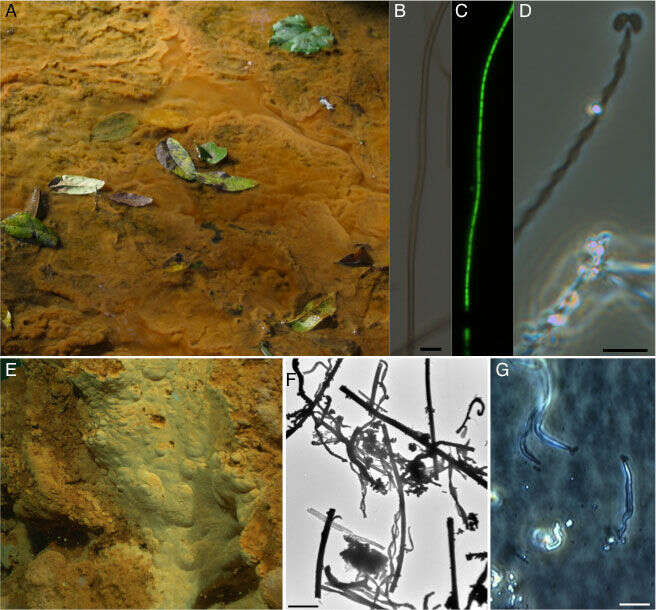
Betaproteobacteria (auch β-Proteobacteria) bezeichnet eine Klasse im phylogenetischen System Bakterien, das auf der Grundlage der Basensequenz der ribosomalen 16S-Ribonukleinsäure (16S-rRNA) aufgestellt wurde. Das Phylum (der Stamm) Proteobacteria wird in die fünf Klassen Alphaproteobacteria bis Epsilonproteobacteria eingeteilt. In den letzten Jahren sind noch zwei weitere Klassen hinzugekommen, die Oligoflexia und die Zetaproteobacteria. Alle Vertreter dieses Stammes sind gramnegativ, wobei auch einige Arten bei den Gram-Test gram-variabel reagieren. Es folgt eine Liste einiger Ordnungen die zu den Betaproteobacteria gehören: Burkholderiales Garrity et al. 2006 Hydrogenophilales Garrity et al. 2006 Methylophilales Garrity et al. 2006 Neisseriales Tønjum 2006 Nitrosomonadales Garrity et al. 2006, „Procabacteriales“ Rhodocyclales Garrity et al. 2006 Sulfuricellales Watanabe et al. 2015 sowie zahlreiche, bisher nicht sicher eingeordnete Isolate. Wichtige Vertreter sind unter anderem in den Gattungen Neisseria, Simonsiella, Burkholderia, Achromobacter, Alcaligenes, Sphaerotilus, Nitrosomonas, Spirillum, Thiobacillus und Gallionella zu finden.
via GBIF
Research
58,264 papersArticle
7 sectionsContents
- Metabolism
- Phylogeny
- Role in disease
- Economic importance
- See also
- References
- External links
Betaproteobacteria are a class of Gram-negative bacteria, and one of the six classes of the phylum Pseudomonadota (synonym Proteobacteria).
== Metabolism == The Betaproteobacteria comprise over 75 genera and 400 species. Together, they represent a broad variety of metabolic strategies and occupy diverse environments, ranging from obligate pathogens living within host organisms to oligotrophic groundwater ecosystems. Whilst most members of the Betaproteobacteria are heterotrophic, deriving both their carbon and electrons from organocarbon sources, some are photoheterotrophic, deriving energy from light and carbon from organocarbon sources. Other genera are autotrophic, deriving their carbon from bicarbonate or carbon dioxide and their electrons from reduced inorganic ions such as nitrite, ammonium, thiosulfate or sulfide — many of these chemolithoautotrophic.