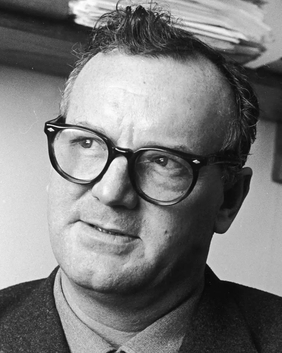
File:C._Wright_Mills_(1916–1962).jpg · Wikimedia Commons · See Wikimedia Commons
Charles Wright Mills
Sign in to savesociologue américain
C. Wright Mills was an influential American sociologist in the mid-20th century who developed influential critiques of power, bureaucracy, and social inequality in modern society. His work matters because he shaped how sociologists and the public think about who holds power in America and how institutions affect ordinary people's lives.
AI-generated from the Wikipedia summary — may contain errors.
Wikidata facts
- Instance of
- human
- Family name
- Mills
- Gender
- male
- Citizenship
- United States
- Place of birth
- Waco
- Place of death
- Nyack
- Occupation
- university teacher
- Educated at
- Columbia University
- Employer
- University of Maryland
- Languages spoken
- English language
- Notable work
- The Power Elite
- Field of work
- sociology
- Official website
- www.cwrightmills.org
- Image
- C. Wright Mills.jpg
Show 8 more facts
- Commons category
- Charles Wright Mills
- cause of death
- myocardial infarction
- date of birth
- 1916-08-28
- date of death
- 1962-03-20
- manner of death
- natural causes
- personal library at
- Harry Ransom Center
- on focus list of Wikimedia project
- Wikipedia:Vital articles/Level/4
- different from
- Charles Mills
Sources (7)
via Wikidata · CC0
Article · Français
Charles Wright Mills est un sociologue américain né le 28 août 1916 à Waco (Texas), et mort le 20 mars 1962. Professeur de sociologie à l’université Columbia à New York, il s’est distingué par sa réflexion sur les élites aux États-Unis, développée dans ses deux principaux ouvrages The Power Elite (1956) et White Collar (1951). À contre-courant de l’approche sociologique dominante, alors incarnée par Talcott Parsons, dont il a dénoncé le théoricisme dans L'Imagination sociologique (1961), il s’inscrit dans une tradition de sociologie critique. En contraste avec l’idéologie américaine de la société ouverte, il défend la thèse que les élites forment en fait un groupe de pouvoir fermé, en opposition aux autres groupes sociaux. Si une forme de mobilité est importante aux États-Unis, elle se limite selon lui à la circulation des élites entre les trois principaux secteurs du pouvoir (politique, économique et militaire).
Abstract from DBpedia / Wikipedia · CC BY-SA