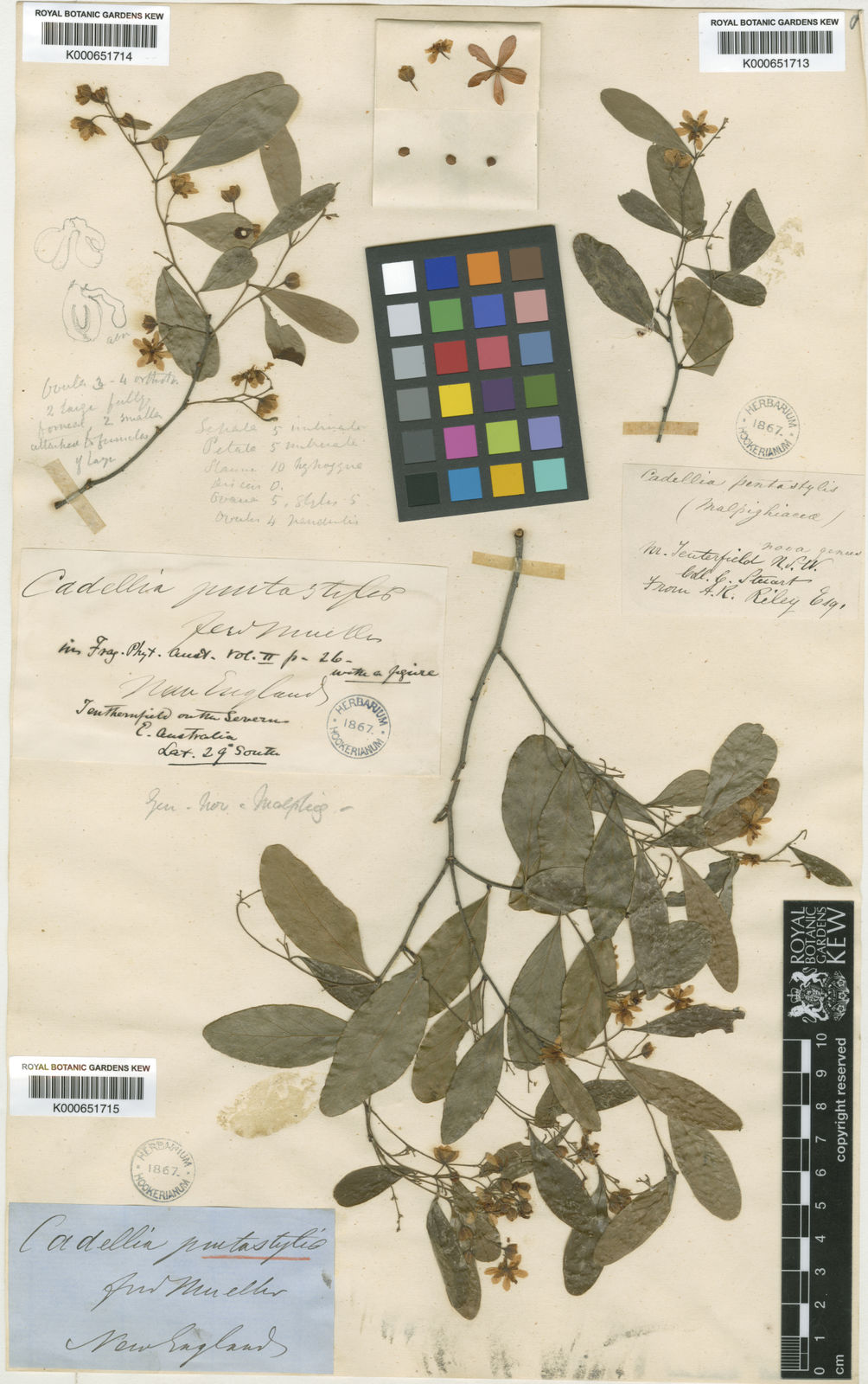
Cadellia · Kew POWO · Kew Plants of the World Online
Cadellia
Sign in to saveCadellia is a monotypic genus of trees in the botanical family Surianaceae. The sole species, Cadellia pentastylis, commonly known as ooline, is a medium to large tree with bright green leaves and rough tile-pattern bark. It has rain forest origins dating from the Pleistocene Era when much of Australia was wetter than it is today. It grows on moderately fertile soils, preferably those suited for agriculture or pasture development. Due to extensive forest clearing, it is now considered a vulnerable plant in Australia.
Species
GENUS
- KingdomPlantae
- PhylumTracheophyta
- ClassMagnoliopsida
- OrderFabales
- FamilySurianaceae
via GBIF · Kew POWO
Museum specimens
- Specimen records
- 1
- With media
- 1
- Family
- Surianaceae
- Collections
- VT
- Recorded in
- Australia
Wikidata facts
- Instance of
- taxon
- Parent taxon
- Surianaceae
- Image
- Gamilaroi Nature Reserve Ooline.jpg
Show 5 more facts
- taxon name
- Cadellia
- taxon rank
- genus
- topic's main category
- Category:Cadellia
- Commons category
- Cadellia
Sources (1)
via Wikidata · CC0
~4 min read
Encyclopedic overview
5 sectionsContents
- Description
- Distribution
- Taxonomy
- Gallery
- References
Cadellia is a monotypic genus of trees in the botanical family Surianaceae. The sole species, Cadellia pentastylis, commonly known as ooline, is a medium to large tree with bright green leaves and rough tile-pattern bark. It has rain forest origins dating from the Pleistocene Era when much of Australia was wetter than it is today. It grows on moderately fertile soils, preferably those suited for agriculture or pasture development. Due to extensive forest clearing, it is now considered a vulnerable plant in Australia.
== Description == The Cadellia tree grows to be about 10 m—rarely 25 m in height. It has leaves that are alternate, undivided and obovate or oval in shape. Flowering occurs from about October to December. The flowers have five white petals, about 5-7 mm in length. The ooline's fruit is brownish, wrinkled, and remains surrounded by five red sepals at its base. Fruiting generally occurs from November to December. The fruit's edibility for humans is not stated.
Excerpted from Wikipedia’s “Cadellia” article, available under the CC BY-SA 4.0 licence.