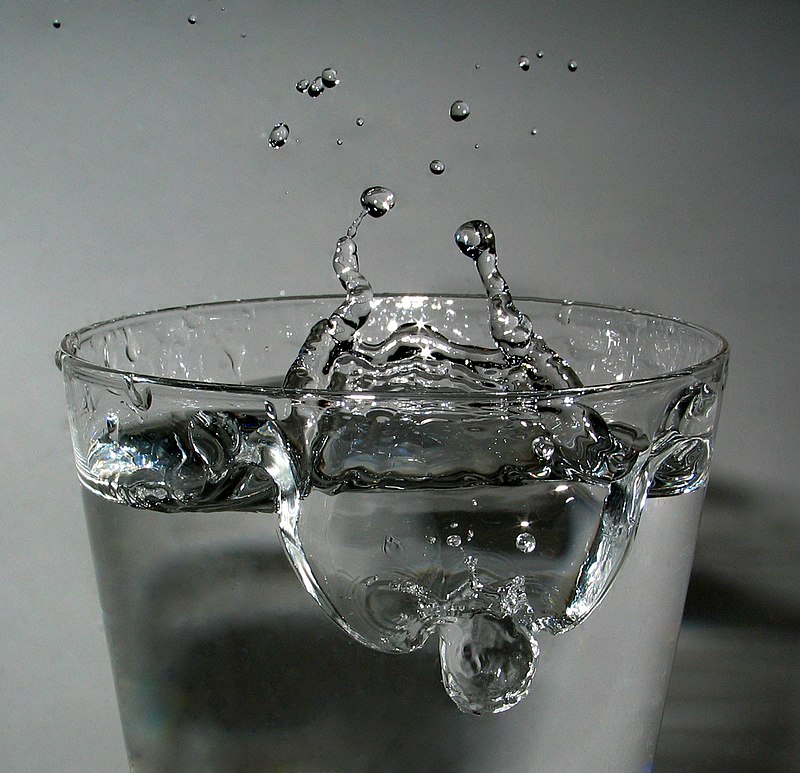
File:2006-02-13_Drop-impact.jpg · Wikimedia Commons · See Wikimedia Commons
chemical compound
Sign in to saveAlso known as compound, heteroatomic molecular entity, chemical compounds, compounds, 🧪 compound
pure chemical substance consisting of two or more different chemical elements
A chemical compound is a pure substance made up of two or more different chemical elements that are chemically bonded together. Understanding compounds matters because they form the basis of everything around us—from the water we drink to the materials we use in medicine and technology.
AI-generated from the Wikipedia summary — may contain errors.
Wikidata facts
- Subclass of
- pure substance
- Has part
- chemical bond
- Has parts of class
- moiety
Show 9 more facts
- Commons category
- Chemical compounds
- described by source
- Brockhaus and Efron Encyclopedic Dictionary
- topic's main category
- Category:Chemical compounds
- equivalent class
- dbpedia.org/ontology/ChemicalCompound
- studied by
- chemistry
- on focus list of Wikimedia project
- Wikipedia:Vital articles/Level/4
- different from
- simple substance
- is metaclass for
- chemical substance
- Stack Exchange tag
- physics.stackexchange.com/tags/chemical-compounds
via Wikidata · CC0
~13 min read
Encyclopedic overview
A chemical compound is a chemical substance composed of many identical molecules (or molecular entities) containing atoms from more than one chemical element held together by chemical bonds. A molecule consisting of atoms of only one element is therefore not a compound. A compound can be transformed into a different substance by a chemical reaction, which may involve interactions with other substances. In this process, bonds between atoms may be broken or new bonds formed or both.
There are four major types of compounds, distinguished by how the constituent atoms are bonded together. Molecular compounds are held together by covalent bonds, ionic compounds are held together by ionic bonds, intermetallic compounds are held together by metallic bonds, and coordination complexes are held together by coordinate covalent bonds. Non-stoichiometric compounds form a disputed marginal case.
Excerpted from Wikipedia’s “chemical compound” article, available under the CC BY-SA 4.0 licence.
Gallery (5)
Available in 140 languages
- Español
- Français
- Deutsch
- 中文
- 日本語
- Русский
- Português
- Italiano
- العربية
- हिन्दी
- abstract
- Afrikaans
- Albanian
- Albanian
- Angika
- Aragonese
- Armenian
- Assamese
Show 121 more
- Asturian
- azb
- Azerbaijani
- Bahasa Indonesia
- Bangla
- Bashkir
- Basque
- bat_smg
- be_x_old
- Belarusian
- Bikol
- blk
- Bosnian
- Bulgarian
- Burmese
- Catalan
- cdo
- Cebuano
- Central Kurdish
- Chuvash
- Croatian
- Czech
- Danish
- Egyptian Arabic
- Esperanto
- Estonian
- Faroese
- Fiji Hindi
- Fijian
- Filipino
- Finnish
- fiu_vro
- Galician
- gcr
- Georgian
- Greek
- Haitian Creole
- Hebrew
- Hungarian
- Icelandic
- Ido
- Interlingua
- Irish
- Jamaican Creole English
- Javanese
- Kabyle
- Kannada
- Kashmiri
- Kazakh
- kbp
- Latin
- Latvian
- Lithuanian
- Lojban
- Lombard
- Low German
- Lower Sorbian
- Macedonian
- Malay
- Malayalam
- Manx
- Marathi
- Minangkabau
- mnw
- Mongolian
- Moroccan Arabic
- Nederlands
- Nepali
- Northern Frisian
- Norwegian
- Norwegian Nynorsk
- Occitan
- Oromo
- Ossetic
- Pashto
- Piedmontese
- Polski
- Punjabi
- Quechua
- rki
- Romanian
- Rusyn
- Sanskrit
- Scottish Gaelic
- Serbian
- Serbian (Latin)
- simple
- Sindhi
- Sinhala
- Slovak
- Slovenian
- Somali
- Sundanese
- Svenska
- Swahili
- Tajik
- Tamil
- Tatar
- Telugu
- Tiếng Việt
- Türkçe
- Tuvinian
- Ukrainian
- Upper Sorbian
- Urdu
- Uzbek
- Veps
- Waray
- Welsh
- Western Panjabi
- Wu Chinese
- Yakut
- Yiddish
- Yoruba
- zh_classical
- zh_min_nan
- zh_yue
- Zulu
- فارسی
- ไทย
- 한국어
via Wikidata sitelinks · CC0