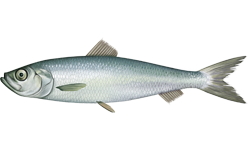
File:Clupea_harengus.png · Wikimedia Commons · See Wikimedia Commons
OverviewAI-generated
Clupea is a genus of fish within the family Clupeidae and order Clupeiformes. It belongs to the class Teleostei, phylum Chordata, and kingdom Animalia. The scientific name Clupea was established by Linnaeus in 1758, and the taxon is currently accepted. The genus has existed for approximately 55 million years.
The organisms in this genus inhabit marine, brackish, and freshwater environments. The Japanese common name for the group is ニシン属. Records of Clupea have been documented in Italy, the United States, and Canada, with specimens held by institutions including CM and UWFC.
Synthesized by Vinony from 28 facts across 6 sources: Wikidata, GBIF, Gbif Occ, iDigBio, WoRMS, Vinony graph. Generated from structured data (not the Wikipedia text) and checked against those facts — may still contain errors.
Species
ニシン属
Clupea
GENUS
- KingdomAnimalia
- PhylumChordata
- ClassTeleostei
- OrderClupeiformes
- FamilyClupeidae
Echte Heringe (Clupea) sind eine Gattung der Familie Heringe (Clupeidae). Es handelt sich um Fische, die in großen Schwärmen leben. Ihre Hauptnahrung sind Copepoden, kleine Krebse, die im Plankton leben. Der Körper ist länglich, der Bauch rundlicher als bei der Sprotte. Die Schuppen am Bauch sind nicht gekielt. Eine Fettflosse fehlt. Der Hering wird maximal um 45 cm lang, ist weiß geschuppt und glänzt silbergrün. Der frische Fisch wird grüner Hering genannt, in Abgrenzung vom Salzhering, der mittels Salz oder Salzlake haltbar gemacht ist. Inhaltsverzeichnis 1 Arten 2 Anale Kommunikation 3 Einzelnachweise 4 Weblinks Arten Atlantischer Hering (Clupea harengus Linnaeus 1758), die wirtschaftlich bedeutendste Art im Nordatlantik Clupea manulensis Marion de Procé, 1822 Pazifischer Hering (Clupea pallasii Valenciennes 1847) Anale Kommunikation Sowohl pazifische als auch atlantische Heringe drücken Luft aus ihrer Schwimmblase über den Analtrakt nach außen und erzeugen damit pulsierende Töne (Fast Repetetive Tick, FRT). FRTs dauern 0,6 bis 7,6 Sekunden und erzeugen Schallwellen im Bereich von 1,7 bis 22 kHz. Deren genaue Funktion ist noch nicht erforscht. Da sie aber vermehrt in dichten Sch
via GBIF
Museum specimens
- Specimen records
- 607
- With media
- 27
- Family
- Clupeidae
- Collections
- CM, UWFC
- Recorded in
- Italy, United States, Canada
Wikidata facts
- Instance of
- taxon
- Subclass of
- fish as food
- Parent taxon
- Clupeinae
- Image
- Herringadultkils.jpg
Show 6 more facts
- taxon name
- Clupea
- taxon rank
- genus
- Commons category
- Clupea
- topic's main category
- Category:Clupea
- MCN code
- 0304.86.00
- start time
- 55000000-0
Sources (3)
via Wikidata · CC0
Article · Español
Los arenques (Clupea) son un género que abarca unas 15 especies de peces teleósteos, de color azul, eurihalinos y nativos de las aguas templadas y poco profundas del océano Atlántico y el mar Báltico. Forman grandes cardúmenes. El arenque adulto vive en alta mar donde, por la noche, asciende hasta la superficie para alimentarse de plancton. Tiene dientes pequeños, pero sus branquias funcionan como un tamiz y le permiten capturar pequeños animales filtrando el agua que va tragando al nadar. La hembra pone más de 41.000 huevos al año y los va esparciendo en el agua: se depositan en el lecho marino y muchos son engullidos por peces y otros predadores; de los que logran sobrevivir nacen pequeñas crías que alcanzan la superficie atraídas por la luz. En el norte de Europa, su pesca se lleva a cabo desde épocas prehistóricas y, en los últimos años del siglo XX, las capturas alcanzaron tal magnitud que su número mermó considerablemente. Llegan a medir hasta 45 centímetros de largo y su hábitat es el norte del Océano Atlántico.
Abstract from DBpedia / Wikipedia · CC BY-SA