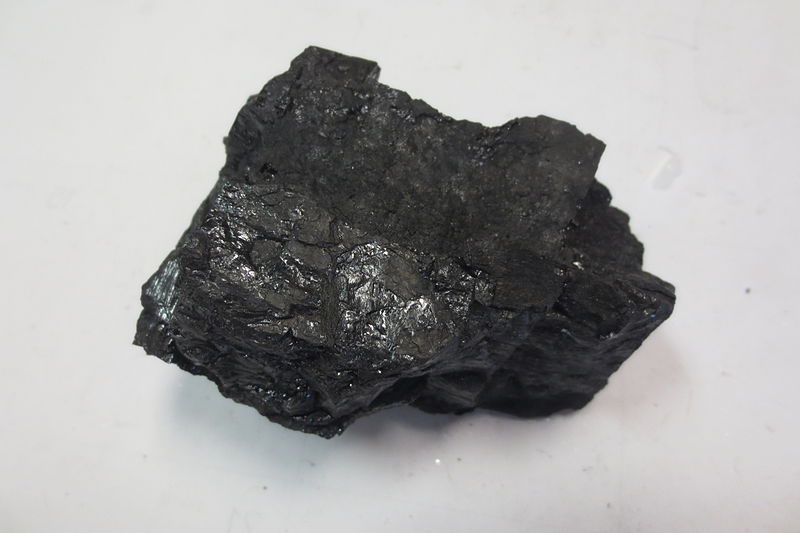
File:Bituminous_Coal.JPG · Wikimedia Commons · See Wikimedia Commons
煤
Also known as carbone
Coal is a combustible black or brownish-black sedimentary rock, formed as layers called coal seams. Coal is mostly carbon with variable amounts of other elements, chiefly hydrogen, sulfur, oxygen, and nitrogen. It is a fossil fuel, formed when plants decay into peat which is converted into coal by the heat and pressure of deep burial over millions of years. Vast deposits formed from wetlands called coal forests that covered much of the tropics during the late Carboniferous and early Permian.
AI overview
Coal is a dark, combustible rock formed from ancient plants that decayed into peat and were transformed by heat and pressure over millions of years, composed mainly of carbon along with hydrogen, sulfur, oxygen, and nitrogen. It matters because it is a fossil fuel that has historically been a major energy source, though vast deposits from prehistoric tropical wetlands took millions of years to form and are now being consumed much more rapidly than they were created.
AI-generated from the Wikipedia summary — may contain errors.
Key facts
- Rock.name
- Coal
- Rock.type
- Sedimentary
- Rock.image
- Bituminous Coal.JPG
- Rock.image_caption
- Bituminous coal, the most common coal grade
- Rock.image_size
- 258px
- Rock.composition
- carbon
via Wikipedia infobox
Research
44,374 papersvia PubMed
Wikidata facts
- Image
- Coal (Anthracite).JPG
Show 4 more facts
- Commons category
- Coal
Article · 中文
煤(英語:coal)是一种可燃的黑色或棕黑色沉积岩,这样的沉积岩通常是发生在被称为煤床或煤层的岩石地层中或矿脉中。因为后来暴露于升高的温度和压力下,较硬形式的煤可以被认为是变质岩,例如无烟煤。煤主要是由碳构成,连同由不同数量的其它元素构成,主要是氢,硫,氧和氮。 在历史上,煤被用作能源资源,主要是燃烧用于生产电力和热,并且也可用于工业用途,例如精炼金属,或生产化肥和许多化工产品。作为一种化石燃料,煤的形成是古代植物在腐敗分解之前就被埋在地底,转化成泥炭,然后转化成褐煤,然后为次烟煤,之后烟煤,最后是无烟煤。煤產生之碳氫化合物经过地壳运动空气的压力和温度条件下作用,产生的碳化化石矿物,亦即,煤炭就是植物化石,多半來自於石炭紀至二疊紀時期的煤炭森林。这涉及了很长时期的生物和地质过程。
Abstract from DBpedia / Wikipedia · CC BY-SA