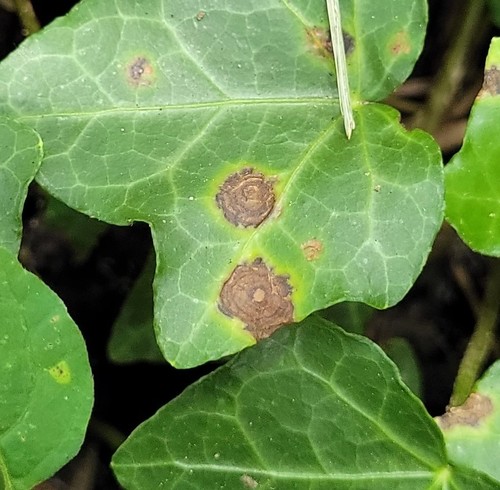
(c) Matthew Beziat, some rights reserved (CC BY-NC), uploaded by Matthew Beziat · cc-by-nc
Colletotrichum
Sign in to saveColletotrichum (sexual stage: Glomerella) is a genus of fungi that are symbionts to plants as endophytes (living within the plant) or phytopathogens. Many of the species in this genus are plant pathogens, but some species may have a mutualistic relationship with hosts.
Species
Ivy Anthracnose
GENUS
- KingdomFungi
- PhylumAscomycota
- ClassSordariomycetes
- OrderGlomerellales
- FamilyGlomerellaceae
Acerwulus ze szczecinkami u Colletotrichum sublineolum Plamy na liściu wywołane przez Colletotrichum orbiculare Colletotrichum (Fr.) Tul. & C. Tul. – rodzaj grzybów z klasy Sordariomycetes. Według ankiety przeprowadzonej wśród fitopatologów przez czasopismo "Molecular Plant Pathology" w 2012 r. gatunek ten znalazł się na 8 miejscu wśród grzybów o największym znaczeniu w gospodarce człowieka.
via GBIF
Museum specimens
- Specimen records
- 1,229
- With media
- 576
- Family
- Glomerellaceae
- Collections
- LSUM, NEB, OSC, MIN, NY, MICH
- Recorded in
- United States
Research
4,947 papers- Colletotrichum: species complexes, lifestyle, and peculiarities of some sources of genetic variability.Applied microbiology and biotechnology · 2020
- The fungus Colletotrichum as a source for bioactive secondary metabolites.Archives of pharmacal research · 2019
- Colletotrichum higginsianum as a Model for Understanding Host⁻Pathogen Interactions: A Review.International journal of molecular sciences · 2018
- Colletotrichum keratitis.American journal of ophthalmology · 2002
- Soybean anthracnose caused by Colletotrichum species: Current status and future prospects.Molecular plant pathology · 2021
via PubMed
Wikidata facts
- Instance of
- taxon
- Parent taxon
- Glomerellaceae
- Image
- Colletotrichum lindemuthianum.jpg
Show 5 more facts
- taxon name
- Colletotrichum
- taxon rank
- genus
- Commons category
- Colletotrichum
- topic's main category
- Category:Colletotrichum
- taxon author citation
- Corda
via Wikidata · CC0
~10 min read
Encyclopedic overview
20 sectionsContents
- History
- Species and species complexes
- ''Colletotrichum acutatum'' species complex
- ''Colletotrichum agaves'' species complex
- ''Colletotrichum boninense'' species complex
- ''Colletotrichum dematium'' species complex
- ''Colletotrichum destructivum'' species complex
- ''Colletotrichum dracaenophilum'' species complex
- ''Colletotrichum gigasporum'' species complex
- ''Colletotrichum gloeosporioides'' species complex
- ''Colletotrichum graminicola-caudatum'' species complex
- ''Colletotrichum magnum'' species complex
- ''Colletotrichum orbiculare'' species complex
- ''Colletotrichum orchidearum'' species complex
- ''Colletotrichum spaethianum'' species complex
- ''Colletotrichum truncatum'' species complex
- Singleton species
- Species names that are no longer valid or have been synonymized
- References
- Further reading
Colletotrichum (sexual stage: Glomerella) is a genus of fungi that are symbionts to plants as endophytes (living within the plant) or phytopathogens. Many of the species in this genus are plant pathogens, but some species may have a mutualistic relationship with hosts.
== History == The history of the Colletotrichum genus is a case study on the tension between the lumpers and splitters. While the genus Colletotrichum was first proposed in 1831, the exact definition of Colletotrichum and the species that belong in this genus has been in flux ever since. The biggest recent shift has been from a definition (of both the genus and the species within it) based on morphology to a definition based on a combination of morphology and molecular phylogenetics. The use of molecular phylogenetics has led to a huge increase in the number of recognized species in this genus, and the species are now organized into species complexes that usually have the name of their most widely known species. The name of a species when referring its namesake species complex will often have the suffix s.l. or sensu lato (in the broad sense) while that same name when referring to the specific species within the species complex will have the suffix of s.s. or sensu stricto (in the strict sense).
Excerpted from Wikipedia’s “Colletotrichum” article, available under the CC BY-SA 4.0 licence.