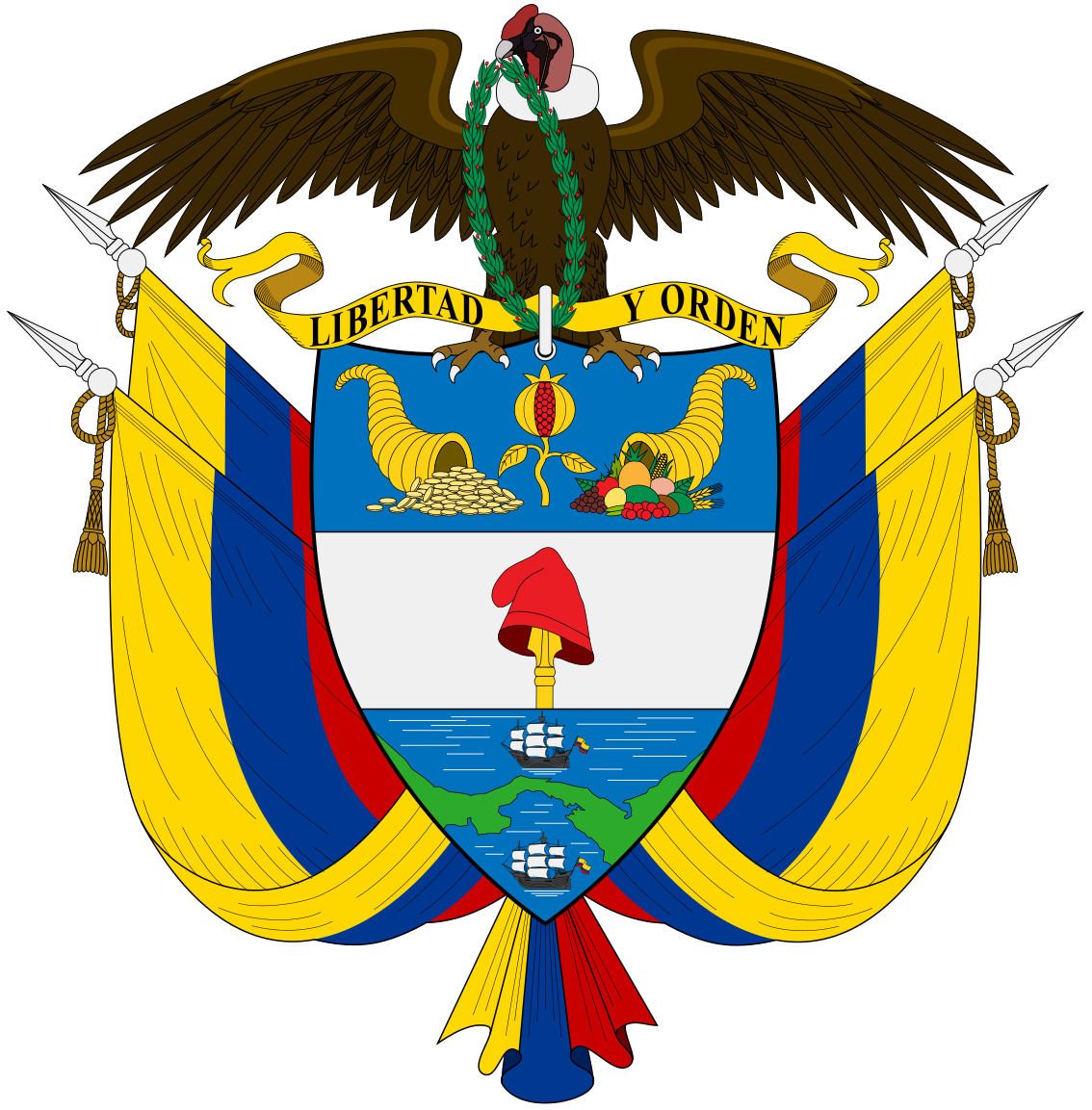
Also known as Republic of Colombia, COL, CO, ISO 3166-1:CO, The Republic of Colombia, Colombiá
Stato dell'America meridionale
Colombia is a South American country bordered by the Caribbean Sea and Pacific Ocean, with its capital and largest city in Bogotá, which serves as the nation's financial and cultural center. The country is strategically positioned between multiple South American nations and the Caribbean region, making it geographically significant in the continent.
AI-generated from the Wikipedia summary — may contain errors.
via Open-Meteo
Colombia is the only country in South America with coastlines on both the North Pacific Ocean and Caribbean Sea, and it has the second-most biodiversity in the world. Lying to the south of Panama, Colombia controls the land access between Central and South America. With Panama to the north, Colombia is surrounded by Venezuela to the east, Brazil to the southeast, and Ecuador and Peru to the south west. The country was named in honor of Christopher Columbus, following the Italian version of his name (Cristoforo Colombo). Although Columbus never set foot on the current Colombian territory, in his fourth voyage he visited Panama, which was part of Colombia until 1903.
Traveling in Colombia is definitely worthwhile. From Bogotá, with a temperate climate 2,600 m (8,530 ft) above sea level and at a constant temperature of 19°C, a drive of one or two hours north, south, east or west can take you to landscapes which are as diverse as they are beautiful. To historic city centres and towns, modern and energetic party cities, oriental plains which stretch out far beyond the horizon with little modulation. rugged contours of the higher Andean region, the Guajira peninsula and its desert, idyllic beaches, the tropical jungle of the Amazon and the Choco with abundant flora and fauna, snowy peaks and volcanoes, ancient ruins, the Magdalena River valley and its hot weather, beautiful coral reefs and an abundant underwater marine life together with pleasant relaxed tropical islands…
thumb|[[Cali]] Much of Colombia is in the Andes, which means there is very beautiful mountainous scenery to be found. On the other hand, there are also nice beaches to be found in the lowlands. The altitude of some peaks mean that snow can be seen even though they lie in the tropics.
There are a lot of things to do in Colombia, and you can find parties and celebrations wherever you go. Colombians especially love to dance, and if you don't know how, they'll happily teach you. Colombia is known for its exciting night life.
There are many groups and agencies offering eco-tourism and it is very usual to find trekking plans (locally named 'caminatas' or 'excursiones') on weekend; many groups (named 'caminantes') offers cheaper one day excursion, special trips (on long weekends or during periods of vacation time (January, Holy Week, July, August, October, December) to different places in the country. Some recommended groups based out of Bogotá are: Viajar y Vivir, Fundación Sal Si Puedes, Caminantes del Retorno; there are many other. Patianchos in Medellín; Rastros in Bucaramanga. They usually offer guidance and transportation to the place; on long trips include lodging and other services. The recommendation is asking if the guide has the official certification.
La Colombia (pronuncia italiana /ko'lombja/, pronuncia spagnola [ko̞ˈlõ̞mbjä]), formalmente Repubblica di Colombia (República de Colombia), è uno Stato della regione nord-occidentale dell'America Meridionale, la cui superficie è di 1 141 748 km² (2 070 408 km² se si aggiungono i 928 660 km² di estensione marittima). Delimitata a est da Venezuela e Brasile, a sud da Perù ed Ecuador e a nord-ovest da Panama, dal Mar dei Caraibi a nord e dal Pacifico a ovest, è l'unico paese sudamericano ad affacciarsi sui due oceani che bagnano il continente; fanno parte della Colombia anche le isole dell'arcipelago di San Andrés, Providencia e Santa Catalina; è il sesto Paese più esteso dell'America ed il quarto per popolazione. La capitale è Bogotà. Il ricco patrimonio culturale della Colombia riflette le influenze di varie civiltà amerindiane, insediamenti europei, schiavi africani e immigrazione dall'Europa e dal Medio Oriente. Lo spagnolo è la lingua ufficiale della nazione, oltre alla quale si parlano oltre 70 lingue. Il territorio che comprende l'attuale Colombia fu originariamente abitato da tribù di amerindi che migrarono dall'America centrale e dai Caraibi. Le tribù principali furono muisca, quimbaya, tairona e zenu, appartenenti alle famiglie delle lingue arawakana, chibcha e caribe.Parte del sud fu abitato dagli Inca. Nel XV secolo i conquistadores spagnoli occuparono e colonizzarono il territorio, istituendovi il vicereame della Nuova Granada.Nel 1819, con le campagne di Simón Bolívar, la Colombia ottenne l'indipendenza dalla Spagna insieme alle attuali Panama, Venezuela ed Ecuador, unite in un'unica repubblica chiamata Gran Colombia. Tuttavia già nel 1830 la Grande Colombia si divise in seguito a guerre intestine che portarono alla separazione delle attuali Venezuela ed Ecuador. I territori oggi noti come Colombia e Panama emersero come Repubblica della Nuova Granada; successivamente esse si federarono con la Confederazione Granadina nel 1858, per formare poi gli Stati Uniti di Colombia nel 1863, fino al consolidamento dell'attuale repubblica centralista nel 1886.Nel 1903, dopo la Guerra dei mille giorni, si arrivò alla secessione del dipartimento di Panama. Nel 1932 la Colombia fu coinvolta in una guerra contro il Perù per la contesa di un vasto territorio denominato trapezio amazzonico, che fu risolta attraverso la mediazione della Società delle Nazioni. Nel 1948 incominciò un'epoca di tumulti sociali che condusse ad una guerra civile che sfociò nell'attuale conflitto armato tra il governo e le formazioni paramilitari da un lato e trafficanti di droga e la guerriglia comunista dall'altro, e che produce come conseguenza decine di migliaia di morti, feriti, persone scomparse e milioni di sfollati, classificando la Colombia come uno dei Paesi più violenti al mondo ed uno dei maggiori esportatori di droghe. Ciononostante la Colombia ha avuto istituzioni relativamente stabili, fatta eccezione per gli anni tra il 1953 ed il 1957, in cui sperimentò un colpo di Stato militare che portò al governo del generale Rojas Pinilla. La Colombia è all'inizio del XXI secolo una potenza di media grandezza, con il PIL al terzo posto tra i Paesi del Sud America, in cui è significativa la produzione di caffè e l'esportazione di fiori, carbone e petrolio. La maggioranza del bilancio dello Stato è assorbito dalle spese militari, che sostengono l'esercito più numeroso del continente in rapporto alla popolazione, il quale è impegnato nel conflitto armato contro le due guerriglie colombiane attualmente attive: le Forze Armate Rivoluzionarie della Colombia (FARC) e l'Esercito di Liberazione Nazionale (ELN). Presenta una grande diversità culturale ed una delle più ampie biodiversità del pianeta. La Colombia è una repubblica unitaria di tipo presidenziale; il potere legislativo è esercitato dal Congresso, composto da Senato (102 senatori) e Camera di consiglio (166 deputati).
60 mapped locations
Discovered by embedding cosine similarity (sentence-transformers MiniLM, 384-dim).
via REST Countries
via World Bank Open Data · CC BY 4.0
via Wikimedia Pageviews API
via Wikipedia infobox
via PubMed
via Wikidata · CC0
Colombia’s national sport, tejo is a traditional indigenous game from central Colombia, similar to beanbags or horseshoes, but with explosions. Also beer, or traditionally chicha, although Tejo aficionados are trying to downplay its role. For the vibe, think Colombian axe-throwing. it is common to find professional tejo teams around the major cities and smaller towns. There are upscale establishments that cater to tourists,
Pre-Columbian civilizations cultivated about 200 varieties of potatoes, and they remain popular today. Try the local preparations like papas saladas (salted potatoes) or papas chorriadas (stewed potatoes). Most meals feature some kind of meat with rice, potatoes, and avocados. In the coastal areas, the rice is usually flavored with coconut.
Both restaurants and family meals often feature soup, and, in the mountain areas, you may even be served a milk-based soup called changua for breakfast.
Colombian food is not nearly as spicy as Mexican food. Some foods with the same name are quite different. For example, empanadas, made with potato and meat wrapped in a yellow crust, are delicious and entirely different from their Mexican and Argentinian counterparts. thumb|Buñuelos In many areas of Colombia, it is common to have buñuelos (deep fried corn flour balls with cheese in the dough) and arepas (rather thick corn tortillas, often made with cheese and served with butter) with scrambled eggs for breakfast. Bogotá and the central region have its own breakfast delicacy of tamales: maize and chopped pork or chicken with vegetables and eggs, steamed in plantain leaves, often served with homemade hot chocolate.
For lunch, especially on Sundays, you should try a sancocho de gallina (rich chicken soup, served with part of the chicken itself, rice and vegetables or salad). Sancocho is widespread throughout the country, with countless regional variants. On the coast it features fish, and …
The water is drinkable right from the tap in most major cities, such as Bogotá and Medellín, but be prepared to buy bottled water if you go to the countryside or along the Caribbean coast. Agua Manantial brand bottled water comes from a natural spring near Bogotá. Avoid ice cubes and any beverage that might contain water that isn't bottled or boiled. Ask if the beverage is made with tap or bottled/boiled water.
For breakfast, take a home-made hot drink. The choices normally include coffee, hot chocolate or agua de panela. The latter is a drink prepared with panela (dried sugar cane juice), sometimes with cinnamon and cloves, which gives it a special taste. Coffee is usually taken with a lot of milk.
Fruit juice is particularly popular. Beverages made of fruit juice, sugar, and your choice of either water or milk are widely available.
Colombia's national alcoholic beverage, Aguardiente (a.k.a. guaro), tastes strongly of anise, and is typically bought by the bottle or half bottle or a quarter. People usually drink it in shots. Each region has its own aguardiente, "Antioqueño" (from Antioquia), "Cristal" (from Caldas), "Quindiano" (from Quindío), "Blanco del Valle" (from Valle del Cauca) and "Nectar" (from Cundinamarca). There is also a variety of rum beverages, like "Ron Santa Fe" (also from Cundinamarca), "Ron Medellín Añejo" (also from Antioquia), "Ron Viejo de Caldas" (also from Caldas) among others.
In Colombia you can find a range of options, bed and breakfast conditioned to western standards and hostels to five-star hotels. There are also apartments that rent per day.
Colombia has suffered from a terrible reputation as a dangerous and violent country, but the situation has improved dramatically since the 1980s and 1990s. Colombia is on the path to recovery, and Colombians are very proud of the progress they have made. These days, Colombia is generally safe to visit, with the violent crime rate being lower than that in Mexico or Brazil, as long as you avoid poorer areas of the cities at night, and do not venture off the main road into the jungle where guerrillas are likely to be hiding.
The security situation varies greatly around the country. The Travel Risk Map covers Colombia and shows the current safety levels throughout the country. Most jungle regions are not safe to visit, but the area around Leticia is very safe, and the areas around Santa Marta are OK. No one should visit the Darien Gap at the border with Panama (in the north of Chocó), Putumayo or Caquetá, which are very dangerous, active conflict zones. Other departments with significant rural violence include the Atlantic departments of Chocó, Cauca, and Valle del Cauca; eastern Meta, Vichada, and Arauca in the east; and all Amazonian departments except for Amazonas. That's not to say that these departments are totally off-limits — just be sure you are either traveling with locals who know the area or sticking to cities and tourist destinations. In general, if you stick to the main roads between major cities and do not wander off into remote parts of the jungle, you are unlikel…
Drink only bottled water outside the major cities. The water in major cities is safe. Most drinking water in people's homes is either boiled or of the purified variety that comes in huge multi-gallon plastic bags (which you can find at any little grocery store). The coffee's delicious, though, so why not just start that habit!
The tourism website of Colombia has the current information on COVID-19.
Tropical diseases are a concern in lowland parts of the country, and more so outside of major cities. Mosquitoes carry malaria, Yellow fever, and Dengue, and infection rates are similar to other lowland parts of South America (i.e., much lower than in sub-Saharan Africa). Yellow fever has a vaccine, so get it—it's required for entry to many national parks, anyway. Dengue is not preventable beyond avoiding mosquito bites, so using bug spray regularly in lowland rural areas is good sense.
Malaria is a potential problem, so trips outside Bogotá, Medellín, Cartagena, and the Andean region warrant use of antimalarials, which can be bought very cheaply without a prescription from a droguería, which are everywhere in any city of any size throughout the country. Ask for Doxycicline tablets at a dosage of 100 mg, with the number being 30 days plus the number of days in a malarial area (so you can start 1–2 days in advance, and take it daily continuing for 4 weeks past the end of your trip). The phrase you want is: doxyciclina, cien miligramos, [number] pastillas. Using some bug spra…
Colombians are acutely aware of their country's bad reputation, and tactless remarks about the history of violence might earn you a snide remark (likely regarding your country of origin) and an abrupt end to the conversation. However, Colombians eventually become willing to discuss these topics once they feel comfortable enough with someone.
Colombians are more formal than most other Latin Americans. Make a point to say "please" ("Por favor" or "Hágame el favor") and "thank you" ("muchas gracias") for anything, to anyone. When addressed, the proper response is "¿Señora?" or "¿Señor?" In parts of the country (especially Boyacá) Colombians can be formal to the point of anachronism, calling strangers "Su merced" (your Mercy!) in place of usted. The one (much) more informal part of the country is along the Caribbean coast, where referring to people just as "chico" can be more the norm—but take your cues from those around you.
thumb|Street view in Bogota
Race is not a hot issue in Colombia, since whites, criollos, and mestizos (mixed race) blend naturally with natives and Afro-Colombians in everyday life (education, living, politics, marriage). Differences between white foreigners are not dwelled upon: expect to be called "gringo" even if you are, say, Russian. Unless context includes anger, it's not meant to be offensive. If you are black, you will probably be referred to as "negro" or "moreno," which also are not considered at all offensive. Asians are usually called "chino" …
Crossing the land border is possible to Ecuador, Brazil, Peru and Venezuela.
To cross the land border to Brazil and Peru, take a flight to Leticia. To enter Ecuador on land, you could fly to Ipiales or Pasto near the border.
Travel guide from Wikivoyage (CC BY-SA 4.0)
Abstract from DBpedia / Wikipedia · CC BY-SA
via Wikidata sitelinks · CC0