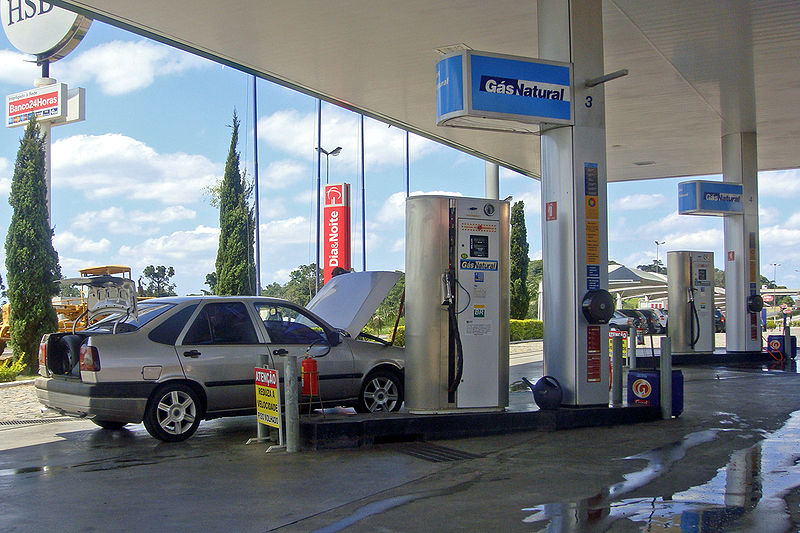
File:Posto_GNV_01_2009_485_CWB.jpg · Wikimedia Commons · See Wikimedia Commons
compressed natural gas
Sign in to saveAlso known as CNG
CNG, fuel which can be used in place of gasoline, diesel fuel and propane/LPG
Wikidata facts
Show 5 more facts
- Commons category
- Compressed natural gas
- short name
- GNC
- exact match
- purl.obolibrary.org/obo/ENVO_01000555
- different from
- liquefied natural gas
- on focus list of Wikimedia project
- WikiProject Climate change
via Wikidata · CC0
~40 min read
Encyclopedic overview
Compressed natural gas (CNG) is fuel gas composed primarily of methane (CH4), compressed to less than 1% of its volume at standard atmospheric pressure. It is stored in high-pressure containers at approximately 20–25 megapascals (2,900–3,600 psi; 200–250 bar), typically in cylindrical or spherical shapes.
CNG is used in modified petrol and internal combustion engine vehicles as well as purpose-built CNG vehicles. These include dedicated CNG systems, dual-fuel vehicles that combine CNG with liquid fuel, and bi-fuel vehicles. It can serve as an alternative to petrol, diesel fuel, and liquefied petroleum gas (LPG). Compared with these fuels, CNG combustion produces lower emissions of several pollutants. Because natural gas is lighter than air, it disperses more readily when released. Biomethane derived from anaerobic digestion or landfill sources can also be used.
Excerpted from Wikipedia’s “compressed natural gas” article, available under the CC BY-SA 4.0 licence.