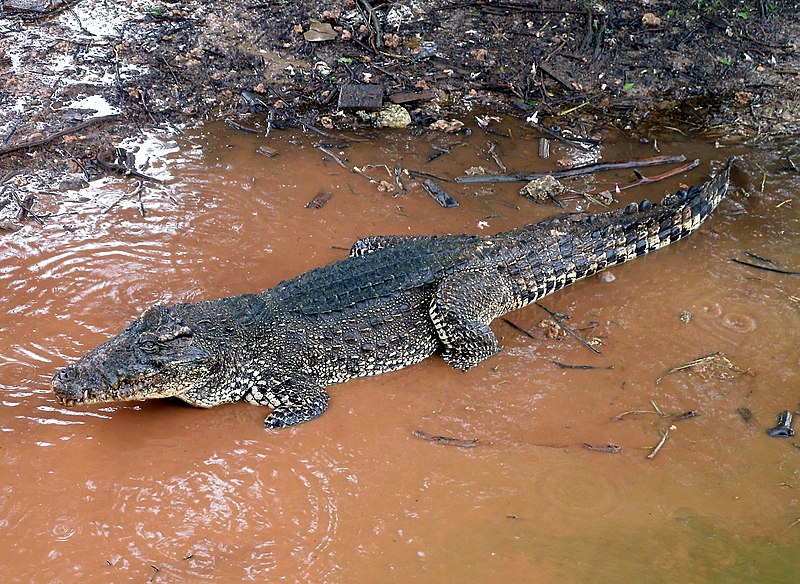
File:Crocodylus_Rhombifer.JPG · Wikimedia Commons · See Wikimedia Commons
OverviewAI-generated
The Cuban crocodile (*Crocodylus rhombifer*) is a species within the family Crocodylidae and class Crocodylia. It belongs to the phylum Chordata and is classified under the genus *Crocodylus*. The scientific name for this taxon is *Crocodylus rhombifer*, with the authority cited as (Cuvier, 1807). It is also referred to by the common names Cocodrilo de Cuba and Crocodile de Cuba.
This freshwater species holds a status of Critically Endangered on the IUCN Red List, a designation recorded in 2022. It is listed in Appendix I of CITES. In captivity, the maximum longevity for the Cuban crocodile is 38.2 years.
Synthesized by Vinony from 21 facts across 5 sources: Wikidata, WoRMS, IUCN Red List, Encyclopedia of Life, Vinony graph. Generated from structured data (not the Wikipedia text) and checked against those facts — may still contain errors.
Species
Critically EndangeredSpecies
- PhylumChordata
- ClassCrocodylia
- FamilyCrocodylidae
Maximum longevity: 38.2 years (captivity)
via IUCN
Wikidata facts
- Instance of
- taxon
- Parent taxon
- Crocodylus
- Image
- Estocolm 2008 163.jpg
Show 8 more facts
- taxon rank
- species
- IUCN conservation status
- Critically Endangered
- taxon name
- Crocodylus rhombifer
- Commons category
- Crocodylus rhombifer
- Commons gallery
- Crocodylus rhombifer
- taxon common name
- Cuban Crocodile
- CITES Appendix
- Appendix I of CITES
- short name
- C. rhombifer
Sources (1)
via Wikidata · CC0
~8 min read
Encyclopedic overview
The Cuban crocodile (Crocodylus rhombifer) is a small-medium species of crocodile endemic to Cuba. Typical length is 2.1–2.3 m (6 ft 11 in – 7 ft 7 in) and typical weight 70–80 kg (150–180 lb). Large males can reach as much as 3.5 m (11 ft) in length and weigh more than 215 kg (474 lb).
The Cuban crocodile is of interest to biologists for its unique physical and behavioral traits. Long- and strong-legged, it is the most terrestrial of extant crocodiles. Its preferred habitat comprises freshwater and brackish water environments, such as mangrove swamps, coastal lagoons, estuaries, marshes, floodplains, and river deltas. There, the adults feed on fish, turtles and small mammals, while the young eat invertebrates and smaller fish. Mating occurs between May and July. Captive animals have displayed cooperative hunting behavior, and can be taught tricks, suggesting intelligence.
Excerpted from Wikipedia’s “Cuban crocodile” article, available under the CC BY-SA 4.0 licence.