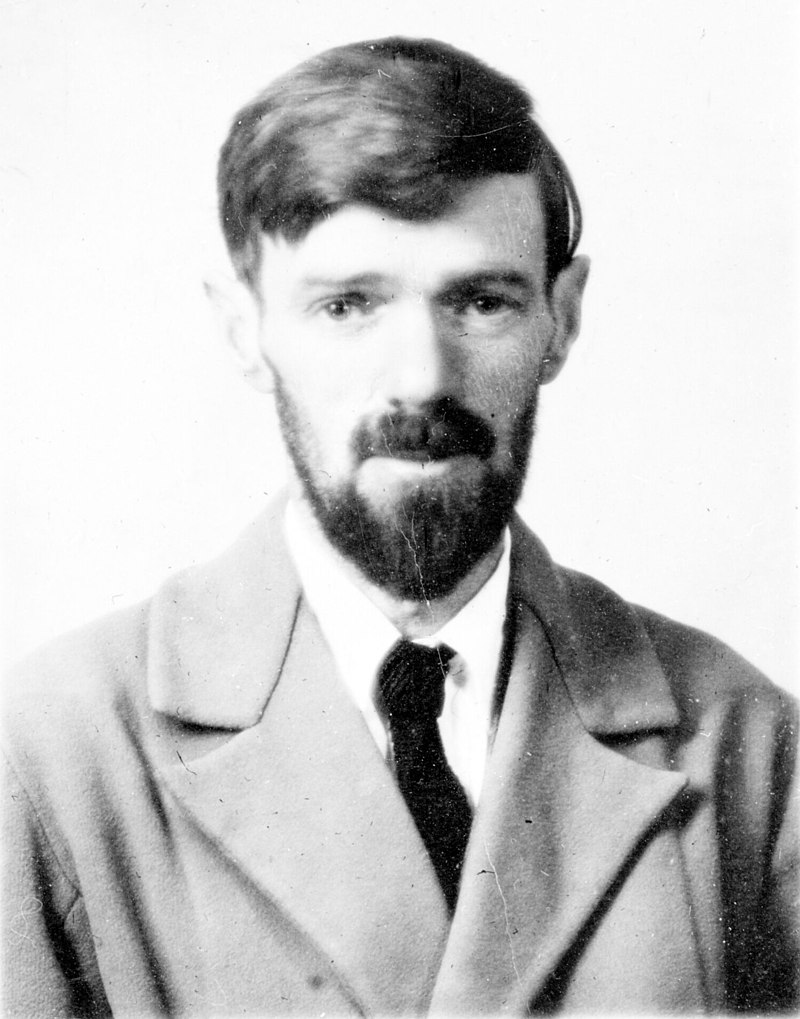
File:D_H_Lawrence_passport_photograph.jpg · Wikimedia Commons · See Wikimedia Commons
D. H. Lawrence
Sign in to saveAlso known as Lawrence H. Davison, D.H. Lawrence, D. H. Lorenss, D. G. Lourens, David Herbert Richards Lawrence, D. H. David Herbert Lawrence, David Herbert Lawrence
English writer and poet (1885–1930)
OverviewAI-generated
D. H. Lawrence was a British playwright, translator, writer, and poet associated with modernist literature. Born David Herbert Richards Lawrence in Eastwood in 1885, he was educated at the University of Nottingham and the University of London. He wrote notable works including *Sons and Lovers*, *The Rainbow*, *Women in Love*, and *Lady Chatterley’s Lover*. His other works include *My skirmish with Jolly Roger*, *The plumed serpent*, *The white peacock*, and *The trespasser*. He received the James Tait Black Memorial Prize and used the pseudonym Lawrence H. Davison.
Lawrence died of tuberculosis in Vence on March 2, 1930. His medical condition was tuberculosis, and his manner of death was natural causes. He was married to Frieda Lawrence. His archives are held at the Beinecke Rare Book & Manuscript Library and the Harry Ransom Center. His works were subject to Nazi book burnings.
Synthesized by Vinony from 27 facts across 2 sources: Wikidata, Open Library. Generated from structured data (not the Wikipedia text) and checked against those facts — may still contain errors.
Person · Open Library
- Born
- 1885
- Died
- 1930
- Works
- 3867
Top works
- Guía literaria de Londres
- My skirmish with Jolly Roger
- The plumed serpent
- The white peacock
- Women in love
via Open Library + Wikidata
Wikidata facts
- Instance of
- human
- Given name
- Herbert
- Family name
- Lawrence
- Gender
- male
- Citizenship
- United Kingdom
- Place of birth
- Eastwood
- Place of death
- Vence
- Spouse
- Frieda Lawrence
- Occupation
- painter
- Educated at
- University of London
- Languages spoken
- English language
- Notable work
- Lady Chatterley's Lover
- Genre
- erotic art
- Movement
- modernist literature
- Image
- D H Lawrence passport photograph.jpg
- Significant event
- Nazi book burnings
Show 18 more facts
- Commons category
- D. H. Lawrence
- cause of death
- tuberculosis
- date of birth
- 1885-01-01
- date of death
- 1930-01-01
- topic's main category
- Category:D. H. Lawrence
- medical condition
- tuberculosis
- pseudonym
- Lawrence H. Davison
- manner of death
- natural causes
- birth name
- David Herbert Richards Lawrence
- archives at
- Harry Ransom Center
- name in native language
- David Herbert Lawrence
- ethnic group
- English people
- has works in the collection
- The Nelson-Atkins Museum of Art
- writing language
- English language
- start of work period
- 1907-00-00
- Commons Creator page
- D. H. Lawrence
- influenced by
- William Blake
- P12749
- Balerna
Sources (10)
via Wikidata · CC0
~40 min read
Encyclopedic overview
David Herbert Lawrence (11 September 1885 – 2 March 1930) was an English novelist, short story writer, poet, playwright, literary critic, travel writer, essayist, and painter. His modernist works reflect on modernity, social alienation and industrialisation, while championing sexuality, vitality and instinct. Four of his most famous novels – Sons and Lovers (1913), The Rainbow (1915), Women in Love (1920), and Lady Chatterley's Lover (1928) – were the subject of censorship trials for their radical portrayals of romance, sexuality, and use of explicit language.
Lawrence's opinions and artistic preferences earned him a controversial reputation; he endured persecution and the misrepresentation of his creative work throughout his life, much of which he spent in a voluntary exile that he described as a "savage enough pilgrimage". At the time of his death, he had been variously scorned as tasteless, avant-garde, and a pornographer who had only garnered success for erotica; however, the English novelist and critic E. M. Forster, in an obituary notice, challenged this widely held view, describing him as "the greatest imaginative novelist of our generation". Later, the English literary critic F. R. Leavis also championed both Lawrence's artistic integrity and his moral seriousness.
Excerpted from Wikipedia’s “D. H. Lawrence” article, available under the CC BY-SA 4.0 licence.
Gallery (10)
Available in 78 languages
- Español
- Français
- Deutsch
- 中文
- 日本語
- Русский
- Português
- Italiano
- العربية
- हिन्दी
- Afrikaans
- Albanian
- Armenian
- Asturian
- azb
- Azerbaijani
- Bahasa Indonesia
- Bangla
Show 59 more
- Basque
- be_x_old
- Breton
- Bulgarian
- Catalan
- Central Kurdish
- Cornish
- Croatian
- Czech
- Egyptian Arabic
- Esperanto
- Estonian
- Finnish
- Galician
- Georgian
- Greek
- Hebrew
- Hungarian
- Ido
- Irish
- Kannada
- Kotava
- Latin
- Latvian
- Lithuanian
- Lombard
- Luxembourgish
- Macedonian
- Malayalam
- Marathi
- Mingrelian
- Nederlands
- Norwegian
- Norwegian Nynorsk
- Occitan
- Piedmontese
- Polski
- Punjabi
- Romanian
- Sardinian
- Serbian
- Serbian (Latin)
- simple
- Slovak
- Slovenian
- Svenska
- Tamil
- Tiếng Việt
- Türkçe
- Ukrainian
- Urdu
- Waray
- Welsh
- Western Panjabi
- Wu Chinese
- zh_yue
- فارسی
- ไทย
- 한국어
via Wikidata sitelinks · CC0