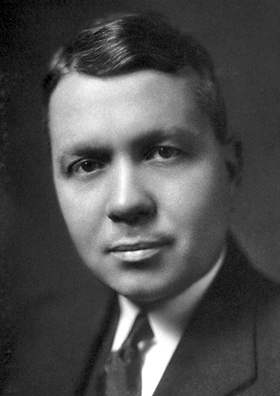
File:Urey.jpg · Wikimedia Commons · See Wikimedia Commons
deuterium
Sign in to saveAlso known as H-2, hydrogen-2, 2H, Heavy hydrogen, D, 重水素, ²H
Deuterium (hydrogen-2, symbol H or D, also known as heavy hydrogen) is one of two stable isotopes of hydrogen; the other is protium, or hydrogen-1, H. The deuterium nucleus (deuteron) contains one proton and one neutron, whereas the far more common H has no neutrons.
Deuterium is a heavier form of hydrogen that contains an extra neutron in its nucleus, making it roughly twice as heavy as ordinary hydrogen. Although deuterium is much rarer than regular hydrogen, it occurs naturally and is one of only two stable forms of hydrogen found in nature.
AI-generated from the Wikipedia summary — may contain errors.
Key facts
- Isotope.image
- Deuterium discharge tube.jpg
- Isotope.image_caption
- Deuterium glowing in a gas discharge tube
- Isotope.name
- Deuterium
- Isotope.alternate_names
- hydrogen-2
- Isotope.mass_number
- 2
- Isotope.symbol
- H
- Isotope.num_neutrons
- 1
- Isotope.num_protons
- 1
- Isotope.abundance
- 0.0156% (Earth)
- Isotope.mass
- 2.0141017778
- Isotope.spin
- 1+
- Isotope.halflife
- stable
via Wikipedia infobox
Research
29,603 papers- Deuterium and its impact on living organisms.ReviewFolia microbiologica · 2019Kselíková V, Vítová M, Bišová KDOI: 10.1007/s12223-019-00740-0
- Deuterium metabolic imaging - Back to the future.ReviewJournal of magnetic resonance (San Diego, Calif. : 1997) · 2021De Feyter HM, de Graaf RADOI: 10.1016/j.jmr.2021.106932
- Applications of Deuterium in Medicinal Chemistry.ReviewJournal of medicinal chemistry · 2019Pirali T, Serafini M, Cargnin S et al.DOI: 10.1021/acs.jmedchem.8b01808
- Luminescence enhancement by deuterium.ReviewJournal of labelled compounds & radiopharmaceuticals · 2023Filer CNDOI: 10.1002/jlcr.4056
- Application of deuterium in research and development of drugs.ReviewEuropean journal of medicinal chemistry · 2025Chen J, Zhu YY, Huang L et al.DOI: 10.1016/j.ejmech.2025.117371
- Emerging Role of Deuterium/Protium Disbalance in Cell Cycle and Apoptosis.ReviewInternational journal of molecular sciences · 2023Yaglova NV, Timokhina EP, Obernikhin SS et al.DOI: 10.3390/ijms24043107
- Deuterium isotope effects on noncovalent interactions between molecules.ReviewChemico-biological interactions · 1999Wade DDOI: 10.1016/s0009-2797(98)00097-0
- Explaining deuterium-depleted water as a cancer therapy: a narrative review.ReviewEuropean journal of cancer prevention : the official journal of the European Cancer Prevention Organisation (ECP) · 2026Kyriakopoulos AM, Seneff SDOI: 10.1097/CEJ.0000000000000953
via PubMed
Wikidata facts
- Instance of
- isotope of hydrogen
- Subclass of
- simple substance
- Part of
- period 1
- Followed by
- tritium
- Follows
- protium
- Mass
- 2.01410177811
- Image
- Deuterium-glow.jpg
Show 15 more facts
- time of discovery or invention
- 1931-01-01
- element symbol
- D
- discoverer or inventor
- Harold Urey
- neutron number
- 1
- Commons category
- Deuterium
- atomic number
- 1
- natural abundance
- 0.000115
- binding energy
- 2224.566
- spin quantum number
- 1
- parity quantum number
- 1
- mass excess
- 13135.72176
- melting point
- -254.43
- boiling point
- -249.58
- topic's main category
- Category:Deuterium
- isomeric SMILES
- [2H]
Sources (11)
via Wikidata · CC0
~41 min read
Encyclopedic overview
38 sectionsContents
- Differences from common hydrogen (protium)
- Chemical symbol
- Spectroscopy
- Big Bang nucleosynthesis
- Abundance
- Production
- Properties
- Data for molecular deuterium
- Physical properties
- Quantum properties
- Nuclear properties (deuteron)
- Deuteron mass and radius
- Spin and energy
- Isospin singlet state of the deuteron
- Approximated wavefunction of the deuteron
- Magnetic and electric multipoles
- Applications
- Nuclear reactors
- NMR spectroscopy
- Mass spectrometry
- Tracing
- Contrast properties
- Nuclear weapons
- Drugs
- Reinforced essential nutrients
- Thermostabilization
- Slowing circadian oscillations
- History
- Before the search
- Deuterium detected
- Naming of the isotope and Nobel Prize
- "Heavy water" experiments in World War II
- In thermonuclear weapons
- Modern research
- Antideuterium and the antideuteron
- See also
- References
- External links
Deuterium (hydrogen-2, symbol H or D, also known as heavy hydrogen) is one of two stable isotopes of hydrogen; the other is protium, or hydrogen-1, H. The deuterium nucleus (deuteron) contains one proton and one neutron, whereas the far more common H has no neutrons.
The name deuterium comes from Greek deuteros, meaning "second". American chemist Harold Urey discovered deuterium in 1931. Urey and others produced samples of heavy water in which the H had been highly concentrated. The discovery of deuterium won Urey a Nobel Prize in 1934.
Excerpted from Wikipedia’s “deuterium” article, available under the CC BY-SA 4.0 licence.
Gallery (19)
Available in 81 languages
- Español
- Français
- Deutsch
- 中文
- 日本語
- Русский
- Português
- Italiano
- العربية
- हिन्दी
- Afrikaans
- Armenian
- Asturian
- Azerbaijani
- Bahasa Indonesia
- Balinese
- Bangla
- Basque
Show 62 more
- be_x_old
- Belarusian
- Bosnian
- Breton
- Bulgarian
- Catalan
- Chuvash
- Croatian
- Czech
- Danish
- Esperanto
- Estonian
- Filipino
- Finnish
- Galician
- Gan Chinese
- Georgian
- Greek
- Hebrew
- Hungarian
- Icelandic
- Interlingua
- Irish
- Kannada
- Kazakh
- Kyrgyz
- Latin
- Latvian
- Lombard
- Low German
- Macedonian
- Malagasy
- Malay
- Malayalam
- Marathi
- Moroccan Arabic
- Nederlands
- Norwegian
- Occitan
- Polski
- Romanian
- Serbian
- Serbian (Latin)
- simple
- Sinhala
- Slovak
- Slovenian
- Svenska
- Swahili
- Tamil
- Tiếng Việt
- Türkçe
- Ukrainian
- Upper Sorbian
- Urdu
- Uzbek
- Western Panjabi
- Wu Chinese
- zh_yue
- فارسی
- ไทย
- 한국어
via Wikidata sitelinks · CC0