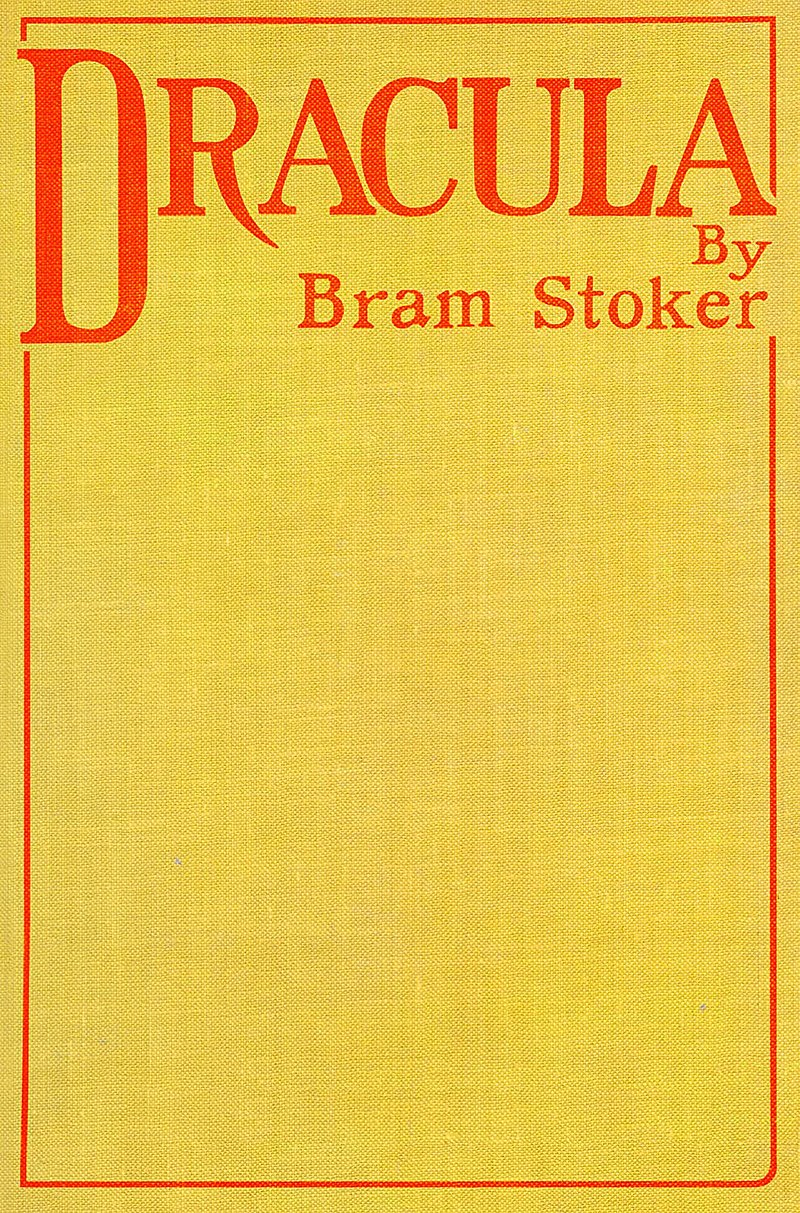
File:Dracula_1st_ed_cover_reproduction.jpg · Wikimedia Commons · See Wikimedia Commons
Drácula
Sign in to saveRomance de ficção gótica lançado em 1897
"Dracula" is an 1897 Gothic horror novel by Irish author Bram Stoker told through letters, diary entries, and newspaper articles, following English solicitor Jonathan Harker's encounter with a Transylvanian nobleman who reveals himself to be a vampire and travels to England to terrorize the seaside town of Whitby. The novel matters as a foundational work of vampire fiction that established many conventions of the genre and remains influential in horror literature and popular culture.
AI-generated from the Wikipedia summary — may contain errors.
Key facts
- Book.name
- Dracula
- Book.image
- Dracula 1st ed cover reproduction.jpg
- Book.caption
- First edition cloth cover (1897)
- Book.author
- Bram Stoker
- Book.country
- United Kingdom
- Book.language
- English
- Book.publisher
- Archibald Constable and Company (UK)
- Book.oclc
- 1447002
- Book.wikisource
- Dracula
- Book.pub_date
- May 1897
via Wikipedia infobox
Full text
Dracula, by Bram Stoker - Free ebook download - Standard Ebooks: Free and liberated ebooks, carefully produced for the true book lover
standardebooks.org →Dracula is one of the most famous horror novels, responsible not just for introducing the eponymous Count Dracula, but for laying the foundations for many of the common tropes we see in modern horror fiction. Count Dracula isn’t the first vampire to have graced the pages of Western literature—that honor belongs to Lord Ruthven in “The Vampire ,” a short story by John William Polidori —but Dracula is the vampire on which the modern vampire trope is based. Dracula wasn’t as famous in its day as it is today; readers of the time seemed to enjoy it as nothing more than a good story, and Stoker died nearly penniless. But its long-lasting influence is undeniable, and for all its age Dracula remains a gripping, fast-paced, and enjoyable read. azw3 — Kindle devices and apps. Also download the Kindle cover thumbnail to see the cover in your Kindle’s library. Despite what you’ve been told, Kindle does not natively support epub. You may also be interested in our Kindle FAQ . kepub — Kobo devices and apps. You may also be interested in our Kobo FAQ . Advanced epub — An advanced format that uses the latest technology not yet fully supported by most ereaders. If you’re comfortable with technology and want to contribute directly, check out this ebook’s GitHub repository and our contributors section . You can also donate to Standard Ebooks to help fund continuing improvement of this and other ebooks.
Excerpt from the full text · 4,953 chars · not written by Vinony
Wikidata facts
- Read free · Project Gutenberg
- #345
- Instance of
- literary work
- Named after
- Count Dracula
- Author
- Bram Stoker
- Genre
- romance
- Country of origin
- United Kingdom of Great Britain and Ireland
- Main subject
- epidemic
- Depicts
- Chicken paprikash
- Narrative location
- Cluj-Napoca
- Dedicated to
- Hall Caine
- Image
- Dracula-First-Edition-1897.jpg
Show 19 more facts
- derivative work
- Dracula
- characters
- Ármin Vámbéry
- Commons category
- Dracula
- inspired by
- Ármin Vámbéry
- topic's main category
- Category:Dracula
- set in period
- 1890s
- narrator
- Abraham Van Helsing
- working title
- The Un-Dead
- work available at URL
- standardebooks.org/ebooks/bram-stoker/dracula
- first line
- 3 May. Bistritz. - Left Munich at 8.35 p.m. on 1st May, arriving at Vienna early next Morning; should have arrived at 6.46, but train was an hour late.
- last line
- Already he knows her sweetness and loving care; later on he will understand how some men so loved her, that they did dare much for her sake.
- language of work or name
- English language
- publication date
- 1897-05-26
- copyright status
- public domain
- narrative motif
- death
- inception
- 1890-00-00
- references work, tradition or theory
- Bradshaw's Guide
- form of creative work
- novel
- title
- Dracula
Sources (7)
via Wikidata · CC0
Article · Português
Drácula (em inglês: Dracula) é um romance de terror gótico publicado em 1897, escrito pelo autor irlandês Bram Stoker. Como um romance epistolar, a narrativa é relatada por meio de cartas, diários e artigos de jornal. Não tem um único protagonista, mas abre com o advogado Jonathan Harker fazendo uma viagem de negócios para ficar no castelo de um nobre da Transilvânia, Conde Drácula. Harker escapa do castelo depois de descobrir que Drácula é um vampiro, e o Conde se muda para a Inglaterra e assola a cidade litorânea de Whitby. Um pequeno grupo, liderado por Abraham Van Helsing, caça Drácula e, no final, o mata. Drácula foi escrito principalmente na década de 1890. Stoker produziu mais de cem páginas de notas para o romance, extraindo extensivamente da história e do folclore da Transilvânia. Alguns estudiosos sugeriram que o personagem de Drácula foi inspirado por figuras históricas como o príncipe valáquio Vlad, o Empalador, ou a condessa Elizabeth Báthory, mas há um desacordo generalizado. As notas de Stoker não mencionam nenhuma das figuras. Ele encontrou o nome Drácula na biblioteca pública de Whitby enquanto passava férias lá, escolhendo-o porque achava que significava diabo em romeno. Após sua publicação, Drácula foi recebido positivamente pelos revisores que apontaram para o uso efetivo do horror. Em contraste, os revisores que escreveram negativamente sobre o romance o consideraram excessivamente assustador. Comparações com outras obras de literatura gótica eram comuns, incluindo sua semelhança estrutural com (1859), de Wilkie Collins. No século passado, Drácula foi situado como uma peça de ficção gótica. Estudiosos modernos exploram o romance dentro de seu contexto histórico—a era vitoriana—e discutem sua representação de papéis de gênero, sexualidade, e raça. Drácula é uma das peças mais famosas da literatura em língua inglesa. Muitos dos personagens do livro entraram na cultura popular como versões arquetípicas de seus personagens; por exemplo, Conde Drácula como o vampiro por excelência, e Abraham Van Helsing como um caçador de vampiros icônico. O romance, que está em domínio público, foi adaptado para o cinema mais de 30 vezes, e seus personagens fizeram inúmeras aparições em praticamente todas as mídias.
Abstract from DBpedia / Wikipedia · CC BY-SA
Gallery (19)
Available in 70 languages
- Español
- Français
- Deutsch
- 中文
- 日本語
- Русский
- Português
- Italiano
- العربية
- हिन्दी
- Armenian
- Asturian
- Azerbaijani
- Bahasa Indonesia
- Bangla
- Basque
- be_x_old
- Bosnian
Show 51 more
- Breton
- Bulgarian
- Catalan
- Central Kurdish
- Croatian
- Czech
- Danish
- Esperanto
- Estonian
- Finnish
- Galician
- Georgian
- Greek
- Hebrew
- Hungarian
- Icelandic
- Irish
- Javanese
- Kyrgyz
- Latin
- Latvian
- Lithuanian
- Macedonian
- Malayalam
- Nederlands
- Norwegian
- Norwegian Nynorsk
- Occitan
- Pashto
- Polski
- Romanian
- Serbian
- Serbian (Latin)
- simple
- Slovak
- Slovenian
- Svenska
- Tiếng Việt
- Türkçe
- Ukrainian
- Urdu
- Uzbek
- Waray
- Welsh
- Western Frisian
- Wu Chinese
- Yiddish
- zh_yue
- فارسی
- ไทย
- 한국어
via Wikidata sitelinks · CC0